

Last Updated: November 24, 2026
Quick Summary
Clothes that fit well follow your body's shape without pulling, gaping, or bunching, and the size label alone tells you very little. Judge fit by checking the shoulder seam, waist, and hips, and by running movement tests before you decide.
- Sizing differs between brands, so judge fit by how the garment sits rather than the size on the tag.
- Check that the shoulder seam sits at the edge of your shoulder bone.
- Compare your body measurements with each brand's size chart, not a general chart.
- Run movement tests such as raising your arms or sitting down before you decide.
- Re-measure every few months, since weight and posture shift over time.
Table of Contents
- How Do I Know If Clothes Fit Properly?
- Taking Accurate Body Measurements for Clothes
- How Clothes Should Fit Across the Shoulders, Waist and Hips
- Trying On Clothes: What to Wear and What to Check
- How to Shop for Clothes Online Without Guessing
- When to Tailor Clothes and What It Costs
- Building Your Fit Checklist for Your Next Purchase
- Frequently Asked Questions
How Do I Know If Clothes Fit Properly?
Clothes that fit properly follow your body's shape without pulling, gaping, or bunching. Many Australian shoppers find that a size label alone tells them very little.
Start by checking three things: the shoulder seam should sit at the edge of your shoulder, the waist should sit where you want it, and the fabric should lie smoothly across the widest part of your body. If standard sizing still doesn't work for your proportions, you can explore petite friendly clothing Australia for garments cut for different body types. If any of these look off, the piece will not fit well, however good the label says it is.
Fit is also about movement. A dress that looks lovely standing still can pull across the back when you reach for something, so keep in mind that clothes that fit well must also move with you as you read through the checks below.
Taking Accurate Body Measurements for Clothes
Good fit starts with accurate measurements. Use a soft measuring tape and keep it level around your body. Do not pull it tight.
Take these measurements:
- Bust: Around the fullest part of your chest, with the tape level across the back.
- Waist: Around your natural waist, the narrowest point above your hip bone.
- Hips: Around the fullest part of your hips and seat.
- Inseam: From your crotch down to your ankle bone.
Write these numbers down and keep them in your phone. Compare them with the brand's size chart, not a general chart, because each label cuts its patterns differently.
Watch out: many shoppers measure once and assume the numbers never change. Re-measure every few months, as weight and posture shift over time.
How Clothes Should Fit Across the Shoulders, Waist and Hips
Fit changes depending on where you are on the body. Check each zone separately.
Shoulders: The seam should sit at the edge of your shoulder bone. If it slides down your arm, the garment is too big.
Waist: A waistband should sit flat and comfortable without digging in. You should be able to slide two fingers under it.
Hips: The fabric should skim the curve of your hips without straining.
Fit Checks at Key Body Points
Use this quick checklist at each point:
- Shoulder seams sit on the shoulder edge
- Bust fabric lies flat with no gaping at buttons
- Waist sits where you intend it to sit
- Hip fabric moves with you without pulling
Garment-by-Garment Fit Reference
Different pieces need different checks. Use the table below as a starting point, then adjust for the fabric and cut.
| Garment | What to check | Common fit failure |
|---|---|---|
| T-shirt or knit top | Shoulder seam on the shoulder edge; sleeve hem sits at mid-bicep; body skims without clinging | Shoulder seam drops past the shoulder, making the top look oversized |
| Button-up shirt | Collar sits flat with one finger of room; buttons lie flat across the bust; cuff ends at the wrist bone | Gap between buttons at the bust, or collar standing away from the neck |
| Blouse | Bust darts point toward the fullest part; no gaping at the placket; hem sits at the hip bone | Darts sitting too high or too low, causing pulling |
| Jeans | Rise sits at your natural waist or preferred height; waistband does not gap at the back; leg does not twist | Waistband gaping at the back while the hips fit, or the leg twisting outward |
| Trousers | Waistband flat; pleats lie closed; hem breaks once at the shoe | Pleats pulling open, or hem pooling on the shoe |
| Dress | Bust and waist sit at your body's points; armhole does not cut into the armpit; hem clears the floor | Waist seam sitting above or below your natural waist |
| Jacket or blazer | Shoulder seam on the shoulder edge; button closes without strain; sleeve ends at the wrist bone | Shoulder padding extending past your shoulder, or button pulling |
| Skirt | Waistband flat; zip lies flat; hem parallel to the floor | Zip rippling, or hem riding up at the back |
Watch out: a garment can pass the shoulder check but fail at the waist, or the reverse. Judge each zone independently rather than assuming one good fit means the whole garment works.
Checking Fit at the Widest Points
A useful rule is to buy for your widest measurement and tailor the rest. If your hips are wider than your bust, choose trousers and skirts that fit the hips, then take in the waist. If your shoulders are the widest part, choose jackets and shirts that fit the shoulders, then adjust the body. This approach reduces the number of alterations you need and keeps the garment's original proportions intact.
Movement Tests for Each Garment Type
Standing still tells you only half the story. Run these movement tests before you decide:
- Tops and shirts: Raise both arms overhead. The hem should not rise above your waistband, and the buttons should not gape.
- Jeans and trousers: Sit down, then cross one leg over the other. The waistband should not dig in, and the fabric should not pull tight across the thigh.
- Dresses: Walk a few steps, then sit. The hem should not ride up more than a few centimetres, and the bodice should not pull across the bust.
- Jackets: Button the front, then reach forward as if to shake hands. The back should not pull tight across the shoulder blades.
If a garment fails two or more of these tests, it is unlikely to become comfortable with wear.
Trying On Clothes: What to Wear and What to Check
Trying clothes on is the best way to judge fit.
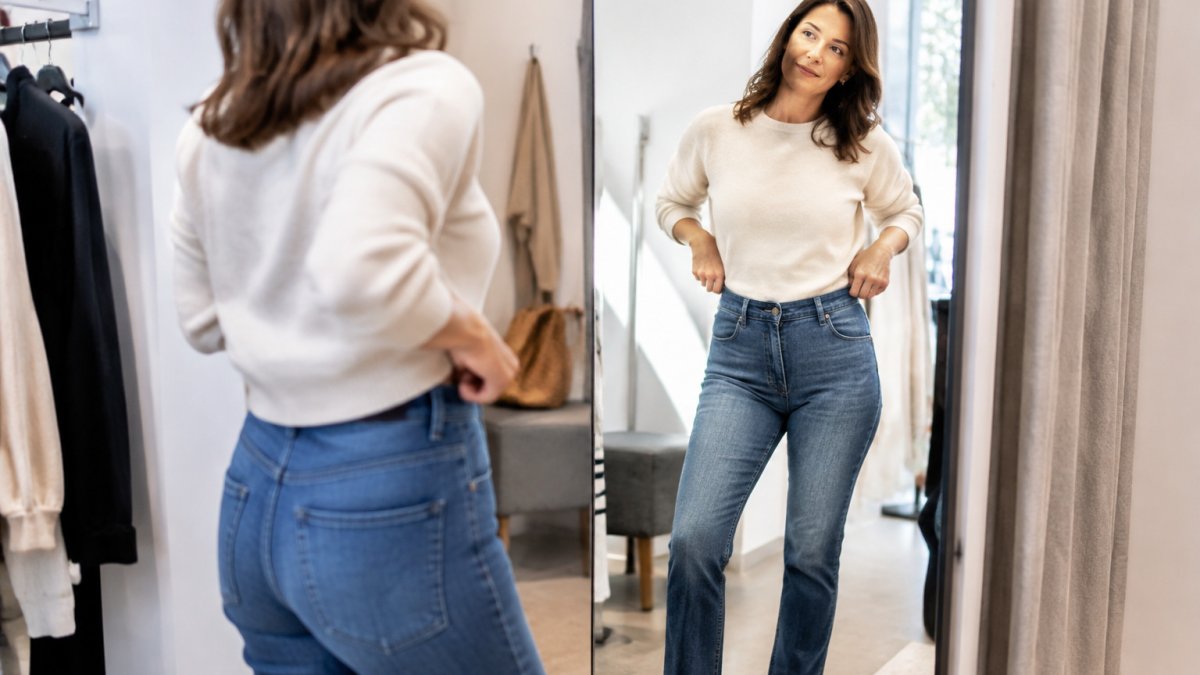
Once you have the piece on, do a short movement test.
Look at yourself from the side and the back, not just the front. Many fit problems show up there first.
Ask for help if you are unsure. A knowledgeable shop assistant can point out fit issues you may miss.
How to Shop for Clothes Online Without Guessing
Online shopping makes fit harder to judge, so you need a plan. For more on mastering sizing and choosing a women's clothing retailer, see our style guide.
Follow these steps:
- Read the product's measurements in centimetres, not just the size label.
- Check the model's height and the size she wears, if it is listed.
- Read customer comments about fit, especially those that mention height or body shape.
- Look for fabric details. Stretch fabrics move differently from firm ones.
- Check the return policy before you buy.
A piece can look different on a model than on you. Compare the garment's flat measurements with your body measurements.
If you are unsure, order a size up or down as a test, then return what does not fit.
When to Tailor Clothes and What It Costs
Tailoring can turn a good piece into a perfect one. It is most useful when the rest of the garment fits well, but one area is slightly off, such as the sleeve length or the waist.
Which Alterations Are Worthwhile
Some alterations are straightforward and reliable; others are complex and may not be possible. Use this guide to decide where to spend your money.
| Alteration | Typical difficulty | When it works well | When to skip it |
|---|---|---|---|
| Hemming trousers or skirts | Simple | The waist and hips already fit | The hem has a special finish that cannot be replicated |
| Shortening sleeves | Simple | The shoulder and body fit | The sleeve has working buttons or a complex cuff |
| Taking in or letting out the waist | Moderate | There is at least 2 cm of seam allowance | The garment has no seam allowance, or the fabric is delicate |
| Taking in the body of a shirt or dress | Moderate | The shoulders and bust fit | The garment is heavily structured or lined |
| Adjusting jacket shoulders | Complex | Rarely worth the cost | Almost always, choose a jacket that fits the shoulders instead |
| Shortening a jacket | Moderate | The pockets and button stance allow it | Shortening would bring the pockets too close to the hem |
A common pattern is that simple alterations cost less and carry less risk, while complex ones can cost more than the garment is worth. Prioritise the simple fixes first.
What Alterations Typically Cost
Tailoring prices vary by tailor, city, and garment. As a rough guide, simple hems and sleeve shortenings are usually the least expensive, waist adjustments sit in the middle, and jacket shoulder work is the most expensive.
Watch out: a quote that seems low may not include a second fitting or pressing. Ask what is included so you can compare quotes fairly.
When Tailoring Is Not Worth It
Tailoring cannot fix every fit problem. Skip alterations when:
- The shoulders of a jacket or shirt do not fit. Shoulder adjustments are complex.
- The garment is too small in the bust or hips with no seam allowance to let out.
- The fabric is delicate, heavily embellished, or bonded, which limits what a tailor can safely change.
- The alteration would cost more than half the garment's price. At that point, buying a better-fitting piece is usually the wiser choice.
How to Prioritise Your Alterations
Work out which pieces you wear most often, then decide which ones are worth the cost. A well-fitted jacket or pair of trousers can be worth a tailoring fee because you wear them frequently. Start with the garments you reach for weekly, then move to occasional pieces.
A practical order is:
- Trousers and jeans that need hemming or a waist adjustment.
- Jackets that fit the shoulders but need sleeve or body work.
- Dresses and skirts that need a hem or waist adjustment.
- Shirts that need sleeve shortening or a slight waist take-in.
Preparing for a Tailoring Appointment
Bring the shoes you will wear with the garment, since hem length depends on heel height. Wear the undergarments you plan to use. Pin or mark the areas that need adjustment before you go, and be clear about how you want the garment to feel, close-fitting or relaxed. A good tailor will tell you what is possible and what is not, so ask questions before any work begins.
Building Your Fit Checklist for Your Next Purchase
Before you buy your next piece, run through this list:
- Compare the size chart with your own measurements
- Check the shoulder, waist, and hip fit in the product photos
- Read reviews that mention body shape and height
- Confirm the fabric has enough stretch for your needs
A short checklist saves money and wasted trips. Over time, you will learn which brands and cuts suit your shape best.
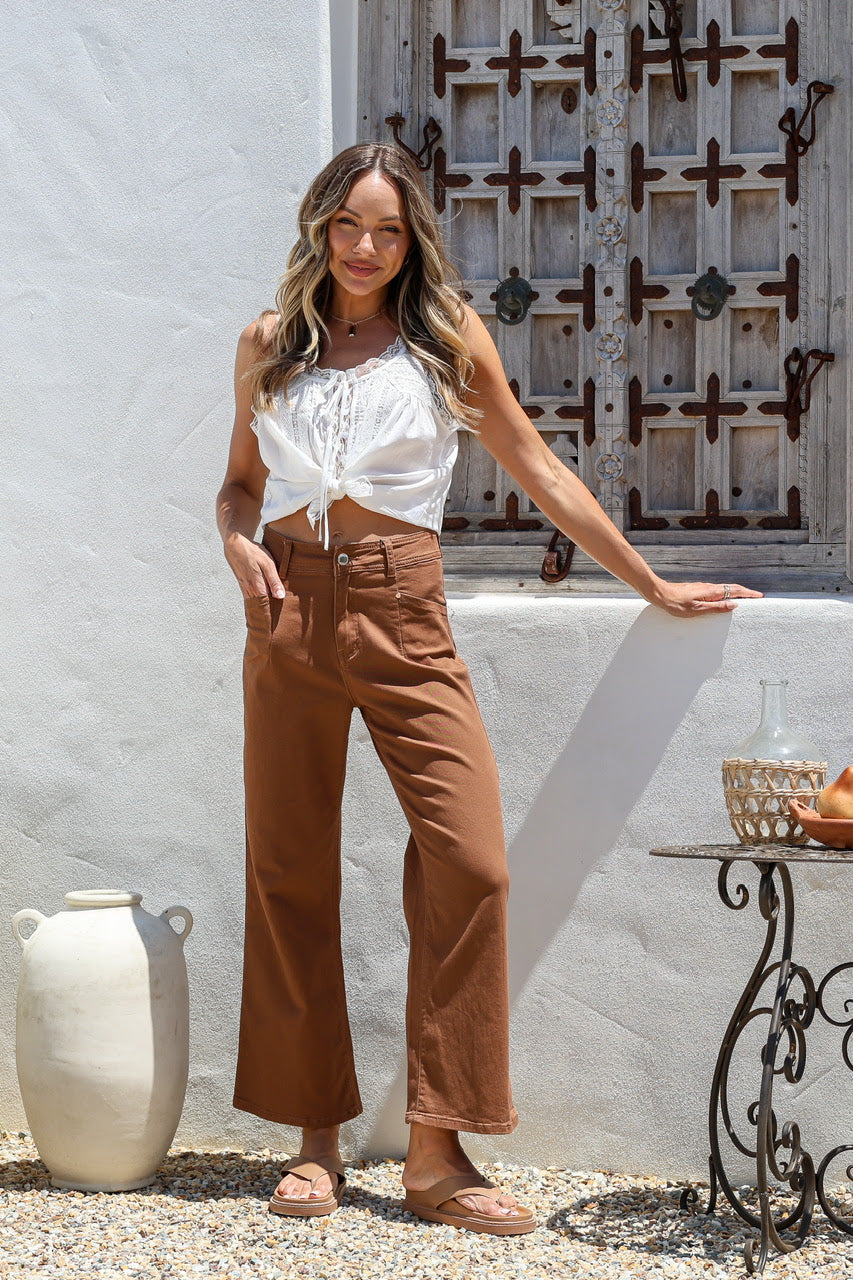
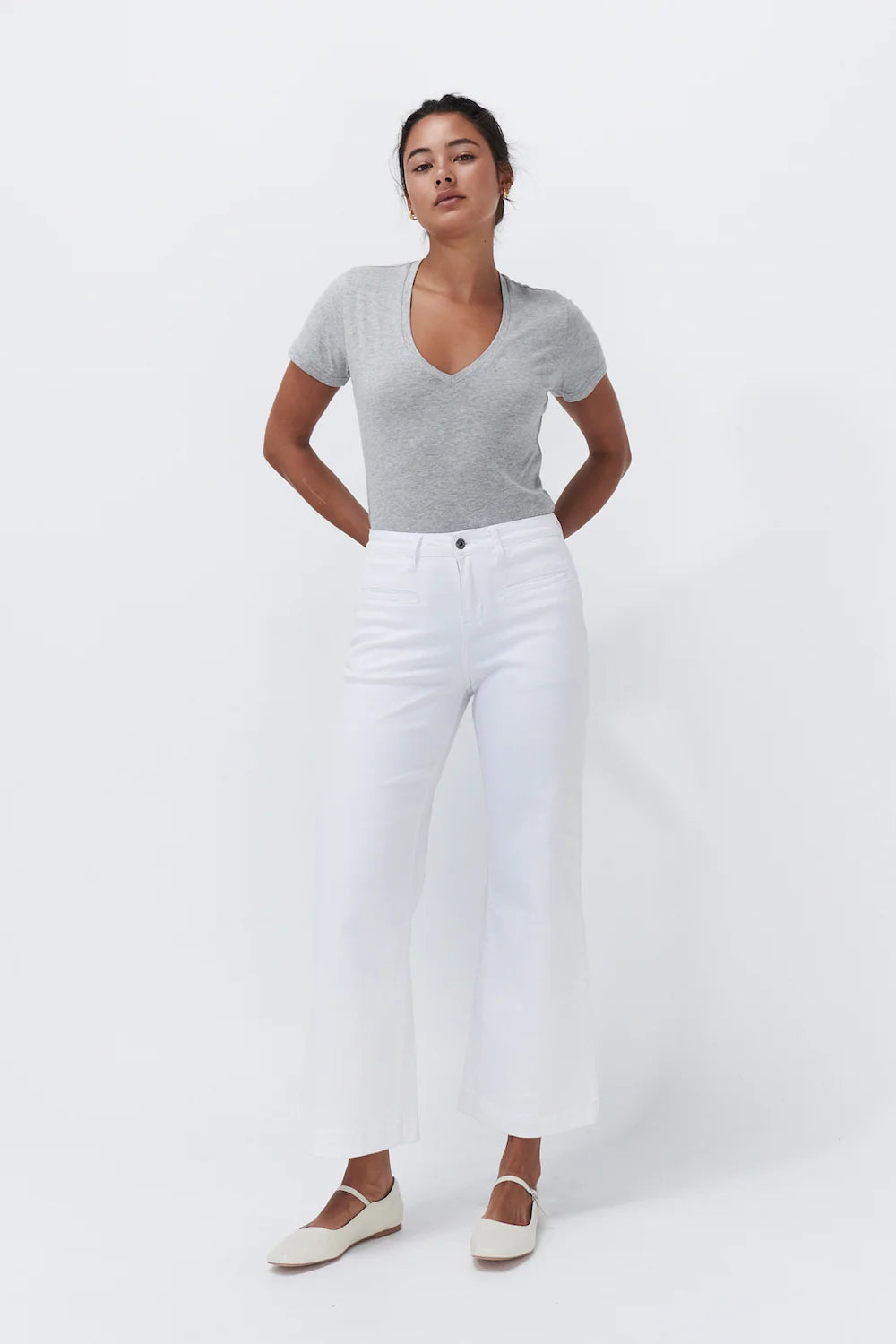
Explore our range of J Lo Jeans in Soft Tan for a classic stretch denim that moves with you. If you prefer a wide-leg silhouette, our Freya Jean in Snow White is fitted through the hips and flares from the knee.
Frequently Asked Questions
What measurements should I take before buying clothes?
Start with bust or chest, waist, hips, inseam and shoulder width, using a soft measuring tape held snugly but not tight. Record each measurement in centimetres. Compare these numbers against the garment measurements printed on a brand's size chart rather than relying on the size label alone. Your measurements can change over time, so retake them every six to twelve months or when you notice a consistent change in how your clothes fit.
Should clothes feel tight or loose when I try them on?
A well-fitted garment should feel comfortable with enough room to move, sit and reach without pulling across the chest, back or hips. Light pulling that eases with movement is normal in stretch denim, but horizontal creases, gaping at buttons or a waistband that digs in are signs the piece is too small. Excess fabric that bunches or hangs loosely from the shoulders means the size is too large. Move through a few motions, such as sitting, raising your arms and bending, before deciding.
How can I find the right size when sizing varies between brands?
Sizing differs between labels, so treat the number on the tag as a starting point only. Check each brand's size chart against your own measurements and read the fabric and fit notes in the product description. When shopping with Dutchess Martha, the listed model measurements and fit notes on each product page give a useful reference for how a garment is cut. Keep a note of the sizes and measurements that have fitted you well in the past to compare across future purchases.
When is it worth paying for alterations?
Alterations are most cost-effective on pieces you love and wear often, where a small change makes a big difference to fit. Hemming trousers, adjusting a waistband or taking in a jacket at the side seams are common, relatively simple jobs. Changes to shoulder seams, armholes or the overall cut are harder and may not be possible without compromising the garment. Ask a tailor for a quote before starting, and prioritise alterations for quality pieces that will last rather than trend items you may not keep.
