

Last Updated: November 24, 2026
Quick Summary
A capsule wardrobe for work is a small, deliberately chosen set of pieces that mix together into a full week of polished outfits. Start by auditing what you already wear, choose three neutral base colours, and count roughly fifteen outfits' worth of tops, bottoms, layers and shoes.
- Audit the last month of office outfits to spot the shapes you repeat and avoid.
- Choose three neutrals as your foundation, then add one or two accent colours you enjoy.
- Aim for six to eight tops, two to three bottoms, and one or two layers.
- Set a budget per piece rather than per season, and spend more on items you wear most.
- Buy in priority order: bottoms first, then tops, a layer, shoes and accents last.
Table of Contents
- Choosing a Workwear Colour Palette That Mixes Easily
- Work Capsule Wardrobe Essentials: Tops, Bottoms and Layers
- Tailoring Your Capsule to Your Workplace Dress Code
- Work Capsule Wardrobe Checklist and Piece Count
- Work Capsule Wardrobe Outfits: Building an Outfit Matrix
- Adapting a Summer Work Capsule Wardrobe
- Budget Tiers, Cost-Per-Wear and Caring for Your Pieces
- Your Next Step: Auditing Your Wardrobe and Shopping With a Plan
- Frequently Asked Questions
A capsule wardrobe for work is a small, deliberately chosen set of pieces that mix together into a full week of polished outfits. People who build a small, coordinated collection tend to spend less, get dressed faster and feel more put-together than those who buy piecemeal. The aim is not fewer clothes for their own sake. It is fewer, better pieces that all work together.
Start with an honest audit of what you already wear to the office. Pull out everything you reached for in the last month, then note what you wore without thinking and what you avoided. Most people find they repeat the same three or four shapes. Learn how to dress up a casual outfit with polished pairings to widen your options.
Next, decide how many outfits your week requires. A typical professional needs five days of work looks, plus one or two options for client meetings or evenings out. Work backwards from that number. If you need around fifteen outfits, you are typically looking at six to eight tops, three bottoms, two layers and a pair of shoes that suit most of them.
Finally, set a budget per piece, not per season. Spending a little more on the items you wear most often, such as a sharp blazer or well-cut trousers, usually returns more value than spreading the same money across trend pieces you will rarely reach for. Explore quality over quantity wardrobe advice on choosing pieces that last.
Choosing a Workwear Colour Palette That Mixes Easily
A colour palette is what makes a capsule work. Choose three neutrals as your foundation, such as white, black and navy, or cream, camel and charcoal. Then add one or two accent colours you genuinely enjoy. Because every piece relates to the same few shades, almost any top can go with almost any bottom.
Keep your neutrals consistent in tone. Warm whites sit uneasily beside cool greys, so check pieces side by side in natural light before you buy. A mismatch that looks minor in a dressing room becomes obvious across a working week.
Watch out: buying a single bright accent colour in a fashionable shade often leaves you with one wearable outfit. Choose accents that also pair with your neutrals, so the piece earns its place every week rather than once.
Work Capsule Wardrobe Essentials: Tops, Bottoms and Layers
Every good capsule rests on a few reliable categories. Build your tops, bottoms and layers around pieces you can wear repeatedly without thinking about them.
Shirts, blouses and knit tops
A crisp white cotton shirt is the single most useful top in a work capsule. It can be tucked into tailored trousers for the office, worn open over a slip dress for dinner, or layered under a blazer. The Cotton Shirt | White is a classic example of this kind of versatile base. Add two or three blouses or knit tops in your accent colours, and your tops section is complete.

Trousers, skirts and work dresses
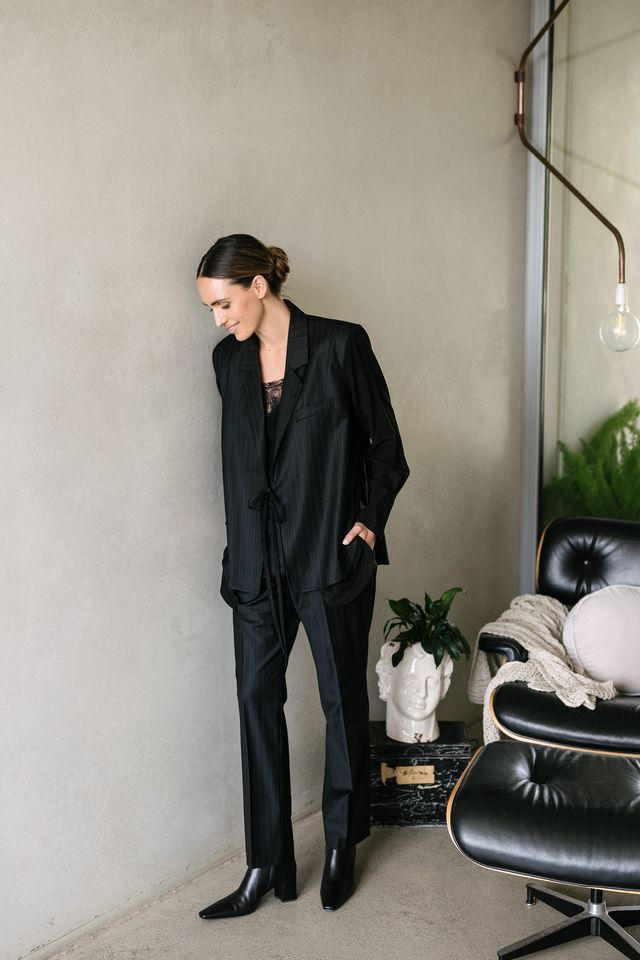
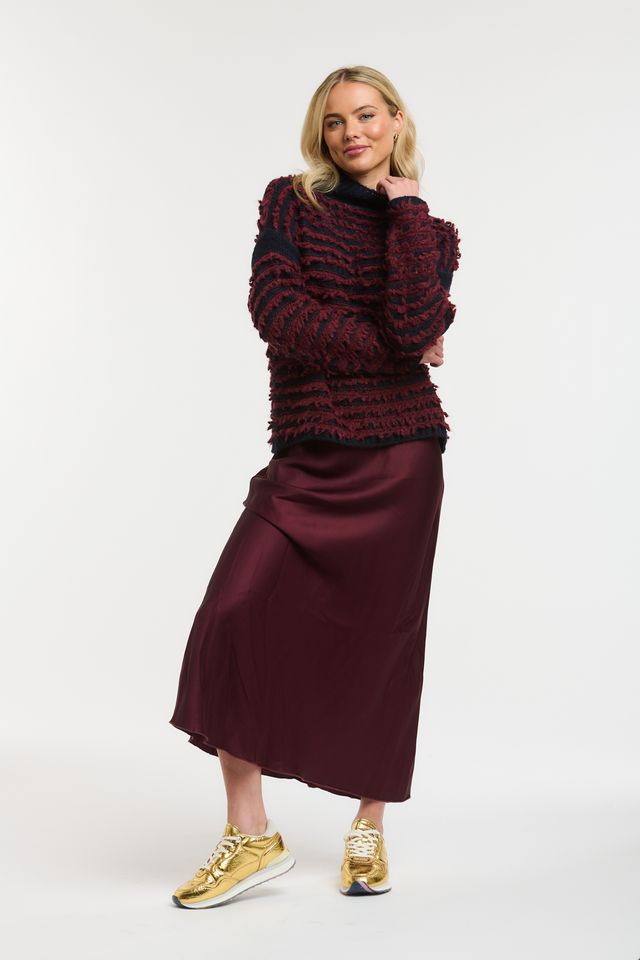
Choose one pair of straight or pencil trousers in a neutral tone, then one skirt that suits your dress code. Our Darling Pencil Pants | Black Pin Stripe show how a tailored silhouette can move from the boardroom to an evening out. A skirt or dress adds range, so consider an A-line option like the Faux Suede A Line Skirt Burgundy, which works well with a plain top. For a polished alternative to a basic blouse, the guide to peplum tops for work covers how to choose a style that sits well with tailored bottoms.
Tailoring Your Capsule to Your Workplace Dress Code
Not every office expects the same thing, and a capsule that ignores your dress code either looks overdressed or underdressed for most of the week. The practical fix is to build one core set of neutral pieces, then adjust the layers, fabrics and footwear for the specific code you work under. Most professionals sit in one of several camps, and each needs a slightly different weighting.
Business formal
Think law firms, corporate head offices and client-facing finance roles. Structure matters more than colour here. Weight your capsule towards a tailored blazer, pressed trousers or a pencil skirt, and shirts with a clean collar. Keep prints minimal and let the cut do the work. A common pattern is two jackets, three bottoms and five tops, all in the same two neutrals, which yields well over a fortnight of combinations without repetition. Choose fabrics with some weight, such as wool blends and crisp cotton poplin, because they hold a press through a long day.
Business casual
The most common office code, and the easiest to get wrong. Business casual does not mean jeans and a T-shirt, but it does allow knitwear, softer fabrics and more relaxed silhouettes. Build around one tailored bottom and one softer bottom, such as a straight-leg trouser and an A-line skirt, then add knitwear, blouses and a single unstructured blazer. The layer is what steps an outfit up for a meeting; remove it and you are back to an ordinary Tuesday.
Creative and relaxed offices
Agencies, studios and many tech workplaces reward personality rather than uniformity. Keep the neutral base but allow one statement piece per outfit, whether that is a coloured skirt, a textured knit or a distinctive shoe. The capsule still works because the base pieces remain interchangeable; the accent is the variable, not the foundation. Avoid building the whole capsule around trends, because a creative office still notices when the same novelty piece appears three times a week.
Hybrid and video-first workplaces
If you are on camera several days a week, your capsule needs to read well from the waist up and still work in person. Prioritise collars, structured shoulders and solid colours, which hold up on a webcam better than fine stripes or busy prints. Keep two or three tops reserved for camera days so they stay pressed and presentable, and let your more relaxed pieces carry the office days. This split also reduces laundering, because camera-day tops are worn for shorter periods.
Many professionals find that the same core pieces serve several codes. The difference is usually the layer you add, the shoe you choose and whether you tuck or leave a shirt loose. Build one tier of pieces for your everyday code and a small set that steps up for important meetings, and you keep the capsule lean without sacrificing appropriateness. Watch out: buying a separate capsule for every code defeats the purpose and usually leaves you with two half-used wardrobes.
Work Capsule Wardrobe Checklist and Piece Count
A practical checklist keeps your capsule honest. Use this as a starting point and adjust the numbers to your own week.
- Three neutral base colours chosen
- Six to eight tops, including shirts, blouses and knits
- Two to three bottoms, such as trousers and one skirt
- One or two layers, such as a blazer and a knit
- One dress or versatile day-to-evening piece
- Two pairs of work-appropriate shoes
- One bag suited to daily commuting
Count your pieces before you shop. If your total exceeds your target, remove the item you wear least. Many people discover that a capsule of around 25 to 30 items covers a full working wardrobe without repetition feeling tedious.
Work Capsule Wardrobe Outfits: Building an Outfit Matrix
An outfit matrix lays out your pieces so you can see every combination at a glance. List your tops across one axis and your bottoms and layers down the other, then mark the pairings that work. Within a few minutes you will have a dozen or more ready-made outfits.
In practice, a white shirt with the pencil trousers and the blazer gives you a sharp meeting look. The same shirt tucked into a skirt with a knit gives you a softer office day. Swap the shoes or add a belt, and the outfit moves towards evening.
A woman in her forties in a neutral cotton shirt and tailored black trousers, with a black blazer draped over her arm, walking through a bright Melbourne office lobby

Keep the matrix on your phone so you can check it before a busy morning. It turns getting dressed from a decision into a routine.
Adapting a Summer Work Capsule Wardrobe
Warm months call for lighter fabrics and fewer layers, but the principles stay the same. Swap heavy knits for breathable cotton and lightweight tencel, and keep your neutral palette. A drawstring tencel pant in washed black can suit a relaxed summer office, while a waxed coated pant in chocolate gives a richer option for cooler evenings.
Choose sleeveless or short-sleeved blouses for hot days, and keep one lightweight blazer you can remove at your desk. Summer capsules often need fewer pieces overall, because the heat shortens the time you spend layering.
Budget Tiers, Cost-Per-Wear and Caring for Your Pieces
A capsule is a spending plan as much as a wardrobe plan. The useful question is not what a piece costs but what it costs each time you wear it, and that calculation should drive the order in which you buy.
Setting a realistic starter budget
Most people building a work capsule from scratch are replacing gaps rather than buying a whole wardrobe at once. A workable approach is to set a total figure you can spend over two to three months, then divide it by the number of gaps you identified in your audit. If you need eight pieces and can commit AUD 800, your average is AUD 100 per piece, which is enough for good cotton shirts and a basic blazer but not for a tailored wool jacket. Adjust the split rather than the total: spend more on the pieces you wear weekly and less on the ones you rotate.
Cost per wear in practice
Divide the price by the number of times you expect to wear the item in a year. A trend piece at AUD 70 worn six times costs about AUD 11.70 per wear. The cheaper item is the more expensive one. Apply the same test before you buy: if you cannot picture at least one outfit per week for the item across a season, it is not a capsule piece.
A prioritisation order
Buy in this order, and stop when your budget runs out:
- Bottoms you can wear at least twice a week.
- Two or three tops that work with every bottom.
- One layer that steps an outfit up for meetings.
- Shoes that suit your commute and your office floor.
- Accent pieces and accessories last, once the base is proven.
This order protects you from the most common mistake, which is buying several tops that only work with one bottom you do not yet own.
Care, repair and replacement planning
Care extends the life of every piece and lowers your real cost per wear. Follow the garment label, wash less often where possible, and allow wool and blended pieces to rest between wears. Store trousers on hangers and knitwear folded, and keep shoes on trees so they hold their shape. A well-maintained capsule holds its form far longer than one that is rushed through the wash.
Plan replacement rather than waiting for failure. Check these points each season and replace one or two pieces a year rather than several at once. A small repair, such as rehemming or replacing a button, often buys another year of wear and keeps the capsule stable.
The order you buy in matters as much as the amount you spend, so this summary sets out the priorities.
| Priority | Item | Why it comes here |
|---|---|---|
| 1 | Bottoms worn at least twice a week | Anchor every outfit |
| 2 | Two or three tops that suit every bottom | Multiplies outfit combinations |
| 3 | One layer that steps an outfit up | Makes outfits meeting-ready |
| 4 | Shoes for commute and office floor | Completes the daily look |
| 5 | Accent pieces and accessories | Add only once the base is proven |
Your Next Step: Auditing Your Wardrobe and Shopping With a Plan
Begin with the audit: list what you own, what you wear and what is missing. Then choose your palette, count your pieces against the checklist, and build your outfit matrix. Only then should you shop, buying the gaps rather than adding more of what you already have.
Browse our collection to find pieces that fit your plan, and speak to our team if you would like help choosing combinations for your body and your working week.
Frequently Asked Questions
How many pieces should a work capsule wardrobe have?
Most people find a workable capsule sits between 20 and 35 pieces, including shoes and outerwear. The exact number matters less than whether every piece works with at least three others. Start with a core of four or five tops, two bottoms, one blazer and one pair of shoes for daily wear, then add a dress or skirt and an evening piece once you know how often you actually dress for work. Count the pieces you truly wear, not the ones you own, and review the list each season.
What are the essential pieces in a professional capsule wardrobe?
The core pieces are a crisp white cotton shirt, a black or navy blazer, well-fitted tailored trousers, a pencil skirt or work dress, a knit top, a neutral coat and comfortable office shoes. The Manhattan Blazer in black from Dutchess Martha, priced at $89.00, is an example of a layering piece that dresses up or down. Choose fabrics that hold their shape, since durability matters more than trend when you wear the same pieces every week.
How do you create work outfits from a small wardrobe?
Use a simple formula: one top, one bottom and one layer or shoe that changes the mood. A white shirt tucked into trousers with a blazer is a polished daytime look, while the same shirt worn open over a slip dress works for an evening function. Plan a matrix of tops against bottoms before you shop, so you can see which combinations are missing. Accessories such as a silk scarf or a belt multiply outfits without adding garments.
How can you build a work capsule wardrobe on a budget?
Prioritise the pieces you wear most, such as the blazer, shirts and trousers, and buy these first at the best quality you can afford. Plan spending in tiers: invest in items you wear weekly, and keep trend pieces modest. Calculate cost-per-wear by dividing the price by the number of times you expect to wear an item. Use the same calculation on any piece you are considering: divide the price by the number of times you expect to wear it.
How do you adapt a work capsule wardrobe for different seasons?
Keep the neutral base constant and rotate the layers and fabrics. In cooler months, add knitwear, a heavier coat and wool-blend trousers; in warmer months, lean on lightweight Tencel pants, shorter sleeves and breathable shirts. A summer work capsule wardrobe can use the same blazer as a light layer over a dress, so fewer pieces cover more of the year.
