

More clothes don’t automatically make getting dressed easier. A quality over quantity wardrobe prioritises well-made, versatile pieces over a crowded closet of items that quickly lose their shape, colour or appeal. The goal isn’t to own less for its own sake. It’s to choose clothes that feel good, suit your style and earn their place through regular wear.
It makes sense to want a wardrobe that’s stylish, practical and enjoyable to wear. Thoughtful choices can help you build one without relying on constant new purchases. In this guide, you’ll learn how fabric, construction and care affect durability, and what to look for in a considered capsule wardrobe.
Capsule wardrobe essentials aren’t a universal checklist. They’re the pieces that work with the rest of your clothes and reflect how you like to dress. We’ll explore how to recognise quality, why craftsmanship matters and how versatile staples can make getting dressed easier and more enjoyable.
Key Takeaways
- Choose garments for how often and how long you’ll wear them, not just their initial appeal.
- Learn which construction details can help you assess a garment’s durability.
- Build a capsule around pieces that coordinate easily and suit your everyday style.
- Use comfort, fit and versatility to decide which essentials deserve a place in your wardrobe.
What Does Quality Over Quantity Clothing Mean?
Quality over quantity means choosing thoughtfully made clothing you’ll wear often, rather than filling your wardrobe with short-lived fashion. Durability, versatility and personal style matter more than the number of garments you own.
Garment Durability and Longevity
Clothing durability is a garment’s ability to remain wearable through repeated use and care. A longer-lasting favourite can reduce the need to replace it and help you make more considered buying decisions.
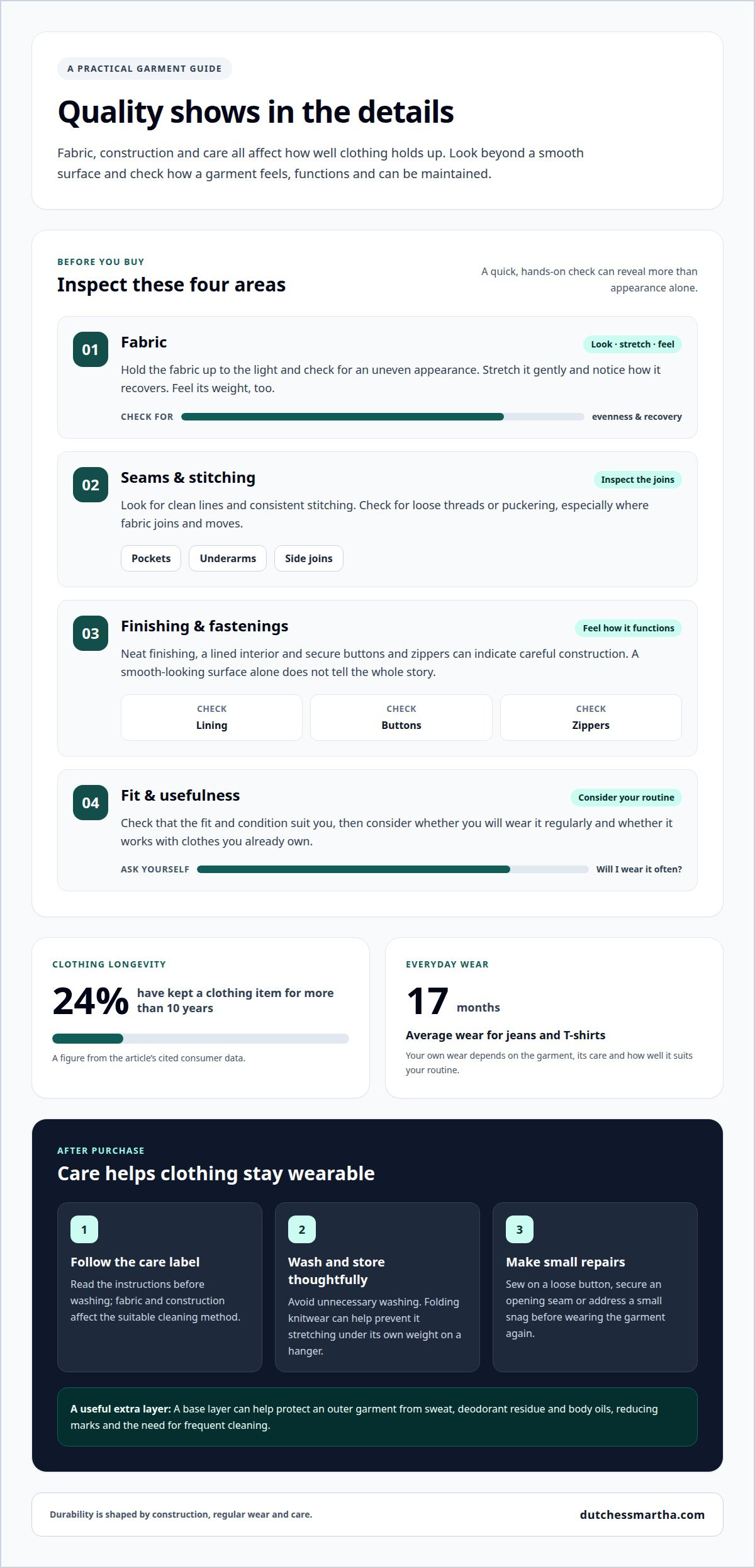
Some consumers keep garments for years: 24% have kept a clothing item for more than 10 years. Jeans and T-shirts are worn for an average of 17 months. These figures show why longevity matters, but your own wear depends on the garment, its care and how well it suits your routine.
Second-hand or vintage clothing can offer value in Australia when the fit, condition and construction suit you. Check for worn areas, sound stitching and repairable details, then consider whether you’ll wear the piece regularly.
Changing Clothing Preferences
Buying more clothing can mean a fuller wardrobe, but not necessarily more useful outfits. Quality-led fashion focuses on considered design and lasting appeal, rather than pieces chosen only for a passing trend.
Fast fashion can contribute to environmental impacts such as resource use and textile waste. Buying fewer garments may reduce how often you replace them, though the effect depends on what you buy, how long you wear it and how you care for it.
For Australian-made or ethically made basics, look for brands that clearly explain how their garments are made and which materials they use. This information can help you make an informed choice without relying on a label alone.
Building Versatile Clothing Capsules
A versatile clothing capsule brings together pieces that coordinate, so fewer items can create more outfits. Choose colours and shapes that suit your routine, then consider whether each garment works with several pieces you already own.
On a budget, build gradually. Start with a gap you often notice, then choose a comfortable, well-fitting item that works with clothes you already own. This avoids buying a full capsule all at once.
Avoid common capsule mistakes by prioritising fit and personal style over a rigid checklist. Before buying, ask whether you can wear the piece in at least three ways, such as layered for work, styled casually for weekends or dressed up for an evening out.
Craftsmanship and garment durability
Craftsmanship is how a garment’s fabric, cut and construction hold up through regular wear. Look for clean lines, consistent stitching and reinforced seams, especially around pockets, underarms and side joins. These areas experience movement and strain in everyday use. Choosing quality means noticing how details feel and function, not relying on appearance alone.
Check the garment closely before buying. Hold the fabric up to the light to see whether it looks uneven, then stretch it gently and note how it recovers. Feel its weight and inspect the seams for loose threads or puckering. Lined interiors, secure buttons and zippers, and neat finishing can also indicate careful construction. A smooth-looking surface alone doesn’t tell the whole story.
Care labels guide garment maintenance. Read the instructions before washing, as fabric type and construction affect the suitable cleaning method. Follow the directions, avoid unnecessary washing, and store pieces in a way that helps them keep their shape. For example, folding a knit garment can help prevent it stretching under its own weight on a hanger.
A base layer can help protect outer garments from sweat, deodorant residue and body oils. It’s useful under a blouse, knit top or jacket worn directly against the skin. Fewer marks and less frequent cleaning can help keep the outer fabric looking presentable between wears.
Small repairs can extend a garment’s useful life. Sew on a loose button, secure a seam that’s beginning to open, or address a small snag before wearing it again. Appropriate cleaning and storage also support longevity through changing seasons. A well-maintained everyday favourite can remain part of your wardrobe for longer, while a considered accessory can refresh its styling. Explore fashion accessories to find finishing touches for outfits you already enjoy wearing.
So, what is a capsule wardrobe?
A capsule wardrobe brings together pieces that work with the rest of your closet. The aim is to make getting dressed easier, with outfits suited to your routines rather than a fixed trend checklist. It can help shape a quality over quantity wardrobe by making each piece work harder.
Versatile Wardrobe Pieces
Versatile wardrobe pieces are garments that combine easily and suit more than one setting. Their flexibility helps you create distinct outfits without buying a separate item for every occasion.
Start with a piece you already wear often, such as a plain shirt. Consider whether it works with trousers for a polished outfit, denim for a casual look and a skirt for a different silhouette. The three-ways test shows whether a new piece can connect with your existing clothes.
Then consider your actual week. A lightweight layer might work over a work outfit, with weekend basics or beneath a coat in cooler weather. Choosing pieces around your climate, activities and preferred colours makes versatility personal, not prescriptive. It also keeps durability in view: a garment that suits several occasions has more chances to earn regular wear.
Minimalist Wardrobe Size
A minimalist wardrobe has no universal clothing count. Its useful size depends on your lifestyle, climate and laundry routine. A number that suits someone dressing casually may not work for someone who needs workwear or occasion outfits.
Build around the situations you dress for. If your week includes office days, time outdoors and social plans, account for each before deciding what stays. Knowing your usual outfit needs helps identify genuine gaps instead of copying someone else’s capsule list.
Fast fashion can encourage frequent buying, but a capsule focuses on combinations and repeat wear. Lay out the pieces you reach for, then notice which colours, shapes and layers already work together. For a quality over quantity wardrobe, add only what fills a real need, such as a warmer layer for cooler days or a top that pairs with bottoms you already own.
Review the capsule as your routine changes. Travel, work shifts or a move to a different climate can alter which pieces feel useful. Keep the clothes that support those changes and let your own wearing habits guide the wardrobe’s size.
Capsule wardrobe essentials
Capsule essentials support your routine and combine into outfits you enjoy wearing. A quality over quantity wardrobe takes shape when each item has a clear role, rather than simply matching a standard checklist. Start with the situations you dress for, such as work, weekends and social plans. Then identify gaps, perhaps a comfortable top for repeat wear, a layer for cooler mornings or a polished piece for meetings.
Build around garments that coordinate in colour and shape. For example, a neutral top might work with tailored trousers, a skirt and relaxed denim. Add a layer suited to your climate, then see whether it complements those same combinations. This exercise helps reveal whether a potential purchase connects with your existing clothes or stands alone in your closet.
Fabric and craftsmanship deserve attention, too. Cotton can feel comfortable for everyday wear, while construction and care needs affect how a garment fits your routine. Read the care label and consider whether you’ll maintain it. A piece that needs special care may not suit someone who prefers easy laundering. Look closely at details, from the finish to the fit, before deciding.
Use intention as your shopping filter. Before buying, name the gap the item fills and picture three ways to wear it with clothes you own. If you can imagine only one outfit, pause and reconsider. For a quality over quantity wardrobe, choose comfortable shapes and colours that make you feel confident, not essentials chosen because a checklist says you need them. Your capsule should reflect your life, not restrict your style.
Let your wardrobe evolve with the season and your routine. When a new need appears, look for a versatile piece that complements existing favourites instead of replacing everything. This keeps each purchase considered and gives craftsmanship a place in your everyday style. To build a quality over quantity wardrobe, explore thoughtfully selected fashion for inspiration as you refine your personal style.
Dutchess Martha
Dutchess Martha offers a considered place to discover pieces for a wardrobe shaped around your style. Its range includes women’s clothing, fashion accessories, jewellery and homewares, with options to explore as you refine your everyday looks.
Turn to Dutchess Martha when you’re ready to add a piece that complements what you already wear, rather than buying without a clear purpose. Consider how a new item fits your colours, routine and favourite outfits. A thoughtful choice can bring a fresh perspective while keeping your personal style at the centre.
Building a wardrobe with intention is personal. Start with what you enjoy wearing, then choose additions that feel right for you. For questions about Dutchess Martha’s offerings, contact the boutique.
Make Your Next Choice Count
Your wardrobe can evolve one thoughtful decision at a time. Before your next purchase, consider what you want to feel when you get dressed and which pieces would support that. A quality over quantity wardrobe isn’t about following strict rules; it’s about making choices that reflect your life and personal style.
Let curiosity guide your next step. Explore women’s clothing, fashion accessories and jewellery as ways to express your style, and choose only what feels right for your wardrobe. The best addition is one you’re excited to wear and can imagine styling your way.
Ready to explore your options? Contact Dutchess Martha and take your next style step with confidence.
Frequently Asked Questions
Why Prioritise Quality in Fashion?
Prioritising quality can make each purchase more deliberate and help you avoid garments that don’t suit your routine. Picture a specific day you’d wear the item, such as commuting, working from home or meeting friends. If it suits the occasion and feels comfortable, it’s more likely to become a regular choice. A considered wardrobe supports personal style without making every new trend a must-buy.
What does quality over quantity mean for a wardrobe?
It means giving more weight to usefulness, construction and personal preference than to the number of clothes in your wardrobe. Instead of buying another top similar to one you rarely wear, identify what makes that piece unsuitable: perhaps the fit, colour or occasion. Use that insight to guide your next purchase. The aim is a wardrobe where items serve a purpose and feel like you.
Which fabrics and garment construction details indicate quality clothing?
Look for fabric that feels appropriate for the garment’s purpose, along with tidy finishing and details that work smoothly. Cotton, linen and wool are natural fibres to consider; blends can also suit different needs. Check that a collar sits neatly, a hem lies flat and fastenings function properly. Compare the garment’s feel and finish across different areas, rather than judging quality by a single detail or label.
What are the best cost-per-wear calculations for buying clothes?
Divide the garment’s purchase cost by the number of times you expect to wear it. Compare options using your own likely wear counts, not an imagined best-case scenario. Estimate based on your calendar, laundry habits and whether the item suits multiple settings. This calculation is a planning tool, not a guarantee: a low figure doesn’t make an uncomfortable or unsuitable garment a worthwhile choice.
How to choose versatile wardrobe essentials for different Australian seasons?
Choose essentials around your local conditions and daily activities, since Australian weather varies between regions and across the year. Consider layers you can add or remove, along with fabrics suited to the temperatures you experience. A light layer can help with cooler mornings, while a breathable top may suit warmer days. Before buying, imagine how each item will work with clothes you already wear in that season.
How to care for clothes so they last longer?
Follow the care label on each garment, because instructions vary by fabric and construction. For item-specific guidance, consult Dutchess Martha’s care blog rather than assuming every piece needs the same treatment. Read the label before the first wash and sort garments according to their stated care needs. This simple pause helps you care for each item appropriately instead of treating delicate and everyday pieces alike.