

A better petite fit is about proportion, not simply choosing a smaller size. In Australia, petite clothing is generally designed for women around 160 cm and under, while petite fashion is also commonly framed for women about 164 cm and under. The difference lies in details such as sleeve length, inseam, rise and shoulder width. Understanding these details makes petite-friendly clothing in Australia easier to choose.
If regular clothes feel too long or overwhelm your frame, you’re not alone in looking for pieces that fit just right. Fitted or cropped cuts can create a balanced shape, while structured fabrics help clothes hold their line without adding bulk. A few practical fit checks can make getting dressed easier.
This guide to petite-friendly clothing in Australia explains how sizing relates to proportions, what to consider in dresses, tops and trousers, and how to style pieces you already love. It also looks at Australian-designed fashion, so you can build a wardrobe that feels considered, comfortable and true to your style.
Key Takeaways
- Learn why petite sizing refers to garment proportions, not simply choosing a smaller size.
- Use Australian size guides as a starting point, then consider how each garment sits on your frame.
- Explore styling choices such as tonal dressing and a midi hem that falls just below the knee.
- See how Australian-designed fashion can complement a petite wardrobe, alongside accessories and jewellery.
What Counts as Petite in Australia?
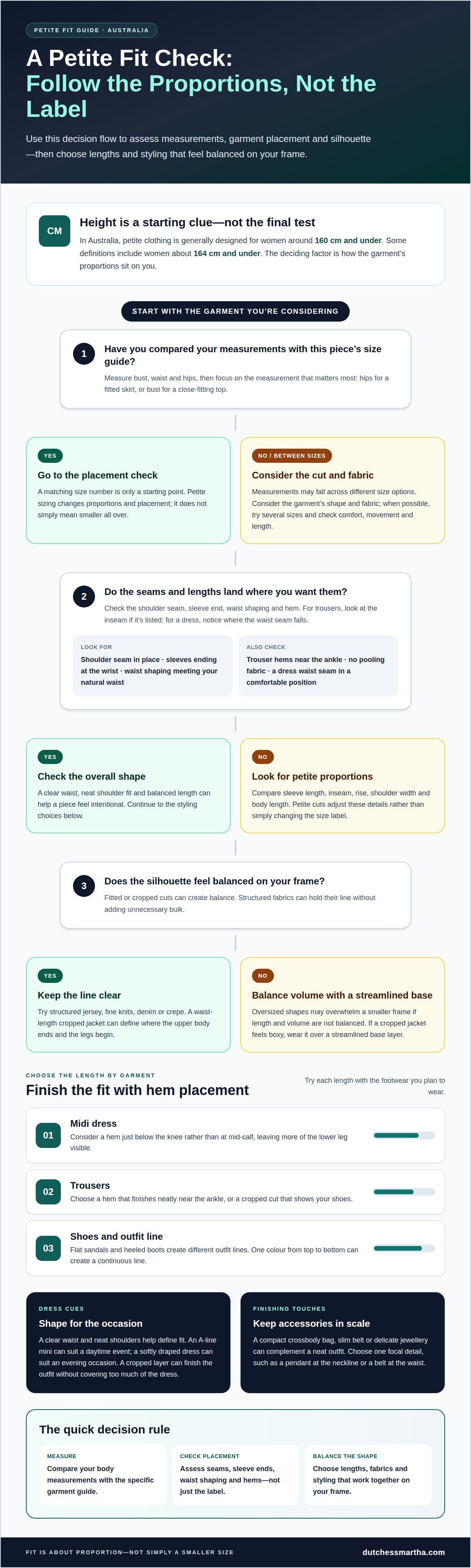
In Australian fashion, petite clothing is generally designed for women around 160 cm and under. Some definitions include women approximately 164 cm and under, so height alone doesn’t settle the question. The key is how a garment’s proportions sit on your frame. A shorter wearer may find standard sleeves cover the hands, trouser hems pool, or a shoulder seam falls too low, even when the garment fits around the body.
Petite cuts adjust details such as inseams, sleeve lengths, rises and shoulder widths. These changes can help a top’s waist shaping meet your natural waist, or trousers finish near the ankle without excess fabric. Fitted or cropped cuts can create a balanced silhouette; oversized shapes may overwhelm a smaller frame if their length and volume are not balanced. Try structured jersey, fine knits, denim or crepe, which hold their shape without adding unnecessary bulk.
A cropped jacket shows how proportion works in practice. A hem near the waist can define where the upper body ends and the legs begin, especially over a simple dress or high-rise trousers. Check where the shoulder seam sits and whether the sleeves end at your wrist. If the jacket feels boxy, pair it with a streamlined base layer rather than adding volume underneath.
Accessories also affect visual scale. A compact crossbody bag, slim belt or delicate jewellery can complement a neat outfit without competing with its proportions. Choose one focal detail, such as a pendant at the neckline or a belt at the waist. When choosing petite-friendly clothing in Australia, consider where each seam, hem and accessory falls, not just the label size.
- Check shoulder seams, sleeve ends and hems for excess length.
- Pair structured fabrics with cropped or fitted shapes.
- Use a waist-length jacket or compact accessory to create definition.
Australian sizing and size guides
Use a size guide to compare garment measurements with your own instead of relying on the label alone. Height helps you assess length, while bust, waist and hip measurements indicate how a garment may fit your body.
Petite Versus Standard Sizing
Petite sizing usually adjusts garment lengths and placement, while standard sizing follows its own proportions and length specifications. The size number may not change as you expect, so compare the guide’s measurements rather than assuming petite means smaller all over. A petite top, for example, may suit your bust measurement but have a shorter body length. Check the sleeve and hem details, too.
Petite Clothing Sizes
Start by measuring your bust, waist and hips, then compare each measurement with the garment’s size guide. Focus on the measurement that matters most for the piece: hips for a fitted skirt, or bust for a close-fitting top. If your measurements fall across different size options, consider the garment’s cut and fabric before choosing. A relaxed shirt and a structured dress may fit differently, even at the same labelled size.
Use height as a guide to where hems and waistlines may fall. When product details include the model’s height and size, compare them with your own proportions, but treat the comparison as a reference rather than a guarantee. Torso length, shoulder width and leg length all affect how clothes sit. For trousers, check the listed inseam if provided; for a dress, consider where its waist seam falls.
- Measure over light clothing, keeping the tape level and comfortably close.
- Compare your measurements with the specific piece’s size guide.
- When possible, try several sizes and assess comfort, movement and length.
Keep notes on the sizes and cuts that work for different garment types. A well-fitting pair of trousers can provide a useful comparison for future pieces, but don’t assume every brand or cut will feel identical. Apply the same measurement-led approach as you browse fashion pieces.
Petite dressing proportions and styling tips
Use hem placement and outfit balance to make each look feel intentional. A change in dress length or trouser shape can alter the overall proportions.
Dress and Trouser Lengths
For a midi dress, consider a hem just below the knee rather than at mid-calf, leaving more of the lower leg visible. With trousers, choose a hem that finishes neatly near the ankle, or a cropped cut that shows your shoes. Try each length with the footwear you plan to wear, since flat sandals and heeled boots create different outfit lines.
Petite-Friendly Dress Options
Look for dresses with a clear waistline, a neat shoulder fit and a shape that moves with you. An A-line mini can work for brunch or a daytime event, while a softly draped dress suits an evening occasion. For a versatile wardrobe, choose pieces that can shift mood with different shoes and accessories, rather than relying on one styling.
For work or a polished lunch, pair a simple knee-length dress with a light layer and understated jewellery. For a celebration, choose a mini dress with a defined waist and add dressier shoes. These combinations keep the dress as the focal point while giving each occasion its own finish.
Build a petite mini-dress outfit around one strong detail. Try a patterned mini with simple flats for daytime, or a clean-lined dress with a small shoulder bag for dinner. If the dress has volume or a statement neckline, keep the other elements streamlined. A cropped layer can complete the outfit without covering too much of the dress.
For an elongated look, wear one colour from top to bottom, such as a matching top and trousers. A tonal dress with shoes in a similar shade creates a continuous line, while a contrasting belt can define the waist. Choose the effect that suits your mood and the occasion.
Australian-designed petite clothing
Australian design and petite sizing describe different things. “Australian-designed” refers to a design connection, while petite fit concerns garment proportions. A locally designed dress is not automatically cut for a shorter frame. Consider design origin and fit separately, then assess each piece by its measurements, shape and construction.
Petite definitions can vary: Australian petite clothing is often associated with women around 160 cm and under, while broader fashion descriptions may include heights up to approximately 164 cm. That range matters because height alone doesn’t describe torso, arm or leg proportions. A designer’s height can offer useful context, but the garment’s own sleeve, waist and hem placement tells you more about its fit.
Use a three-part check when considering a locally designed garment. First, look for garment measurements or model details that help you judge its scale. Next, assess whether the shoulder line and sleeve length sit comfortably. Finally, consider where the waist seam and hem fall on your body. A straight-cut shirt, for example, might suit your shoulders but feel too long through the body.
Construction details can help you decide whether a piece works for your proportions. A defined waist, adjustable tie or cropped hem gives you more control over where the garment sits. A soft, unstructured shape may fall differently from crisp fabric with a straight line. Check how the material drapes and whether the design’s intended silhouette matches the look you want.
Build a useful wardrobe by assessing each item individually instead of assuming every Australian label follows one petite standard. Try a dress with your usual shoes, or compare a jacket’s sleeve finish with a piece you already enjoy wearing. These practical comparisons help distinguish appealing design from the fit details that matter to you.
Explore curated fashion and accessories as you shape a wardrobe around your preferred proportions and personal style.
Dutchess Martha
Dutchess Martha offers a considered collection of women’s fashion and finishing touches for your wardrobe. Once you know which proportions, lengths and details suit you, explore women’s apparel alongside fashion accessories and jewellery to create looks that feel cohesive and personal.
The collection isn’t presented as a dedicated petite range, so use the fit principles in this guide as you assess each piece. Consider the garment’s cut, where its seams fall and how its length works with your proportions. Accessories and jewellery can add a personal finish without relying on a particular clothing size.
Explore Dutchess Martha when you’re ready to find style options beyond the fit checklist or bring a complete look together with considered details. Homewares are also available to add style beyond the wardrobe.
Contact Dutchess Martha to get in touch about your style interests.
Make your next style choice your own
Let your next wardrobe choice begin with how you want to feel and move, not a size label. When choosing petite-friendly clothing in Australia, start with one outfit need, such as a versatile look for work or something special for an evening out. That focus can help you decide which designs deserve a place in your wardrobe.
Keep your personal style priorities in mind as you explore. Perhaps you prefer clean lines, softer shapes or pieces that can be styled in more than one way. Save combinations you enjoy and notice which details make an outfit feel like you. The aim is not to follow a fixed formula, but to shape a wardrobe that feels considered in everyday life.
When you’re ready for your next step, connect with Dutchess Martha about petite clothing. Let your style evolve one thoughtful choice at a time, and enjoy making each look your own.
Frequently Asked Questions
Which Australian clothing brands offer petite ranges?
Choose brands that explicitly identify petite sizing and provide garment measurements. Australian design or retail presence alone does not mean a range is proportioned for shorter frames. Assess each label’s sizing details rather than relying on its name, and look for measurements that help you judge how a piece may fit your proportions.
What petite size ranges do Australian brands offer?
Petite size ranges differ between brands, so there isn’t one range to apply across Australian labels. A petite label may refer to adjusted garment proportions, while the size number still relates to the brand’s sizing system. Compare your bust, waist and hip measurements with the individual size guide, then review garment measurements for the specific piece. This helps you distinguish overall size from fit and length.
What are the best petite-friendly jeans and trousers in Australia?
Choose jeans that fit comfortably at the waist and hips, with a leg shape and hem that work for your outfit. Check the pocket placement and rise, since both affect how the jeans sit and look. Try them while sitting and walking, then assess them with your usual shoes. A straight leg, for example, creates a different finish from a wide leg.
Which Australian brands offer petite dresses, skirts and workwear?
Dutchess Martha offers women’s apparel, including dresses, skirts and pants. Check each garment’s details rather than assuming every piece follows petite proportions. For workwear, consider how a skirt or dress pairs with a jacket and whether its shape suits your setting. Look for a polished combination that feels comfortable throughout the day, without relying on a specific petite label.
What styling tips help petite women find well-fitting clothes?
Plan an outfit around one focal detail, such as a print, neckline or statement shoe, then keep the remaining pieces simple. For example, pair a patterned skirt with a plain top to create a clear visual focus. Take a photo of the full outfit from a natural standing position; it can make imbalances in colour, shape or visual scale easier to spot than a close-up in the mirror.