

The best decorative storage baskets do more than conceal clutter. They add texture, keep everyday essentials close at hand and give plants a considered place to shine. Woven, lidded and plant-holder styles each balance function and decoration differently.
Baskets make organisation feel warm and personal, not just practical. The right shape and material can soften a living room, tidy a hallway or add a natural accent to a bedroom.
Explore popular basket types, from open designs to covered styles, and see how fibres such as rattan, seagrass and water hyacinth affect their appearance. You’ll also find ideas for using baskets as plant holders and choosing decorative options for different spaces. A few thoughtful details can make a basket feel at home, whether it holds throws and household essentials or displays greenery.
Key Takeaways
- Compare natural fibres by their texture and the atmosphere you want to create, then consider how to care for them.
- Use a woven basket as a plant holder or decorative feature to bring softness and natural texture into a room.
- Match baskets to each space’s everyday needs, from keeping shared essentials tidy to storing blankets and accessories.
- Choose the shape and coverage to suit what you’ll store: roomier lidded designs work well for bulky household items.
Natural-fibre basket materials
Natural fibres bring warmth and visible texture to a room. Water hyacinth, rattan and seagrass are popular woven options, each with a distinct look. Water hyacinth often has a relaxed appearance, while rattan and seagrass have more defined woven textures. These materials suit decorative storage baskets when you want practical storage to contribute to the decor.
Basket styles also depend on how the fibres are woven. “Wicker” describes a weaving style, not a specific material. Willow, bamboo, jute and cotton rope are also used to make baskets, while plastic and resin can create a smoother, more uniform finish. Compare the weave, shape and surface as well as the material. A tightly woven rattan basket, for example, looks different from a chunky cotton-rope design.
To match a basket to your decor, start with the colours already in the room. White, grey, beige, natural and black are popular basket colours in Australia. Choose natural tones to complement timber or linen, or use black for stronger contrast. A matching shade creates a subtle look; a contrasting one makes the basket a feature.
Care affects how natural fibres look over time. Keep them dry, dust them gently and avoid prolonged direct sunlight. For example, place a seagrass basket away from a sunny window and remove dust with a soft cloth. These simple steps help keep the weave neat without adding moisture.
Durability depends on the fibre, weave and intended use. Natural-fibre baskets aren’t automatically washable, so avoid soaking them. Use one for toys if the weave is intact and suited to the items. Keep damp clothing out of natural-fibre baskets used for laundry. For food, use a basket only if it’s intended for food contact; otherwise, keep food in a suitable container.
Decorative baskets and plant holders
A woven basket can do more than hold household items. Use one to display flowers, magazines or a leafy plant, and it becomes part of the room’s styling. For a plant-holder look, place a potted plant inside a basket slightly wider than its pot. The woven texture frames the greenery and softens the planter’s appearance. Choose a stable base so the arrangement sits neatly beside a sofa or in an entryway.
Keep the plant in its own pot rather than planting directly into the basket. This makes the arrangement easy to remove and keeps the basket separate from watering. Lift the pot out when it needs attention, then return it once the outside is dry. A seagrass basket, for example, adds a relaxed natural accent to a leafy indoor plant, while rattan offers a more defined woven finish.
Shape and coverage change the decorative effect. An open-weave basket makes its contents visible, which suits a folded throw or a few magazines. A lidded basket conceals everyday items and creates a cleaner silhouette. One listed rattan storage basket with a lid measures 36×26×24 cm, offering a specific example of a covered design. Check that the basket’s opening and depth suit the object you plan to display or store.
Try a simple arrangement: place a basket beside a chair for magazines, or group a plant holder with a smaller woven piece on a shelf. Keep the display uncluttered so the weave and contents are easy to see. A basket can also hold a spare pot or gardening items near a plant display. Choose colours that relate to nearby furnishings and let the greenery add contrast. This makes practical storage a considered feature without crowding the surface.
Decorative baskets for living spaces
In a living room, a basket can gather everyday items while keeping them within reach. Place one beside the sofa for remote controls, gaming gear or periodicals. A larger open basket can hold throws and blankets for cooler evenings. Match its shape to the space: a low basket can sit near a coffee table, while a taller design can make use of an empty corner.
In a bedroom, use a basket to give scarves and other frequently used accessories a clear home near a wardrobe or dressing area. In a hallway, it can collect shared household essentials and help keep surfaces clear. Choose a spot that suits your routine: keep items used on the way out near the entry, and place reading material beside a chair.
Shared spaces need storage that’s easy to use. Woven baskets can hold children’s belongings, such as toys, and help busy rooms feel more composed. Give each basket a category instead of mixing small toys, books and dress-ups together. That makes it easier to return things to the right place. In a bathroom, a woven basket can sit alongside other storage for spare toiletries or folded towels.
- Living room: Gather throws, magazines or gaming gear in a basket near where they’re used.
- Bedroom: Keep accessories in a dedicated basket close to the wardrobe.
- Bathroom: Use shallow wire baskets or fabric containers for candles and extra toiletries.
- Hallway: Give shared essentials one consistent landing place.
Consider visibility as well as capacity. Open baskets make contents easy to spot, which suits blankets or items used daily. A covered style creates a tidier look for mixed household essentials. In any room, leave enough space to lift items out comfortably. A basket that blocks a walkway or crowds a shelf may complicate the routine it was meant to simplify.
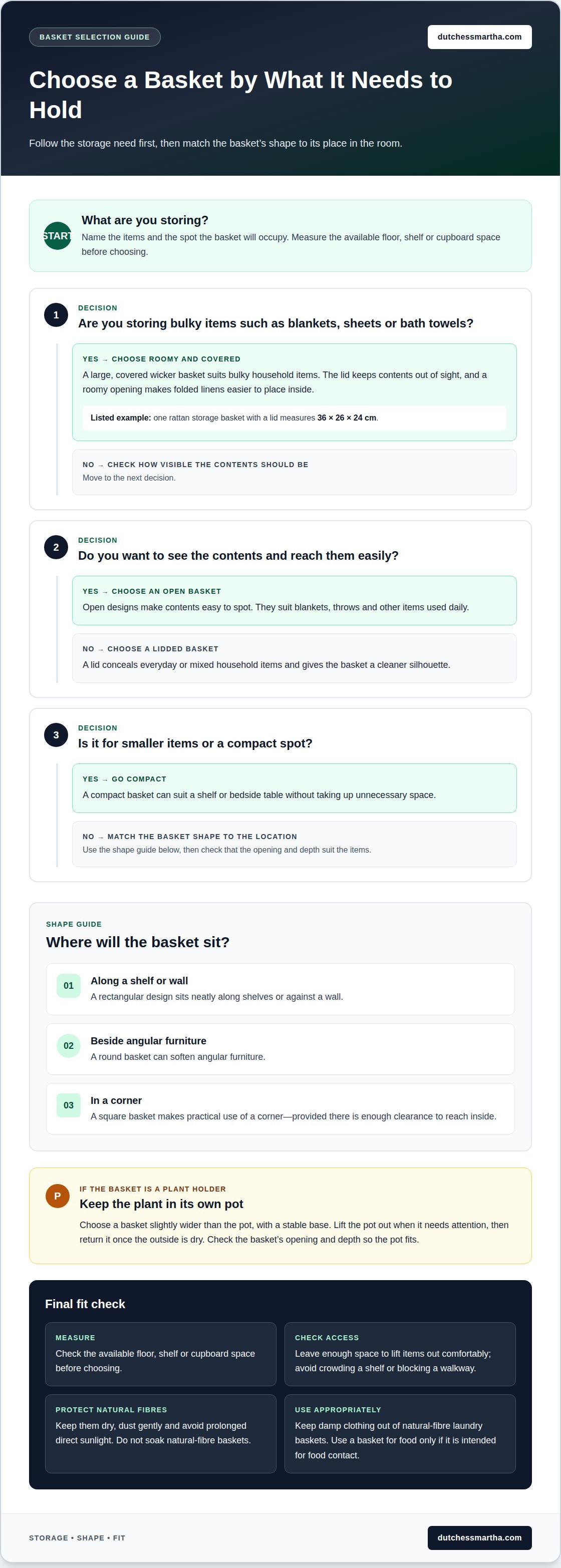
What sizes and shapes of storage baskets suit different rooms and storage needs?
Start with what you want to store, then choose a basket that fits the items and location. Large, covered wicker baskets suit bulky pieces such as blankets, sheets and bath towels. A lid keeps contents out of sight, while a roomy opening makes folded linens easier to place inside. For smaller items, a compact basket can avoid taking up unnecessary space on a shelf or bedside table.
Shape affects how well a basket fits its surroundings. Rectangular designs sit neatly along shelves or against a wall, while round baskets can soften angular furniture. A square basket makes practical use of a corner, provided there’s enough clearance to reach inside. Measure the available floor, shelf or cupboard space before choosing, and consider the basket’s height as well as its width.
Consider the room and purpose, too. In a kitchen, baskets can group items on a bench or inside a pantry, keeping similar essentials together. Choose a shape that fits the shelf and leaves room to remove items easily. In a bedroom, a larger covered basket can hold folded sheets, while a smaller open design keeps accessories within reach. In a bathroom, a shallow basket can sit on a shelf without crowding taller bottles.
- Bulky linens: Choose a spacious, covered wicker style for blankets, sheets or bath towels.
- Shelves: Consider a rectangular shape to use the available length efficiently.
- Kitchen storage: Group similar items in a basket sized to the pantry shelf or bench.
- Small essentials: Use a compact, open design for easy access and visibility.
Before settling on a size, picture the basket in place with its contents inside. Handles can help with moving a filled basket, while a lid needs enough room to open fully. Choose a design that suits both the storage task and the room’s visual balance. Explore ideas for your living space.
Dutchess Martha
Dutchess Martha is a natural next step when you’re shaping a home that feels organised and personal. Use these ideas to choose basket materials, shapes and placements, then consider how those textures work with the rest of your room. Dutchess Martha’s curated homewares can help create a cohesive, boho-chic feel, alongside fashion accessories and jewellery that reflect your personal style.
Explore Dutchess Martha when you’re looking for considered pieces to complement the atmosphere you’re creating. Practical choices can feel like part of a home you enjoy, rather than separate from its style. For a broader refresh, browse homewares alongside women’s apparel and accessories.
For help with your next step, contact Dutchess Martha.
Make room for a style that feels like yours
Let your storage choices support the way you want your home to feel. Start with one corner that needs more order, then build around the colours, textures and objects you already love. A basket can be practical without defining the whole room. Give it space to work, and let its natural finish sit comfortably alongside your personal touches.
As your rooms evolve, reconsider how decorative storage baskets fit into the bigger picture. A small change in placement or contents can refresh a familiar space without starting from scratch. Choose accents that feel cohesive with your home, rather than matching every detail exactly.
Dutchess Martha brings together homewares with women’s apparel, fashion accessories and jewellery for a considered approach to personal style. If you’re ready to explore ideas for your next home refresh, contact Dutchess Martha. Make your space feel welcoming, expressive and distinctly yours.
Frequently Asked Questions
What are the most popular types of baskets?
Open woven baskets, lidded styles, handled baskets and shallow trays are familiar choices. Each has a different role: open designs keep contents visible, lids create a neater finish, handles make baskets easier to move, and trays gather smaller objects. For a cohesive look, repeat a shape or weave in different sizes instead of mixing competing styles.
What types of decorative storage baskets are available in Australia?
In Australia, options include open and covered woven baskets, handled designs, shallow baskets and decorative plant holders. Materials range from rattan, seagrass, bamboo, willow and cotton rope to plastic and resin. Popular colours include white, grey, beige, natural and black. Choose a style based on where it will sit and whether you want its contents visible or tucked away.
Which materials are best for decorative storage baskets, such as seagrass, rattan, wicker or cotton?
The best material depends on the look and purpose you want. Seagrass and rattan offer natural woven texture, while cotton rope creates a softer visual effect. Wicker describes a weaving approach, so the underlying material can vary. For a display basket, consider how its weave and colour look beside nearby finishes. For frequent handling, choose a shape that’s easy to lift and use.
How can I use decorative baskets to organise and style different areas of the home?
Give each basket a clear category, such as chargers, reading material or spare toiletries, so small items don’t become a jumble. Place it near where you use the contents, then keep only what fits comfortably inside. A consistent colour or weave can connect separate areas visually. In a shared room, an open basket makes it easy for everyone to put things away quickly.