

What if the secret to a wardrobe that actually gets better with age is hidden in your laundry room? We've all felt that pang of anxiety when tossing a premium linen dress into the machine. You worry about it shrinking or becoming a crumpled mess that no iron can save. It's frustrating when you've invested in quality pieces only to feel confused about how to care for linen clothing properly. At Dutchess Martha, we believe your clothes should be a source of joy, not stress.
We're here to turn your laundry day into a simple, confident routine. This guide will teach you how to maintain that "new" designer look while helping the fabric become even more luxurious with every wash. We'll share the professional secrets to keeping your pieces soft and effortlessly chic for years. From choosing the right detergent to drying your items safely in the Australian sun, you're about to become a linen expert. You'll master the art of preserving your favorite styles so they remain beautiful for a lifetime.
Key Takeaways
- Protect your premium investment by mastering how to care for linen clothing with gentle rituals that preserve the integrity of every fiber.
- Discover why the iconic "linen rumple" is a sign of authentic quality and learn the damp-ironing technique for an effortlessly crisp finish.
- Keep your curated pieces pristine during the off-season by using breathable storage solutions that prevent moisture buildup and pests.
- Elevate your personal style by learning how to identify high-quality weave density and "slubs" for a truly sophisticated wardrobe.
The Enduring Charm of Linen: Why Proper Care is a Style Investment
Linen is more than just a seasonal trend; it is a lifestyle choice for the woman who values effortless elegance and premium quality. Derived from the resilient flax plant, this natural cellulose fibre has been a symbol of sophistication for centuries. At Dutchess Martha, we believe that every woman deserves to feel confident and beautiful in pieces that stand the test of time. Understanding how to care for linen clothing is the first step in transforming a simple garment into a lifelong style companion. Whether you are curating a versatile collection of dresses or seeking the perfect summer blouse, linen offers a unique blend of luxury and practicality.
In 2026, the focus on sustainable fashion is more critical than ever. Choosing high-quality linen reduces your fashion footprint by moving away from "throwaway" culture. Because linen is incredibly durable, a well-maintained piece can last for decades, becoming a vintage treasure rather than landfill. This longevity is a key pillar of modern femininity; it's about making smart, stylish investments that respect the environment while keeping you looking fashionable.
Understanding the Natural Properties of Flax
To master the art of garment maintenance, you must first understand the unique Linen fabric properties. Flax fibres are significantly stronger than cotton, boasting roughly 30% more tensile strength; however, they lack elasticity. This lack of "stretch" is exactly what gives linen its iconic, structured silhouette. The fibre is also highly moisture-wicking, capable of absorbing up to 20% of its weight in water before feeling damp. This breathability requires gentle handling to prevent the rigid fibres from snapping under high-heat or aggressive mechanical stress. Premium linen possesses a natural lustre that reflects light beautifully, a quality that only remains if the fibres are treated with care.
The "Softens with Age" Myth vs. Reality
You may have heard that linen gets better with time. This isn't just marketing; it is a biological fact. Flax fibres are held together by a natural glue called pectin. During the initial stages of ownership, the fabric might feel slightly stiff or crisp. Regular washing and wear provide the mechanical action needed to break down these pectins, resulting in a fabric that becomes increasingly supple and soft against the skin.
There is a distinct difference between designer-inspired pieces and "fast fashion" alternatives. Cheap linen often uses shorter fibres or chemical coatings that never achieve that buttery, lived-in feel. True luxury linen is designed to evolve. When you learn how to care for linen clothing properly, you embrace the "lived-in" look. This aesthetic is a hallmark of sophisticated dressing, signalling a wardrobe that is both authentic and expertly curated. Don't expect a pristine, factory-flat finish; instead, celebrate the soft ripples and character that develop as your linen accompanies you through life's best moments.
Washing and Drying Your Linen: A Gentle Ritual for Longevity
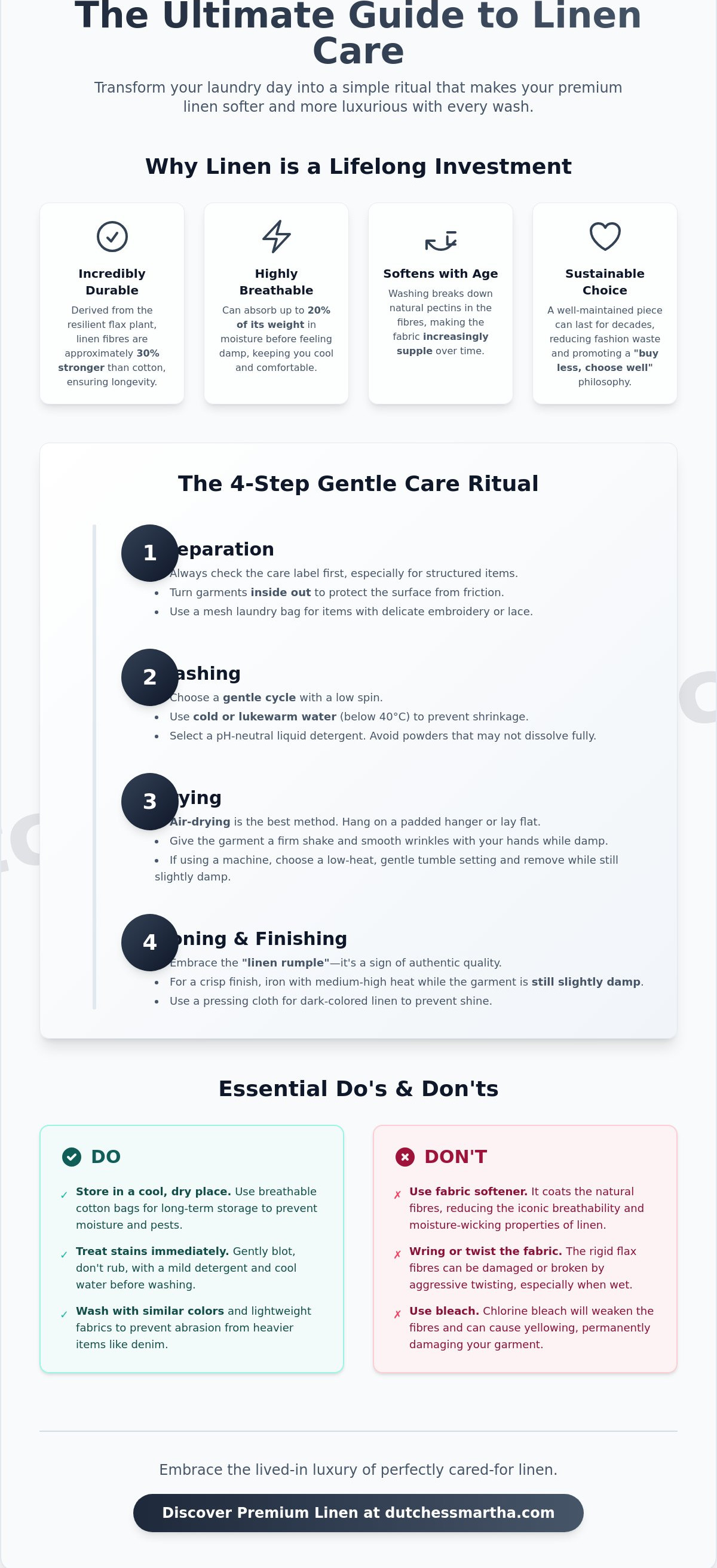
Mastering how to care for linen clothing starts with a gentle touch. Think of your linen pieces as an investment in your personal style journey. They get softer and more beautiful with every wash, provided you follow a few simple steps to protect the premium flax fibers.
- Step 1: Check the care label. Always look for specific "Dry Clean Only" instructions. This is common for structured blazers or lined items where internal tailoring might shift in water.
- Step 2: Turn garments inside out. This protects the surface fibers from friction against other clothes or the washing machine drum.
- Step 3: Choose a gentle cycle. Use cold or lukewarm water, ideally below 40°C. Heat is the primary reason for the 3% to 5% shrinkage often seen in natural textiles.
- Step 4: Use specialized detergent. Pick a pH-neutral liquid and skip the fabric softener. Softeners coat the fibers, which reduces the natural breathability linen is famous for.
- Step 5: Reshape while damp. Give the garment a firm shake and smooth out wrinkles with your hands before hanging.
Machine Wash vs. Hand Wash: Choosing the Right Path
While most modern linen is machine-friendly, some pieces require extra love. For tops featuring delicate embroidery or lace, always use a mesh laundry net. High-end kaftans or pieces with intricate tassels are best suited for the "sink method." Fill a basin with cool water, add a drop of detergent, and gently swirl. Avoid the "over-wash" by opting for spot cleaning. If you have a small mark, treating it locally is much better than a full cycle. It saves water and preserves the fabric integrity.
Detergents and Additives: What to Embrace and Avoid
The chemistry of your wash matters. Learning how to care for linen clothing involves avoiding Optical Brightening Agents (OBAs). These chemicals can alter the curated colors of your garments, making them look dull over time. Following general laundry best practices ensures you maintain the strength of the flax. Bleach is linen's worst enemy; it weakens the threads and turns even the crispest white bohemian pieces a sickly yellow. For a natural alternative to softener, add half a cup of white vinegar to the rinse cycle. It breaks down soap residue and leaves the fabric feeling fresh.
Drying Techniques to Preserve Fiber Integrity
The tumble dryer is the leading cause of linen "burn" and premature wear. High heat makes the threads brittle, leading to holes and frayed edges. In the Australian climate, the sun is a powerful tool but must be used carefully. Direct UV rays can fade premium dyes in a single afternoon. Always line dry your clothes in the shade to keep colors vibrant. If you have heavy linen knits, use the "flat dry" technique. Laying them on a clean towel prevents the weight of the water from stretching the garment out of shape. Browse our latest curated arrivals to find a new timeless piece to add to your collection.
Mastering Wrinkles and Stains: Keeping Your Linen Pristine
Living in linen means embracing the "Linen Rumple." Those soft, organic creases aren't a flaw. They're a badge of authenticity. High-quality flax fibres possess a natural stiffness that creates these distinct folds, signaling you're wearing a premium, breathable material. If you prefer a sharper look, the secret of how to care for linen clothing lies in moisture. Never iron bone-dry linen. Instead, press your garments while they're still damp from the wash. This allows the heat to relax the fibres effectively without the risk of scorching the fabric.
For your dark navy or black linen pieces, always use a press cloth. A simple piece of clean cotton fabric placed between the iron and your garment prevents those frustrating "shiny" patches. This simple step preserves the matte, sophisticated finish of your curated wardrobe. Remember that linen is highly absorbent. It drinks up liquids faster than synthetic blends. Speed is your best ally when a spill happens. Blot the area immediately. Don't rub, as rubbing pushes the liquid deeper into the weave and can damage the integrity of the flax.
The Art of Steaming vs. Ironing
A handheld steamer is the ultimate tool for any boho clothing enthusiast. It's gentle, efficient, and perfect for delicate silhouettes. Use "steam bursts" to relax stubborn fold lines that often appear after shipping or seasonal storage. Check your labels carefully before you begin. The "High" heat setting is strictly for 100% linen. If your piece is a blend, lower the temperature to avoid damaging the secondary fibres. Steaming preserves the natural volume of the fabric, keeping your look effortless and airy.
Spot Treating Common Stains Without Harsh Chemicals
Natural fibres respond beautifully to simple, household remedies. Understanding how to care for linen clothing involves avoiding chemicals that strip the natural strength of the flax. If you spill red wine or coffee during a long lunch, reach for club soda and salt immediately. The salt draws the liquid out while the carbonation lifts the pigment. For oil or grease marks on a delicate blouse, apply a generous dusting of cornstarch. Let it sit for 15 minutes to absorb the oils before brushing it away. To handle perspiration on white linen, a gentle mix of water and lemon juice can prevent yellowing without the need for harsh bleaches. These mindful steps ensure your pieces remain a timeless part of your collection.
Seasonal Transition and Storage: Protecting Your Curated Collection
Your linen pieces are investments in timeless style. When the Australian seasons shift, how you store these garments determines if they'll remain premium for years or succumb to avoidable damage. Understanding how to care for linen clothing during the off-season is the secret to maintaining that effortless elegance Dutchess Martha is known for. It's about preserving the integrity of the weave so your favourite pieces feel fresh every time you pull them out.
Always wash your garments before storage. Even if a blazer looks spotless, microscopic skin oils and perspiration linger in the fibres. These organic traces act as a magnet for pests like silverfish and moths during the quiet winter months. Once cleaned, skip the plastic storage bins. Plastic traps moisture and prevents the fabric from breathing, which creates a greenhouse effect that invites mould and mildew. Opt for breathable cotton garment bags or fabric bins instead.
- Padded Hangers: Use these for linen blazers and structured tops to maintain shoulder shape and prevent "hanger bumps."
- Cedar Blocks: Place these in your wardrobe as a natural, effective moth repellent. Sand them lightly every six months to refresh their protective scent.
- The Roll Method: Consider rolling your linen trousers rather than folding them. Constant pressure on a single fold line can lead to permanent fibre breakage over several months, resulting in visible wear marks.
Preparing Linen for Long-Term Storage
Humidity is the primary enemy of natural fibres. In a humid Melbourne summer, even a tiny amount of residual moisture can lead to "closet rot" and stubborn yellow spotting. Ensure every piece is 100 percent dry before it goes into a dark space. You should never starch your linen before putting it away for the season. Starch is a food source for insects and makes the flax fibres brittle over time. For your heirloom-quality dresses, wrap them in acid-free tissue paper to prevent discolouration and preserve the fabric's soft hand-feel.
Shielding Against Pests and Humidity
Keep your wardrobe fresh with lavender sachets. They smell divine and naturally deter bugs without the harsh, dated chemicals found in mothballs. Managing airflow is equally important for a healthy closet. Don't pack your shelves too tight; leaving space between items prevents that stale, musty linen smell from developing. If your linen feels "crunchy" or stiff after months in storage, don't worry. A quick 10 minute steam or a low-heat tumble with a damp cloth will revive the softness and drape instantly.
Ready to refresh your seasonal look? Shop our latest curated collection to find your next timeless staple.
Elevating Your Linen Wardrobe: Styling and Quality Selection
Investing in a curated linen wardrobe is a conscious choice to step away from the cycle of fast fashion. High-quality linen represents timeless elegance and durability, but identifying premium pieces requires a keen eye. Look closely at the fabric for "slubs," which are the slight, natural lumps in the yarn. While some might mistake these for flaws, they are actually a hallmark of authentic, premium linen. A consistent weave density across the garment indicates a higher standard of production, ensuring the piece maintains its shape after many washes. When you understand how to care for linen clothing, these quality markers become even more apparent over time as the fabric softens without losing its structural integrity.
How to Spot High-Quality Linen Before You Buy
Perform the "light test" before you head to the checkout. Hold the garment up to a natural light source. Premium linen should show a tight, even weave with minimal transparency. If the fabric looks sparse or overly sheer, it likely won't withstand the test of time. European flax is widely considered the gold standard because the climate in regions like France and Belgium produces longer, stronger fibres. However, don't dismiss blends. A cotton-linen blend is often a better choice for everyday office wear because it offers the breathable benefits of linen with the added softness and crease-resistance of cotton. It's a practical way to achieve that sophisticated look with less maintenance.
Curating Your Effortless Boho-Chic Look
The Dutchess Martha aesthetic is all about effortless chic. Achieving this involves mixing textures to create visual interest. Pair a crisp linen button-down with a flowing silk skirt for a high-end finish that feels modern and feminine. To elevate the ensemble, integrate thoughtful accessories like chunky gold jewellery or a structured leather handbag. This contrast between the raw texture of linen and the polished gleam of metal creates a luxe vibe that works for any occasion.
Transitioning your linen pieces is remarkably simple. A linen kaftan that serves as a beach cover-up during the day can be transformed into city-chic dinner attire by adding a waist-cinching belt and wedges. Our founder, Tina Varthalis, believes that style should be a source of joy. By mastering how to care for linen clothing and choosing premium pieces, you ensure your wardrobe remains a collection of staples that make you feel confident and beautiful every single day. Every woman deserves a wardrobe that works as hard as she does while looking completely effortless.
Embrace the Timeless Elegance of Your Linen Collection
Your linen pieces are more than just fabric; they're a lifestyle choice rooted in effortless style and premium quality. By mastering the gentle rituals of cold washing and proper seasonal storage, you ensure your curated collection retains its soft feel for years to come. Understanding how to care for linen clothing transforms these breathable garments into lifelong wardrobe staples that actually improve with every wear.
At Dutchess Martha, founder Tina Varthalis hand-picks every item to ensure it meets our high standards for the modern boho-chic woman. We introduce fresh new arrivals weekly, giving you constant inspiration to elevate your personal style. Whether you're looking for a flowing midi or a structured shirt, we make it easy to grow your collection with Free Express Shipping Australia-wide on all orders over A$250. Every woman deserves to feel confident and beautiful in clothes that are built to last.
Shop our curated collection of premium linen dresses and tops
Enjoy the lasting beauty of your linen and the confidence that comes with a perfectly curated wardrobe.
Frequently Asked Questions
Can I put linen clothing in the dryer?
You should avoid putting your linen pieces in the dryer because high heat can make the natural fibres brittle and cause up to 10% shrinkage. Air drying on a flat surface or a padded hanger preserves the premium texture of your curated wardrobe. If you must use a dryer, choose a no-heat or low-tumble setting for 5 to 10 minutes then hang it while damp to finish.
Does linen shrink every time you wash it?
Linen typically only shrinks during its first wash, usually by 3% to 5% if washed in warm water. High-quality linen garments are often pre-washed to minimize this effect. To maintain the fit of your fashion-forward pieces, always wash in cold or lukewarm water below 30 degrees Celsius. This ensures your timeless staples keep their original shape for years to come.
How do I get my linen clothes soft again?
The best way to soften linen is to wear it often, as the flax fibres naturally break in and become more supple with use. You can also add 125ml of white vinegar or 60g of baking soda to the rinse cycle to remove stiffening residues. This simple trick helps you master how to care for linen clothing while keeping your garments feeling luxurious and soft against your skin.
Is it better to hang or fold linen clothing?
You should hang linen dresses, shirts, and blazers on padded hangers to prevent deep creases and maintain their elegant silhouette. Folding is better for heavy linen blends or knit items to avoid shoulder bumps and stretching. Keep 5cm of space between hangers in your wardrobe to allow the fabric to breathe. This practice helps you feel confident and beautiful in every crisp outfit.
What is the best detergent for linen garments?
Choose a gentle, liquid detergent that is pH-neutral and free from optical brighteners or bleach. Harsh chemicals can weaken the 100% flax fibres and cause colours to fade by up to 20% over several washes. Using a delicate formula ensures your premium curated pieces remain vibrant and strong. It's an essential step in maintaining the effortless elegance of your personal style journey.
How do I remove yellow sweat stains from white linen?
Apply a paste made of 2 parts baking soda and 1 part lemon juice directly to the stain and let it sit for 30 minutes before washing. Avoid using chlorine bleach, as it reacts with proteins in sweat and can make yellowing permanent. This natural method keeps your white linen looking crisp and bright. It ensures your most fashionable pieces stay in your rotation for seasons to come.
Should I iron linen while it is wet or dry?
You should always iron linen while it's still damp or by using a high-moisture steam setting. Ironing dry linen is less effective and can actually scorch the delicate fibres. Aim to iron when the fabric is about 10% damp to easily smooth out wrinkles. This technique helps you achieve that polished, professional look that defines a well-curated and sophisticated wardrobe.