

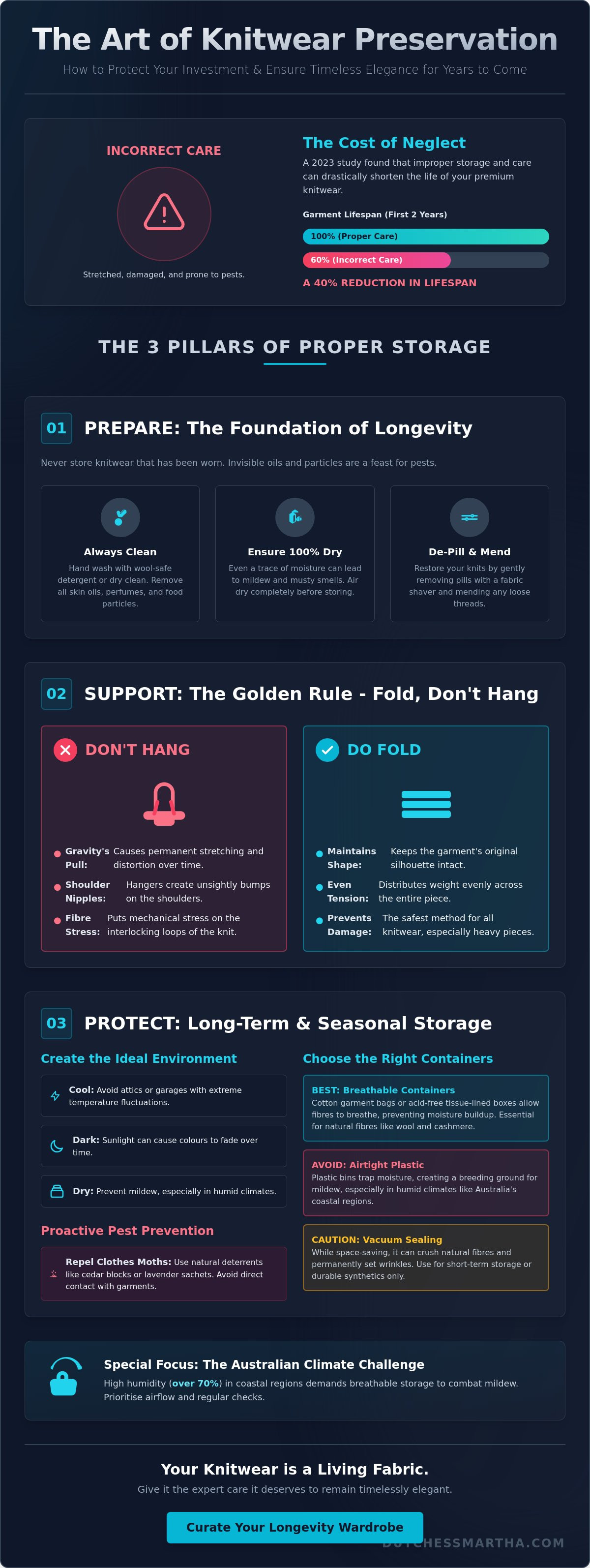
Imagine reaching for your favourite A$350 merino wool jumper on the first crisp morning of the season, only to find it stretched out of shape or dotted with tiny, heartbreaking moth holes. It is a common frustration for every woman building a curated wardrobe. We agree that your premium pieces should be a source of joy, not a cause for stress. When you invest in quality, you expect it to last. However, a 2023 textile care study found that incorrect maintenance can reduce the lifespan of wool garments by 40% within the first two years. Learning how to store knitwear properly is the essential final step in your style journey.
Mastering these simple preservation techniques ensures your cardigans and jumpers maintain that "new" feel for years to come. We will show you exactly how to protect your investment from pilling, pests, and the damaging effects of gravity. From seasonal rituals to daily habits, this guide covers everything you need to keep your wardrobe organised and your knitwear looking timelessly elegant. It's time to feel confident that your favourite winter essentials will be ready for you, season after season.
Key Takeaways
- Protect your investment by mastering the essential cleaning ritual that keeps pests away from your premium designer-inspired knits.
- Discover the "Golden Rule" of how to store knitwear properly to ensure your favourite jumpers and cardigans never lose their shape to gravity.
- Navigate seasonal transitions with confidence by learning the best methods for long-term storage, including the pros and cons of vacuum sealing your woollens.
- Elevate your wardrobe longevity by treating your knitwear as a "living" fabric that requires expert care to remain timelessly elegant and beautiful for years.
Beyond the Fold: Why Learning How to Store Knitwear Properly is Essential
Your knitwear collection represents more than just warmth; it is a curated investment in your personal style. Whether you have pieces from our latest arrivals or timeless designer-inspired staples, these garments are made of "living" fibres. Unlike structured woven items, knits react constantly to their environment and the pull of gravity. Learning how to store knitwear properly is the only way to protect the financial and emotional value of your premium wardrobe.
Many fashion lovers make the mistake of treating a heavy A$300 wool cardigan like a standard cotton shirt. They hang it on a wire hanger or toss it into a plastic tub without a second thought. Proper storage is a three pillar system. It requires consistent climate control, physical structural support, and proactive pest prevention. If you neglect pre-storage cleaning, you are essentially leaving an open invitation for fabric-damaging bacteria and insects to settle into your favourite layers.
The Science of the Stitch: Why Knits Stretch
To preserve your collection, you need a foundational understanding knitwear construction and how it differs from other textiles. Woven fabrics use a grid-like structure that offers stability. In contrast, knitwear consists of a series of interlocking loops. These loops provide that beautiful, comfortable stretch we love, but they also make the garment vulnerable to permanent distortion. When you hang a heavy knit, gravity pulls these loops downward, causing the piece to grow longer and narrower over time.
This mechanical stress often leads to "shoulder nipples," those unsightly bumps caused by the ends of a hanger. Once these fibres are stretched beyond their elastic limit, the damage is often permanent. Heavier yarn weights, such as chunky cable knits, are particularly at risk because their own weight works against them. Storing your knits flat is the best way to ensure the tension remains even across the entire garment.
The Australian Climate Factor
The Australian environment presents unique challenges for knitwear enthusiasts. In coastal regions like Sydney or Brisbane, high humidity levels can reach 70% or more during trans-seasonal months. This moisture gets trapped within natural fibres like wool and cashmere, creating a breeding ground for mildew. Choosing breathable storage solutions, such as cotton bags rather than airtight plastic, allows your knits to "breathe" while staying protected.
Pests are another local concern. The common clothes moth thrives in dark, undisturbed wardrobes across the country. These larvae feed on the proteins found in natural fibres, often targeting areas with trace amounts of perspiration or food spills. By mastering how to store knitwear properly in our specific climate, you ensure your elegant pieces remain as fresh and beautiful as the day you first wore them.
The Preparation Ritual: Cleaning and Mending Before Storage
Preparing your collection for the off-season is a curated ritual of garment restoration. It's the most critical step in learning how to store knitwear properly. You should never store knitwear that's been worn, even if the item appears spotless to the naked eye. Skin oils, lingering perfumes, and microscopic food particles are invisible magnets for pests like clothes moths. These proteins provide a feast that can ruin a premium cashmere blend in weeks.
Before items enter any airtight environment, they must be 100% dry. Even a trace of moisture can foster mildew or a musty scent that's difficult to remove. This preparation ensures your wardrobe remains fresh and ready for its next debut. Taking the time to clean your pieces now saves you from discovering heartbreaking damage when the temperature drops again.
Washing vs. Airing: When to Do Which
Not every garment requires a full soak. For delicate boho-chic blouses or light knits, spot cleaning often suffices to remove small marks without stressing the fibres. A gentle hand wash with a wool-safe detergent is the best way to refresh most seasonal pieces. This process maintains the natural elasticity of the yarn. For structured knits or heavy coats, professional dry cleaning is necessary to preserve the garment's silhouette. Once your pieces are clean, you can curate your seasonal wardrobe with confidence.
The Art of De-pilling
Pilling is the migration of short fibres to the surface. This natural occurrence happens most frequently in high-friction areas like the underarms and side seams. Treating these areas is a meditative act of restoration that makes an old favourite feel brand new.
- Use a wool comb for delicate cashmere and silk blends.
- Opt for a battery-operated fabric shaver on heavy wool or synthetic mixes.
- Always work on a flat, hard surface to avoid snagging the yarn.
- Focus on areas where your handbag rubs against your side.
Taking ten minutes to de-pill each piece ensures your collection looks premium for years to come. This attention to detail is the secret to mastering how to store knitwear properly while maintaining that boutique-fresh feel. By the time you finish this ritual, your knits will be in peak condition for their period of rest.
Folding vs. Hanging: Choosing the Right Method for Your Wardrobe
Gravity is the silent enemy of your favourite jumpers. While hanging a crisp linen shirt is standard practice, doing the same to a heavy woollen piece is a recipe for permanent stretching and unsightly "hanger bumps." Knowing how to store knitwear properly starts with one non-negotiable rule: if it’s a knit, it belongs in a fold. This simple habit preserves the garment's silhouette and keeps the delicate fibres from losing their natural elasticity over time.
There are very few exceptions to this rule. Extremely lightweight cardigans with a stable, tight weave can sometimes handle a wide, padded hanger. However, for 95% of your collection, flat storage is the only way to ensure longevity. Choosing between shelf and drawer storage often comes down to your personal dressing ritual. Shelves allow you to view your curated collection at a glance. This makes it effortless to grab a cosy layer to style over one of our Dresses for Every Occasion when the Australian evening air turns cool. Drawers, on the other hand, provide a sanctuary from dust and light, making them perfect for your most precious seasonal investments.
Mastering the Boutique Fold
To keep your wardrobe looking like a high-end boutique, use the "Rule of Thirds" fold. Lay your jumper face down on a clean surface. Fold the sleeves across the back, then fold each side into the centre so they meet. Finally, fold the bottom third up and the top third down. For premium cashmere or delicate mohair, place a sheet of acid-free tissue paper between the folds. This reduces friction and prevents the fibres from matting. When stacking, always place your heaviest cable knits at the bottom. Keep stacks to a maximum of four items to prevent the bottom layer from being crushed under the weight.
Storage Solutions for Loose Boho Weaves
Open-knit designs and crochet tops require a more specialised touch. These pieces are particularly susceptible to snagging on jewellery or even the internal hardware of your drawers. For these textured items, rolling is often superior to folding. Rolling the garment gently prevents hard creases and maintains the integrity of the loose weave. If your garment has sequins or beads, store it in a separate cotton muslin bag. This prevents the embellishments from catching on other items in your collection. Mastering how to store knitwear properly ensures your boho-inspired pieces remain a joyful part of your wardrobe for years to come.
Seasonal Transitions: Long-Term Storage for Winter and Summer
As the Australian sun begins to warm the coast, it's time to swap those heavy woollens for effortless boho clothing. Transitioning your wardrobe isn't just about making space; it's about protecting your investment. Knowing how to store knitwear properly during the off-season ensures your premium pieces remain in boutique condition for years. This seasonal rotation is the perfect time to audit your collection and ensure every piece is clean before it's tucked away.
Vacuum-sealed bags are a tempting solution for small apartments. They can reduce the volume of your knits by up to 75%, making them easy to hide away in tight spots. However, proceed with caution. Natural fibres like wool and cashmere need to maintain their loft. Keeping them tightly compressed for six months can result in permanent creases or flattened fibres that lose their insulating properties. If you use them, avoid removing 100% of the air. Leave a little cushion so the yarns don't snap under the pressure of the vacuum.
The golden rule for any storage space is that it must be dark, cool, and dry. UV light is a silent killer for delicate dyes, often causing unsightly fading on folded edges. Heat can make natural fibres brittle over time, leading to breakage. Most importantly, moisture is an invitation for mildew and musty odours. Choose a storage spot inside your home, like under the bed or at the top of a wardrobe, rather than a damp garage or a hot attic space.
Natural Pest Prevention
Forget the pungent, toxic smell of traditional mothballs. They're unnecessary and leave a chemical residue that's difficult to wash out. Instead, create a pest-proof sanctuary using cedar wood or lavender. These natural deterrents are highly effective at repelling silverfish and clothes moths. Refresh your cedar blocks every six months by lightly sanding them to release the protective oils. If you discover an active infestation, don't panic. Immediately isolate the affected garment in a sealed bag, wash all surrounding items at a minimum of 30 degrees Celsius, and thoroughly vacuum your storage area to remove any hidden larvae.
Airtight vs. Breathable Containers
Choosing the right vessel depends on your home's environment. Cotton storage bags are the premium choice because they allow air to circulate, preventing that "stale" wardrobe smell. If you're learning how to store knitwear properly in a high-humidity area, airtight plastic bins offer better protection against dampness. Always include a small silica gel packet in plastic bins to manage internal moisture levels. Use a clear labeling system so you can find your favourite jumper the moment the first cold snap hits next autumn.
Ready to elevate your seasonal style? Explore our latest curated collections at Dutchess Martha.
Curating Longevity: Building a Wardrobe with Dutchess Martha
At Dutchess Martha, we believe a fashionable life is built on a foundation of quality. Investing in premium pieces isn't just about luxury; it's about how you feel when you step out the door. When you learn how to store knitwear properly, you're doing more than just tidying up. You're preserving the confidence that comes with a perfectly maintained silhouette. Our founder, Tina Varthalis, curates every item with a singular goal: to make every woman feel her best. Fashion should be a source of joy. It shouldn't be a source of stress.
True elegance is found in the details of care. A well-maintained wardrobe allows you to focus on self-expression rather than replacement. By choosing quality over quantity, you create a collection that tells your story for years to come. This mindful approach to fashion ensures you always have the perfect piece ready for any occasion. It's about building a wardrobe that works for you, day after day.
The Sustainable Choice
Sustainability starts in your own closet. In Australia, the average person buys 27kg of new clothing every year. Statistics show that much of this ends up in landfill due to poor quality or a lack of maintenance. You can break this cycle by choosing high-end pieces and maintaining them with intention. Consider the "cost per wear" benefit. A premium wool jumper that lasts a decade offers far better value than a disposable alternative that loses its shape after two washes. Garment longevity starts with the storage ritual. By mastering how to store knitwear properly, you reduce waste and honor the craftsmanship of your clothes.
- Minimize Waste: Preserving your clothes keeps them out of Australian landfills.
- Maximize Value: Quality pieces have a lower cost per wear over time.
- Protect Fibres: Correct storage prevents irreversible damage from moths or stretching.
Elevate Your Wardrobe Today
Your style journey is always evolving. We invite you to explore our fresh new arrivals at our Bentleigh East boutique or browse our digital collection online. Summer dressing feels easy when you have a wardrobe filled with breathable, premium fabrics and timeless designs. We curate our selections to ensure you feel confident and beautiful every single day. Whether you're looking for a statement piece or a wardrobe staple, our boutique offers the expertise you need to shine.
Mastering the art of garment care is the first step toward a more sustainable and stylish life. Once you've secured your current collection, it's time to find your next favorite piece. We refresh our stock weekly to bring you the latest trends and timeless classics. Join the Dutchess Martha community today. Elevate your wardrobe, embrace your confidence, and discover the joy of a perfectly curated collection.
Invest in Your Style’s Future
Your knitwear collection represents an investment in your personal style and confidence. By mastering how to store knitwear properly, you ensure every premium piece remains as beautiful as the day you bought it. Remember to always clean and mend items before they go into storage to prevent long-term damage. Choosing to fold your heavy knits instead of hanging them will preserve their silhouette for years to come. These simple habits transform a seasonal wardrobe into a lasting legacy of elegance.
At Dutchess Martha, we believe every woman deserves to feel her best in clothes that last. Founder Tina Varthalis has hand-picked a collection that blends modern femininity with timeless quality. To keep your rotation exciting, we introduce fresh new arrivals weekly. You can enjoy Free Express Shipping Australia Wide on all orders over A$250. It's time to treat yourself to pieces that are worth the extra care.
Shop the Latest Curated Knitwear and Elevate Your Wardrobe
Stay stylish and keep your favorite knits looking flawless season after season.
Frequently Asked Questions
Is it better to hang or fold knitwear?
Folding is the best way to maintain the shape and integrity of your premium knitwear. Gravity pulls on the delicate fibers of a hanging garment, which leads to permanent stretching and unsightly bumps on the shoulders. To keep your collection looking curated and elegant, stack your jumpers on a shelf with the heaviest items at the bottom to prevent crushing.
How do I stop moths from eating my jumpers?
Protect your timeless pieces by using natural repellents like cedar blocks or lavender sachets throughout your wardrobe. Moths are attracted to the proteins in natural fibers like wool and cashmere, especially if they find traces of perfume or skin oils. Since 100 percent of moth larvae damage is preventable, always store your items in breathable cotton bags for an extra layer of security.
Can I use vacuum bags for cashmere and wool?
You should avoid using vacuum bags for delicate cashmere and wool items because they crush the natural fibers. These premium materials need air circulation to maintain their loft and softness over time. While vacuum sealing saves 50 percent of storage space, it can cause deep creases that are difficult to remove. Choose breathable storage boxes to ensure your wardrobe remains fashionable and fresh.
How do I get rid of pilling on my favourite cardigan?
Use a dedicated cashmere comb or an electric fabric shaver to gently remove pilling from your favourite cardigan. Pilling occurs when short fibers migrate to the surface and rub together during wear. Most high-quality knits will show some pilling after 3 to 5 wears. Gently gliding a shaver over the surface will restore that smooth, elegant finish you love without damaging the garment.
Should I wash knitwear before storing it for the summer?
Always wash your items before putting them away to ensure you know how to store knitwear properly for the long term. Even if a jumper looks clean, tiny particles of food or sweat can attract pests and cause yellowing over a 6 month storage period. Follow the care label carefully to keep your curated collection in pristine condition. This simple step ensures your pieces stay beautiful for years.
How do I fix a jumper that has stretched out on a hanger?
You can often fix a stretched jumper by hand washing it and laying it flat to dry in its original shape. This process, known as blocking, allows the wet fibers to reset as they dry. Focus on the neckline and shoulders where the most distortion occurs. It's a reliable 1 step solution to restore the fit of your most fashionable pieces after they've been stored incorrectly.
What is the best way to store delicate crochet or lace knits?
Wrap your delicate crochet or lace knits in acid-free tissue paper and store them flat in a sturdy box. This prevents the intricate patterns from snagging on other items or buttons in your wardrobe. Curation is about protection, and these 2 simple materials prevent the fibers from breaking. Keeping your lace pieces separate ensures they remain a timeless part of your style journey for every season.
How often should I refresh my cedar or lavender moth deterrents?
Refresh your cedar blocks every 4 months by lightly sanding the surface to release the protective oils. Lavender sachets should be squeezed monthly and replaced every 6 months to maintain their potency. Since the scent is what keeps the moths away, a quick 5 minute maintenance routine twice a year is essential. This small effort protects your premium investment and keeps your wardrobe smelling fresh and inviting.