

Your favorite linen pieces are an investment in timeless style, but they shouldn't come with a side of laundry day anxiety. Many women find that nearly 40 percent of their wardrobe goes unworn simply because they are unsure how to care for linen clothing without causing shrinkage or damage. It's completely normal to feel frustrated by stubborn wrinkles or the fear that a premium white dress will lose its brilliance over time. You want your clothes to feel soft, look curated, and last for more than just one season.
We are here to help you master the art of laundering and styling your linen with total confidence. This guide provides a clear roadmap for washing, drying, and maintaining your garments so they remain a staple of your boho-chic aesthetic for years. We'll walk you through the best machine settings, how to prevent yellowing, and the secret to making those natural crinkles look intentional and high-end. Get ready to elevate your wardrobe care routine and ensure your most loved pieces stay as elegant as the day you first wore them.
Key Takeaways
- Learn why lukewarm water and gentle cycles are essential to preserving the premium fit and feel of your favorite pieces.
- Protect your investment by mastering the best air-drying techniques to avoid sun-bleaching and the damage caused by tumble dryers.
- Discover how to care for linen clothing using natural spot-treatment secrets that remove stains without compromising the delicate weave.
- Elevate your effortless elegance by learning to style and preserve your linen as a timeless, sustainable wardrobe staple.
- Understand the unique heritage of flax-based fibres to keep your curated collection breathable and beautiful through every Australian summer.
Understanding the Nature of Linen: Why Your Wardrobe Needs Special Care
Welcome to the world of timeless style. At Dutchess Martha, we believe that every woman deserves to feel confident and beautiful, and nothing achieves that quite like the effortless drape of high-quality linen. Understanding the Nature of Linen starts with its heritage. This premium fabric is derived from the flax plant, a resilient crop that has been cultivated for over 30,000 years. It is one of the oldest and most luxurious textiles in human history, prized by ancient civilizations for its purity and strength.
For those of us living in Australia, linen isn't just a style choice; it's a seasonal necessity. When the Melbourne summer heat hits 35 degrees Celsius, the moisture-wicking properties of flax become your best friend. Linen can absorb up to 20% of its own weight in moisture before it even begins to feel damp. This keeps you cool, dry, and elegant during those humid garden parties or coastal escapes. Learning how to care for linen clothing is the first step toward building a wardrobe that works with you, not against you.
Many women worry that linen is too fragile for daily wear because of its tendency to crease. This is a common misconception. In reality, linen is incredibly hardy. It's an evolving fabric that actually improves with age. While synthetic fibres degrade and pill over time, proper washing causes the pectin in flax fibres to break down slightly, making the garment softer and more lustrous with every wear. Once you master how to care for linen clothing, you'll see why it's the ultimate investment in your personal style journey.
The Science of Flax Fibres
The cellular structure of the flax plant is naturally shaped like a hollow tube. This allows for superior airflow, acting like a built-in cooling system for your skin. Because the fibres are thicker than cotton, the weave remains porous, ensuring heat isn't trapped against your body. This breathability is why linen remains the gold standard for summer dressing.
Linen is also naturally hypoallergenic and antibacterial. This makes it the perfect choice for women with sensitive skin or those who struggle with irritation during hot weather. It resists static and repels dirt, staying cleaner for longer than most natural alternatives. Linen possesses a tensile strength approximately 30% higher than cotton, ensuring your favorite pieces last for decades rather than seasons.
Linen vs. Other Natural Fibres
While cotton is a staple in many wardrobes, linen offers distinct advantages in terms of durability and environmental impact. Flax requires significantly less water and fewer pesticides to grow than conventional cotton, making it a more sustainable choice for the conscious shopper. It dries much faster than cotton, which helps prevent the growth of bacteria and mildew in humid climates.
Linen is the undisputed cornerstone of the boho clothing aesthetic, offering that relaxed, chic vibe that defines modern femininity. You can recognize high-quality linen by its weight and the presence of "slubs." These tiny, natural lumps in the weave aren't defects; they're the hallmark of authentic, premium flax fibres. A dense, even weave with consistent slubs indicates a garment that will retain its shape and elegance for years to come.
The Gentle Wash: How to Launder Linen Without Damage
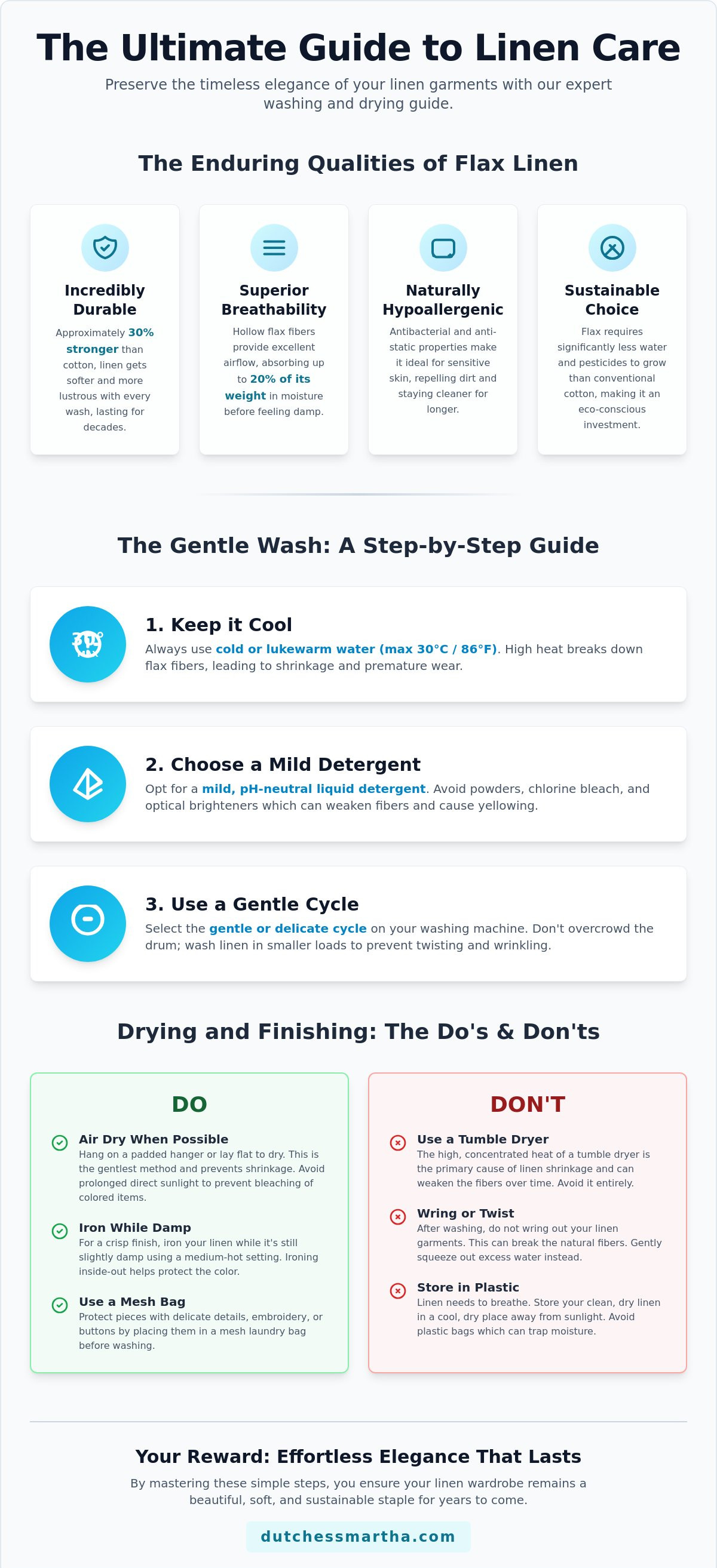
Mastering how to care for linen clothing starts with one non-negotiable rule: keep it cool. High temperatures are the enemy of natural flax fibers. To maintain the structural integrity of your premium pieces, always use cold or lukewarm water, ideally capped at 30 degrees Celsius. Heat breaks down the natural pectins that bind linen fibers together, leading to premature wear and that dreaded shrinkage. When you treat your garments with this level of respect, they reward you with a softer, more luxurious feel over time.
Choosing the right detergent is equally vital for your curated wardrobe. Avoid heavy-duty powders or anything containing optical brighteners and chlorine bleach. These harsh chemicals strip the color and weaken the weave. Instead, opt for a mild, liquid pH-neutral detergent. If you're washing pieces with intricate details or delicate accessories, always place them inside a mesh laundry bag. This simple step prevents snagging and ensures your favorite items remain in boutique condition.
The Machine Wash Checklist
Most modern linen is sturdy enough for the machine, provided you follow a strict protocol. Always select the 'Delicate' or 'Hand Wash' cycle. These settings use a slower agitation rate, which minimizes friction and prevents the surface from "fuzzing." Never fill your machine to capacity. Linen is highly absorbent and becomes heavy when wet; it needs 50% more space than cotton to move freely. This extra room ensures a thorough rinse and prevents the deep, set-in wrinkles caused by crushing. Always separate your whites from deep pigments to avoid dye transfer during the cycle.
Hand Washing for Premium Pieces
For lightweight blouses or items with hand-finished hems, a manual wash is the safest choice. Fill a clean basin with lukewarm water and a small amount of detergent. Submerge the garment and gently agitate the water with your hands for two to three minutes. Avoid scrubbing or wringing the fabric, as this can permanently distort the weave. It's best to rinse the piece at least twice in fresh, cool water until every trace of soap residue is gone. For heavier linens, a 10-minute soak helps lift oils without damaging the fibers. Once finished, you can explore our latest arrivals to find new timeless styles that pair perfectly with your well-maintained collection.
Drying and De-Wrinkling: Navigating the 'Crinkle' vs. 'Crisp' Dilemma
Linen thrives when treated with a gentle touch. While the convenience of a tumble dryer is tempting, high heat is the primary enemy of natural flax fibers. Constant tumbling can cause up to 5% shrinkage and weaken the weave over time. If you must use a dryer, choose a cool, delicate cycle for no more than 10 minutes to relax the fabric, then finish by air drying. This approach protects the integrity of your premium pieces.
The Australian sun is famously intense. Drying your linen in direct sunlight can lead to unwanted bleaching or yellowing of white garments. Always hang your pieces in a shaded, breezy spot. This preserves the vibrant dyes and high-end feel of your wardrobe. It's a simple step that ensures your clothes stay looking new for years rather than months.
Master the 'Snap and Hang' method to save yourself 20 minutes at the ironing board. Give each wet garment a firm, vigorous snap before hanging it on a wide, padded hanger. This action smooths out major folds before they set. Sometimes, the best way how to care for linen clothing is to embrace its natural state. A few soft crinkles add character and a relaxed, boho aesthetic that feels modern and authentic. Effortless elegance often means letting the fabric's natural texture shine.
Ironing for a Polished Look
Achieving a crisp, boutique finish requires the 'Damp Ironing' secret. Iron your linen while it's roughly 10% damp to the touch. This allows the heat to press the fibers flat without scorching them. Use a medium-to-high heat setting and a press cloth to prevent shiny patches on the fabric surface. You should iron on the reverse side for dark colours to prevent the iron from creating visible streaks or fading the rich pigments.
Steaming: The Modern Stylist's Best Friend
Steaming is a faster, safer alternative for delicate dresses. It relaxes the flax fibers without the direct, crushing pressure of a heavy iron. You can refresh a garment between washes by steaming it for 2 minutes to remove light wear-creases and odors. For stubborn travel creases, hold the steamer 2 centimeters away from the fabric and pull the hem taut. This technique is a game-changer for maintaining a fashionable look while on the move.
Stain Removal and Long-Term Preservation for Premium Linen
Life happens, even when you're dressed in your finest. Knowing how to care for linen clothing starts with the first 60 seconds of a spill. If you drop red wine or coffee, act fast. Blot the liquid with a clean, white cloth. Never rub the fabric. Rubbing pushes the pigment deeper into the flax fibers, making it nearly impossible to lift. For a natural approach, reach for white vinegar. With a pH level of approximately 2.5, white vinegar effectively breaks down alkaline stains without the corrosive impact of harsh chemicals.
Avoid chlorine bleach at all costs. It's too aggressive for natural textiles and will turn your crisp whites into a dull yellow. Instead, create a paste using baking soda and water for spot treatments. This gentle abrasive lifts debris while keeping the weave intact. High-quality linen is an investment. Treating it with care ensures your pieces remain a staple in your wardrobe for up to 20 years.
Dealing with Stubborn Stains
Oil-based stains, like those from a stray drop of salad dressing, require a different strategy. If you notice a mark on your favorite linen tops, apply cornstarch or talcum powder immediately. Let it sit for 15 minutes to soak up the grease before brushing it away. If a stain persists after home treatment, it's time for professional help. A 2023 industry report from the Drycleaning & Laundry Institute suggests that professional wet cleaning can extend the life of premium garments by 30% compared to aggressive home scrubbing. Always point out the specific stain to your cleaner so they can use the correct solvent.
Seasonal Storage and Pest Protection
In the Australian climate, humidity and pests are your primary concerns for long-term preservation. When the season shifts, never store your linen in plastic tubs or dry-cleaning bags. Plastic traps moisture, leading to mildew and the "brittleness" that ruins fine flax. Use breathable cotton bags instead. This allows air to circulate, preventing the yellowing that occurs when fibers can't breathe. How to care for linen clothing over winter also involves smart pest deterrents. Skip the mothballs; use cedar blocks or dried lavender sachets to repel silverfish and moths naturally.
- Fold heavy items: Thick linen trousers or heavy dresses should be folded to prevent the weight from stretching the shoulders.
- Hang lightweight pieces: Use padded hangers for light shirts to maintain their structured silhouette.
- Avoid wire hangers: These create "puckers" in the fabric that are difficult to steam out.
A small tear or a loose button isn't the end of your garment's life. Premium linen is designed to be mended. A quick stitch at a local tailor preserves the timelessness of your piece and supports a sustainable, slow-fashion lifestyle. Ready to add more enduring style to your rotation?
Curating Your Linen Collection: Styling and Care for the Modern Woman
Building a "forever" wardrobe starts with choosing materials that stand the test of time. Linen is the ultimate investment in sustainable style, lasting up to 12 times longer than standard cotton when treated with respect. At Dutchess Martha, our founder Tina Varthalis curates every piece with a specific mission: to make every woman feel her best through effortless, premium fashion. We believe that style should be a source of joy, not a cause for stress. It's about finding pieces that resonate with your personal story while offering unmatched comfort.
The Dutchess Martha philosophy centers on the idea that high-end, designer-inspired looks should be accessible. By choosing quality linen, you're opting for a fabric that evolves with you. It becomes softer and more characterful with every wash. Understanding how to care for linen clothing is the final step in mastering this curated lifestyle. It ensures your favorite boho-chic staples remain "fresh off the rack" for years to come, preserving the integrity of the fibers and the vibrancy of the dyes.
Styling the Lived-In Look
Linen's beauty lies in its relaxed elegance. For a weekend outing, lean into the natural texture by pairing a linen shirt with distressed denim. This contrast creates a sophisticated yet grounded aesthetic. You can easily transition your linen trousers from an office-appropriate setting to beach-chic by swapping a structured silk cami for a simple bikini top and an oversized straw hat. This versatility is why linen remains a staple for the modern, busy woman.
Accessorizing is where your personal style truly shines. To complement the fabric's natural lustre, consider these pairings:
- Gold Jewelry: The warm tones of gold elevate the earthy, organic feel of flax fibers.
- Leather Accents: A structured leather handbag or a slim belt adds a necessary "toughness" to soft, flowy linen.
- Natural Textures: Wood or bone accessories reinforce the sustainable vibe of your outfit.
Building Your Wardrobe with Dutchess Martha
We believe every woman deserves to feel confident and beautiful. That's why we introduce fresh new arrivals weekly, ensuring your wardrobe stays dynamic and fashionable. Our collections are hand-picked to offer you the latest trends with a timeless twist. Whether you're looking for a statement dress for a summer wedding or a versatile staple for daily wear, our curated selections provide the perfect foundation for your style journey.
Elevate your wardrobe today and discover how effortless elegance feels. Shop the latest linen arrivals at Dutchess Martha and start building a collection that reflects your inner confidence. When you know how to care for linen clothing, your investment in quality fashion will reward you with a lifetime of beautiful, stylish moments.
Embrace a Lifetime of Effortless Linen Style
Linen is a timeless investment that rewards you with more softness and character every time you wear it. Mastering how to care for linen clothing ensures your premium pieces maintain their shape and breathability through every season. Focus on gentle laundering and avoid high heat during the drying process to protect the natural flax fibers. These small habits turn a simple garment into a long-term wardrobe essential that feels better with age.
At Dutchess Martha, we believe every woman deserves to feel her most confident. Our founder, Tina Varthalis, curates each piece to bring a sense of modern femininity and joy to your daily life. We introduce fresh new arrivals every 7 days to keep your look current and exciting. Enjoy the convenience of our service with free express shipping across Australia on all orders over $250.
Elevate your style with our curated linen collection at Dutchess Martha
Your journey toward a more elegant and sustainable wardrobe starts with these simple care steps. You've got the knowledge to make your linen last; now it's time to wear it with confidence.
Frequently Asked Questions
Can I put linen clothing in the dryer?
You should avoid putting your linen pieces in a high-heat dryer because it can make the natural fibers brittle and cause significant shrinkage. Instead, tumble dry on a low setting for exactly five minutes to shake out the heaviest wrinkles. Immediately hang the garment or lay it flat on a white towel to finish air drying. This method preserves the premium quality of the fabric for years.
How do I stop my linen clothes from shrinking?
The most effective way to prevent shrinkage is to wash your garments in cold or lukewarm water, specifically keeping the temperature under 30 degrees Celsius. Hot water causes the flax fibers to contract and lose their shape. To master how to care for linen clothing, always skip the high-heat drying cycle and let your pieces air dry in the shade to maintain their original silhouette.
Is it better to wash linen by hand or in a machine?
Both methods work beautifully for modern wardrobes, but a washing machine is perfectly safe if you use a gentle cycle. Ensure the machine is only 50% full so your clothes have plenty of room to move without twisting. If your piece features delicate embroidery or hand-stitched details, a quick 10-minute hand wash in a clean basin is the safest way to protect the craftsmanship.
Do I really need to iron my linen dresses?
You don't need to iron your linen if you love the soft, lived-in look that defines effortless elegance. If you prefer a crisp finish, iron the fabric while it's still 10% damp using a medium-hot steam setting. Most of our stylists find that the natural wrinkles soften beautifully after just 20 minutes of wear as the fabric reacts to your natural body heat.
What is the best way to remove stains from white linen?
Treat any spills immediately by dabbing the area with a mixture of club soda and baking soda. Never rub the stain, as this can damage the weave and push the pigment deeper into the flax fibers. For stubborn marks, soak the garment in cool water with a teaspoon of mild detergent for 30 minutes before washing. This gentle approach keeps your whites looking bright and fresh.
How should I store my linen clothes between seasons?
Store your linen in a cool, dry space using breathable cotton garment bags instead of plastic containers. Plastic traps moisture and can cause yellowing or mildew over a 6-month storage period. Ensure your storage area stays at a consistent temperature below 25 degrees Celsius. Fold your items neatly rather than hanging them on thin wire hangers to prevent the shoulders from stretching out of shape.
Why does my linen feel stiff after air drying?
Linen often feels stiff after air drying because the flax fibers harden as water evaporates. This is a normal characteristic of the textile and doesn't mean the fabric is damaged. To restore its signature softness, simply wear the garment for 15 minutes or tumble it on a "no heat" setting for 10 minutes. Understanding how to care for linen clothing helps you maintain that luxurious, supple feel after every wash.
Can I use bleach on my white linen shirts?
You should never use chlorine bleach on linen because it weakens the fibers and causes permanent yellowing. Research shows that chlorine can reduce the fabric strength by 20% after just a few applications. Use an oxygen-based whitener or a squeeze of lemon juice in the rinse cycle for a natural brightening effect. These alternatives keep your white shirts crisp and beautiful without damaging the timeless material.