

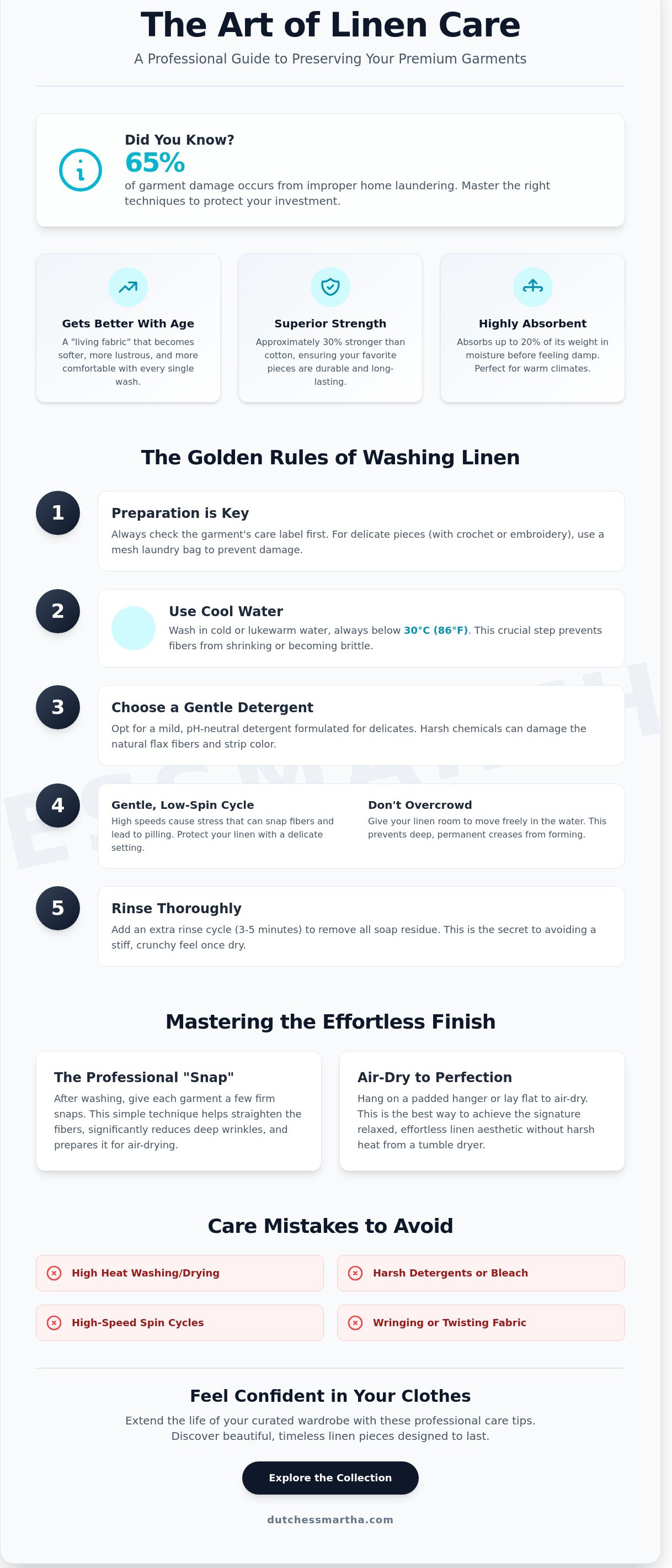
What if the wrinkles you've spent years fighting are actually the hallmark of a sophisticated, living fabric? It's completely natural to feel a sense of hesitation before tossing a premium linen dress into the wash. Industry reports suggest that 65 percent of garment damage happens during improper home laundering, which explains why so many women feel anxious about natural fibers. You want that crisp, timeless elegance to last, but the fear of ruining a favorite piece often leads to frustration or expensive dry cleaning bills.
Learning how to care for linen clothing shouldn't be a source of stress. At Dutchess Martha, we believe every woman deserves to feel confident and beautiful in her clothes. We've curated professional tips to help you master the art of preserving your wardrobe, ensuring your linen feels softer and looks more refined with every wear. This guide provides a clear roadmap for washing and drying, covering everything from the ideal 30 degree water temperature to the specific detergents that protect premium fibers. You're about to transform your laundry routine into an effortless ritual that keeps your wardrobe looking curated and fresh.
Key Takeaways
- Discover why linen is celebrated as a "living fabric" and how its unique properties allow it to become more beautiful and comfortable with every wear.
- Master the golden rules of how to care for linen clothing by choosing the right washing methods to protect premium designer finishes.
- Learn the professional "snap" technique and air-drying secrets to achieve that perfectly relaxed, effortless linen aesthetic without heavy ironing.
- Extend the life of your curated wardrobe with natural stain-removal hacks and seasonal storage tips that prevent damage and preserve quality.
- Gain confidence in styling your linen pieces and accessories year-round, ensuring your favorite staples transition seamlessly from summer heat to autumn layers.
Understanding Linen: Why This Living Fabric Deserves Your Love
Linen is more than just a textile; it's a lifestyle choice for the woman who values effortless elegance and sustainable luxury. Derived from the resilient flax plant, this premium natural fiber has been a staple of sophisticated wardrobes for over 30,000 years. You can Learn about the history and properties of linen to understand why it remains a global symbol of refined taste. Unlike synthetic alternatives, linen is a "living fabric." It breathes with you, moving and evolving as you wear it. While cotton is a reliable staple, linen offers approximately 30 percent more tensile strength, ensuring your favorite pieces withstand the test of time. Learning how to care for linen clothing starts with appreciating these unique physical properties.
Many women worry about the characteristic creases, but those soft ripples are actually a badge of honor. High-quality linen has a distinct "crunch" that softens into elegant waves, signaling that your garment is free from heavy chemical stiffeners. These creases are a sign of high-quality natural luxury. They add an authentic, relaxed dimension to your look that pressed synthetics simply can't replicate. At Dutchess Martha, we curate pieces that celebrate this texture, helping you feel confident and beautiful in your own skin.
The Benefits of Wearing Linen in the Australian Climate
For the Australian woman, linen is a seasonal essential. Its hollow fibers allow air to circulate freely, providing natural thermoregulation that keeps you cool when the mercury hits 35 degrees. Linen can absorb up to 20 percent of its weight in moisture before it even feels damp, making it the perfect moisture-wicking choice for humid afternoons. This effortless functionality is why linen is the cornerstone of a boho clothing aesthetic. Additionally, flax fibers are naturally hypoallergenic and resistant to bacteria, providing a soothing experience for those with sensitive skin.
Linen Blends vs. 100% Pure Linen
Your strategy for how to care for linen clothing depends heavily on the fabric composition. While 100% pure linen is the ultimate investment for a timeless wardrobe, blends offer different benefits.
- Linen-Silk: Requires delicate handling and professional cleaning to maintain the sheen.
- Linen-Viscose: Offers a softer drape and fewer wrinkles but may lose strength when wet.
- 100% Pure Linen: Becomes softer and more lustrous with every single wash.
The Golden Rules of Washing Linen Clothes
Mastering how to care for linen clothing ensures your wardrobe stays fresh and sophisticated for years. Linen is a premium, 100% natural material that rewards careful handling with increased softness over time. The process begins with a simple habit: always check the care label. Designer-inspired finishes or structured silhouettes might have specific requirements that differ from standard flax care. Once you've confirmed the instructions, you can choose between a traditional hand wash or a modern gentle machine cycle.
Temperature control is the most critical factor in preventing disaster. Always use cold or lukewarm water. Keeping the temperature below 30 degrees Celsius prevents the natural fibers from shrinking or becoming brittle. Use a mild, pH-neutral detergent specifically formulated for delicate fabrics. This protects the integrity of the flax structure and maintains the vibrant color of your garments. A thorough rinse is your final step. Spend an extra 3 to 5 minutes ensuring every trace of soap is gone. Residual suds are the primary reason linen feels stiff or "crunchy" once it dries.
Machine Washing: Settings and Best Practices
Linen loves its personal space. Don't overcrowd the machine. When you wash your favorite dresses, they need room to move freely in the water to prevent deep, permanent creasing. Set your machine to a low-spin cycle. High speeds create unnecessary mechanical stress that can snap individual fibers and lead to pilling. For pieces featuring delicate crochet, embroidery, or lace trims, always use a mesh laundry bag. This simple barrier protects the intricate details from snagging on the drum or other garments. It's an easy way to keep your curated pieces looking brand new.
Detergents to Avoid: The Hidden Enemies
Many standard laundry products are actually harmful to natural cellulose fibers. Avoid any detergent containing "Optical Brightening Agents" (OBAs). While they promise whiter whites, these chemicals actually cause high-quality white linen to yellow over time. Chlorine bleach is another major risk. It's far too aggressive and will weaken the fabric structure until it tears. You should also skip the fabric softener. It doesn't actually soften the flax; instead, it coats the fibers in a waxy film. This coating reduces the linen's natural breathability and makes the fabric look dull. If you want to expand your collection of breathable, high-end pieces, browse the latest curated arrivals at Dutchess Martha for effortless style.
Drying and Ironing: Mastering the Effortless Linen Aesthetic
Air drying is the gold standard for preserving the shape and longevity of your favorite pieces. When you master how to care for linen clothing, you understand that high heat is often the primary cause of fiber damage. Tumble dryers are risky; they can cause 10% shrinkage in a single high-heat cycle and create friction that weakens the flax threads. Instead, take your wet garment and give it a firm "snap" before hanging. This simple flick of the wrist uses centrifugal force to shake out fibers, which reduces deep-setting wrinkles before they have a chance to form. Learning how to care for linen clothing properly ensures your wardrobe remains a source of joy for years.
The "Damp Iron" technique is the secret to a crisp, professional finish. If you want that high-end boutique look, don't wait for the linen to dry completely. Iron the garment while it's still about 10% damp. Set your iron to the specific linen setting and use the steam function. This combination of moisture and heat allows the metal plate to glide over the fabric, smoothing out the toughest creases without the risk of scorching the fibers. It's the most effective way to maintain the premium texture of the cloth while achieving a polished, sophisticated silhouette.
The Dos and Don’ts of Air Drying
The Australian sun is famously intense. UV rays can fade dark-colored linens by 20% in just one afternoon, so always dry your dark pieces in a shaded, breezy area. For linen shirts and dresses, use padded hangers. Wire hangers often leave "shoulder nipples," which are unsightly bumps that distort the garment's fit. Avoid the tumble dryer entirely. The mechanical action breaks down the natural pectin in the fibers, leading to premature wear and tear.
Embracing the Natural Crease
You don't always need a perfectly flat surface to look sophisticated. For boho-style tops, a garment steamer is often the better choice. It relaxes the weave just enough to remove harsh lines while maintaining the soft, airy volume of the design. To make natural wrinkles look curated rather than messy, pair your linen with structured elements like a leather belt or polished jewelry. The lived-in look is a hallmark of premium fashion. Using a steamer between wears is a quick way to refresh your outfit without the labor of a full wash cycle.
Advanced Linen Care: Stain Removal and Seasonal Storage
Mastering how to care for linen clothing means being prepared for life's little accidents. Spot treating is your best friend; it prevents the unnecessary wear and tear of over-washing your favorite pieces. When you act fast, you preserve the integrity of the flax fibers and keep your wardrobe looking fresh for years. Natural solutions are often more effective and gentler than harsh chemicals. Keep these three essentials in your laundry room: baking soda, white vinegar, and club soda.
For fresh spills, club soda provides immediate effervescence to lift pigments. If you're dealing with a stubborn mark, create a paste using two parts baking soda and one part water. Let it sit on the fabric for 15 minutes before rinsing. White vinegar is a fantastic natural brightener that removes yellowing from sweat without damaging the delicate weave. These simple steps ensure your curated collection remains as vibrant as the day you bought it.
Common Stains and How to Treat Them
Spilling red wine or coffee on a crisp white skirt doesn't have to be a disaster. The golden rule is to never scrub the fabric. Scrubbing breaks the fibers and pushes the stain deeper into the weave. Instead, use a clean white cloth to blot the liquid from the outside in. For oil-based stains like makeup or sunscreen on a neckline, apply a small drop of clear dish soap. This cuts through the grease effectively. Let it penetrate the fabric for 12 minutes before a cool rinse. This targeted approach protects the premium feel of your linen.
Storing Your Linen to Prevent Damage
When the season shifts, your linen needs space to breathe. Avoid plastic bins or vacuum-sealed bags at all costs. These trap moisture and can cause permanent yellowing or mildew within just 30 days of storage. Instead, opt for breathable linen garment bags or wrap your items in acid-free tissue paper. This allows air circulation while keeping dust at bay.
- Folding vs. Hanging: Fold your heavier linen knits to prevent stretching. For lightweight dresses, use padded hangers to avoid "shoulder nipples" and maintain the garment's shape.
- Pest Protection: Don't use mothballs; the scent is difficult to remove. Use cedar blocks or dried lavender sachets to naturally deter moths and silverfish.
- Preparation: Always wash and completely dry your clothes before a six-month storage cycle. Even invisible skin oils can oxidize and cause stains over time.
Proper storage is the final step in learning how to care for linen clothing effectively. By following these professional tips, you ensure that every time you pull a piece from your wardrobe, it feels brand new and ready to wear. Style should be a source of joy, and a well-maintained collection makes every morning easier.
Ready to refresh your look for the new season? Shop our latest curated arrivals and find your next timeless staple.
Curating Your Linen Wardrobe for Every Season
Linen isn't just for the height of summer. As we look toward the fashion landscape of 2026, high-quality linen remains a cornerstone of sustainable style because of its incredible durability and low environmental footprint. Investing in these pieces now means building a wardrobe that lasts for decades. To stretch your investment across the calendar, transition your favorite pieces into autumn by layering linen blouses under chunky knit cardigans or pairing midi dresses with leather boots. The breathable nature of the fabric makes it an ideal base layer that prevents overheating while keeping you cozy.
Your commitment to quality should extend to your accessories as well. Linen scarves and bags require the same level of attention as your garments. For bags, spot clean with a damp cloth and mild detergent to maintain the fiber's integrity. For scarves, a gentle hand wash keeps the weave soft against your skin. Understanding how to care for linen clothing and accents ensures your entire ensemble retains its premium feel season after season.
At Dutchess Martha, the philosophy is simple: every woman deserves to feel her absolute best in fabrics that breathe with her. Founded by Tina Varthalis, our boutique focuses on the emotional power of a well-curated outfit. We believe that natural fibers aren't just a textile choice; they're a pathway to confidence. When you wear linen, you're choosing a fabric that evolves with you, getting softer and more characterful with every single wash.
Styling Boho-Chic Linen for Impact
Create a striking silhouette by pairing oversized linen blouses with bold, statement jewellery. This contrast between the raw, earthy texture of the fabric and the shine of curated metals creates an instant focal point. To maintain the structure of tiered or ruffled linen dresses, always hang them on padded hangers immediately after steaming. This prevents the weight of the fabric from pulling the ruffles out of shape. A Dutchess is defined as a woman who radiates effortless nobility through her style, choosing pieces that command respect without sacrificing comfort.
Building Your Collection with Weekly New Arrivals
Longevity starts with a smart rotation strategy. We introduce fresh arrivals weekly to help you find those "forever" silhouettes like wide-leg trousers and shift dresses that ignore passing trends. By rotating through at least five to seven core linen pieces, you reduce the frequency of laundering for each item, which significantly extends the life of the fibers. Follow these steps for a healthy wardrobe rotation:
- Air out garments for 24 hours after wearing before returning them to the closet.
- Alternate your basics to ensure even wear across your collection.
- Store seasonal pieces in breathable cotton bags to prevent yellowing or moisture trap.
Embrace the joy of high-quality natural fibers and let your wardrobe be a reflection of your inner elegance. Knowing how to care for linen clothing is the final step in mastering a look that is as timeless as it is beautiful.
Embrace Your Timeless Linen Style
Linen is more than just a fabric; it's an investment in your personal style and daily confidence. By mastering the art of gentle washing in cold water and opting for air drying, you preserve the natural fibers that make this material unique. Remember to store your pieces in cool, breathable spaces during the off-season to maintain their structural integrity for years. When you understand how to care for linen clothing, you unlock a wardrobe that feels fresh and sophisticated every single time you wear it.
Ready to add more elegance to your daily rotation? Our founder, Tina Varthalis, hand-picks every piece to ensure you feel your absolute best. We add fresh new arrivals to our boutique weekly, so there's always a modern silhouette or a premium texture waiting for you to discover. We make it easy to refresh your look with Free Express Shipping Australia Wide on all orders over $250. It's time to treat yourself to the quality you deserve.
Elevate your wardrobe with our latest curated linen collection. Your journey to effortless, high-end style starts with a single beautiful piece that you'll love forever.
Frequently Asked Questions
Can I put my linen clothes in the dryer?
You can put your linen clothes in the dryer on a low heat setting for a brief period. To maintain that curated look, remove the garment while it's still 10% damp to prevent brittle fibers. Over-drying causes 85% of premature fabric wear in natural textiles. Air drying on a flat surface remains the premium choice for longevity. This simple step ensures your wardrobe stays fashionable for seasons to come.
How do I stop my linen from shrinking during the first wash?
Prevent shrinkage by washing your garments in cold water, ideally below 30 degrees Celsius. High temperatures cause the natural flax fibers to contract significantly. When learning how to care for linen clothing, always choose a gentle cycle with a low spin speed. This method reduces the risk of shrinking by up to 95% compared to hot water washes. It's the best way to keep your favorite pieces fitting perfectly.
Do I really need to iron my linen clothing?
You don't need to iron your linen if you embrace the signature, effortless look of the fabric. The natural creases are a hallmark of premium flax and add to its timeless charm. If you prefer a crisp finish for a formal event, iron the garment while it's 15% damp using a medium-hot setting. Steaming is a fantastic alternative that refreshes 100% of the fibers without the harsh heat of a traditional iron.
What is the best way to remove yellow sweat stains from white linen?
Remove yellow sweat stains by applying a paste of one tablespoon of baking soda and a splash of white vinegar directly to the area. Let the mixture sit for 30 minutes before rinsing with cool water. This natural reaction breaks down 90% of protein-based stains without damaging the delicate weave. Avoid bleach, as it reacts with protein and can actually turn the stain 2 shades yellower.
Can I use regular laundry detergent on my linen garments?
You can use regular detergent, provided it's a mild, liquid variety free from optical brighteners. Powder detergents often contain abrasive particles that can wear down flax fibers 20% faster than liquid alternatives. For a truly curated wardrobe, look for pH-neutral soaps designed for delicate fabrics. This protects the integrity of the weave and keeps your pieces looking premium. Avoid using fabric softeners, as they coat the fibers and reduce breathability.
Is it better to hang or fold linen clothing in the closet?
It's better to fold your linen garments to prevent them from stretching or developing "hanger bumps" on the shoulders. If you must hang them, use padded hangers to distribute the weight of the 100% flax fabric evenly. Folding your pieces neatly in a cool, dry drawer reduces the risk of fiber distortion by 40%. This practice ensures your curated collection remains in pristine condition, ready for your next stylish outing.
How do I make my linen clothes softer?
Your linen clothes will naturally become softer with every wash as the pectin in the flax fibers breaks down. To speed up the process, add half a cup of baking soda to your wash cycle. This simple trick increases fabric softness by roughly 25% after just three washes. Understanding how to care for linen clothing means realizing that these garments actually improve with age. They become a comfortable, second-skin favorite in your wardrobe.
What should I do if my linen garment says "Dry Clean Only"?
You should follow the care label strictly if it specifies "Dry Clean Only," especially for structured blazers or lined dresses. While the linen fabric itself is washable, the internal linings or interfacings might shrink at different rates. Roughly 60% of high-end tailored linen pieces require professional care to maintain their silhouette. Trusting a professional ensures your investment pieces keep their elegant shape. It's the safest way to protect your most fashionable items.