

A fuller wardrobe isn’t always a more useful one. To learn how to stop impulse buying clothes, pause before checkout, check whether you already own something similar and ask whether the piece suits the life and body you have now. Waiting 24 hours can help separate a genuine need from a passing urge.
A sale, a quiet afternoon or the thought of a future occasion can make clothes shopping tempting. You don’t have to stop enjoying fashion. Instead, make each choice more intentional and feel confident about what deserves a place in your wardrobe.
Find practical ways to redirect boredom, resist sale pressure and decide whether you have a genuine gap in your wardrobe. Learn to assess fit, fabric and versatility, including whether you can create three outfits with a piece you’re considering. The goal is a wardrobe that feels considered, comfortable and true to your everyday style.
Key Takeaways
- When boredom sparks a shopping urge, try a creative wardrobe activity that makes use of what you already own.
- Pause before buying sale items and consider whether you’d still want them outside the discount or shopping moment.
- Look beyond first impressions of quality and choose pieces you can care for and wear over time.
- Let your current body, personal taste and everyday routine guide what belongs in your wardrobe.
1. What should you do instead of shopping when you are bored?
Before opening a shopping app, name what’s going on: boredom, stress, loneliness or a need for distraction. Notice when the urge is strongest, such as after work, during a quiet evening or while scrolling social media. Writing down the feeling and trigger can reveal a pattern. Recognising what you hope a purchase will change is a useful first step in how to stop impulse buying clothes.
Give your hands and attention a creative task instead. Spend ten minutes styling a rarely worn piece in two different ways. Try tucking it in, changing your shoes or adding an accessory you already own. You could also mend a loose button, plan outfit combinations or photograph a look to remember later. These activities make fashion a creative outlet without turning shopping into your default distraction.
If stress or difficult feelings trigger a shopping urge, step away from checkout and try a walk, a chat with a trusted friend or a cup of tea. If the urge feels hard to manage, consider discussing the pattern with a qualified mental-health professional. Choose an alternative that fits the moment: take a walk after a tense day or call someone when you feel isolated. Respond to the feeling before acting on the urge to buy.
If you’re learning how to stop impulse buying clothes, make tempting content less accessible. Unsubscribe from retailer newsletters that prompt unplanned browsing, mute accounts that trigger shopping urges and move shopping apps off your phone’s home screen. When boredom strikes, close the app and try one creative activity before reconsidering. For example, put together three fresh outfits from your wardrobe or make a playlist for a walk. Small barriers can replace autopilot browsing with a more deliberate choice.
2. How do you stop buying clothes on sale?
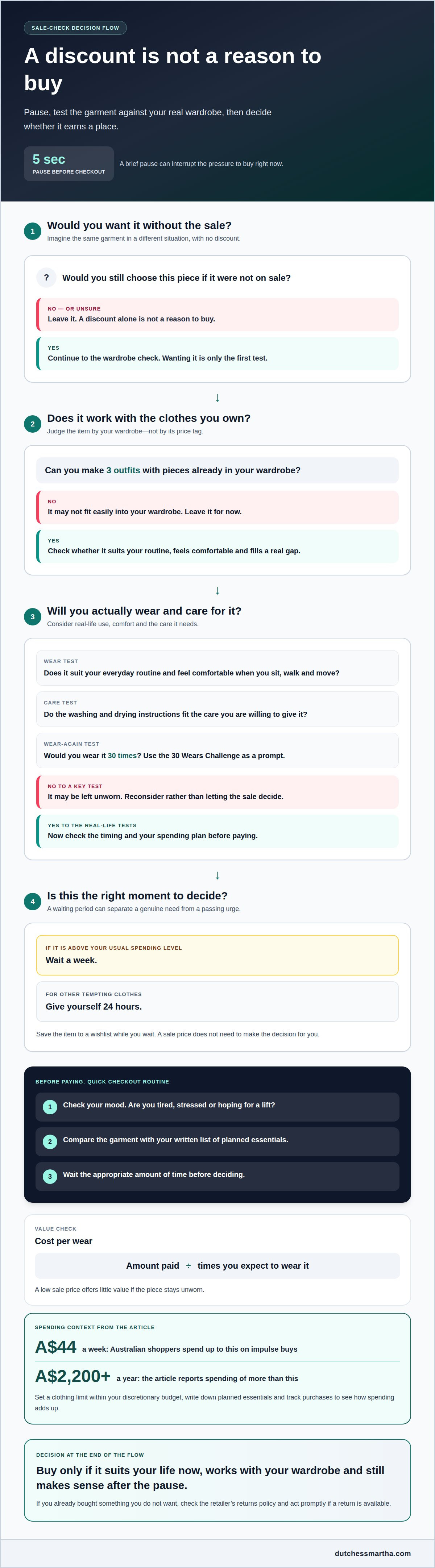
A discount can make a purchase feel urgent, especially when you’re tired, stressed or hoping for a lift. Before checkout, pause for five seconds and ask whether you’d want the garment in a different situation, without the sale. If your answer is no or you’re unsure, leave it. For an item above your usual spending level, wait a week; for other tempting clothes, give yourself 24 hours.
Then test the garment against your wardrobe, not the discount tag. Can you style it into three outfits with pieces you already own? Does it suit your routine, fit comfortably and fill a real gap? Consider the cost per wear: divide the amount paid by the number of times you expect to wear it. A low sale price offers little value if the piece stays unworn. The 30 Wears Challenge offers another useful prompt: would you wear it 30 times?
The cost of impulse clothing shopping is the total spent on unplanned purchases, including items that see little use; planned shopping directs your budget towards clothes you need and expect to wear. Australian shoppers spend up to A$44 a week on impulse buys, and more than A$2,200 a year. Set a clothing limit within your discretionary budget, write down planned essentials, and track each purchase to see how spending adds up.
Use a simple checkout routine: check your mood, compare the item with your written list, then wait before paying. This can help you avoid buying something just because it’s cheap. If you’ve already bought a piece you don’t want, review the retailer’s returns policy and act promptly if a return is available. A wishlist lets you save tempting finds while you decide, without making a sale price a reason to buy something you don’t need.
3. Choosing durable fabrics and quality over quantity
A low-cost garment can feel appealing in the moment, but frequent replacement may leave you with a crowded wardrobe and little to wear. A useful way to think about how to stop impulse buying clothes is to consider whether a piece will still feel wearable after 3 years. Look at its construction: check whether seams lie flat, buttons feel secure, and fabric suits how you’ll use and care for it. These details offer practical clues beyond a label promising quality.
Choose fabrics that suit your routine, climate and comfort. For a piece you’ll wear often, read the care instructions and consider whether the washing and drying requirements fit your habits. Examine the fabric, move around in the garment and notice how it feels against your skin. An item that needs more care than you’re willing to give may not be a lasting choice, even if it looks beautiful on the rack.
Quality over quantity doesn’t mean every useful garment must be expensive. It means choosing fewer pieces that work hard in your wardrobe, fit well and suit your personal style. One investment clothing item can cost the same as buying 300 high-street T-shirts, so focus on what you’ll genuinely wear rather than the number of pieces in your basket. Ask whether the garment complements clothes you already reach for and feels like you.
When considering how to stop impulse buying clothes, include comfort in your decision. Choose clothing that feels good when you sit, walk and move through an ordinary day, not just in a fitting room. If a piece needs constant adjusting or doesn’t feel like your style, it may go unworn. Follow its care label, mend a loose seam or button, and store it thoughtfully. Looking after a valued garment can help you enjoy wearing it for years.
4. Buying clothes for your actual body and lifestyle
Buy for the body, taste and life you have now, not an imagined future self. A dress for a formal event won’t help if your week mostly involves commuting, desk work and school pick-ups. Before adding a garment to your wishlist, picture wearing it on an ordinary day. Ask whether it suits your current comfort, movement and routine, rather than a version of life you hope to have later.
Do a quick lifestyle check before shopping. Think about where you spend your time, what you reach for on busy mornings and which clothes go unworn. If you walk often, consider whether a garment works with shoes you can comfortably wear. If you spend your days sitting at a desk, check whether its fabric and fit feel comfortable while seated. These real-life details can matter more than how an outfit looks in a styled photo.
Build a capsule wardrobe around the pieces you already wear and enjoy. Notice their colours, shapes and layers, then identify a genuine gap, such as a versatile top for work and weekends. Add only those specific needs to your wishlist. Before buying, check whether the new item works with your existing clothes and suits the season and activities ahead. A written list helps separate a practical addition from a passing attraction.
Fit isn’t a goal to postpone until your body changes. Choose the size and shape that feel comfortable now, and move naturally in the garment before deciding. If you’ve bought something for an imagined occasion or future lifestyle, ask what would make it wearable in your actual week. Keep the pieces that support how you live and express your taste. Explore clothing for your everyday wardrobe as you turn your wishlist into more intentional choices.
Dutchess Martha
Dutchess Martha offers a curated selection of women’s apparel, fashion accessories, jewellery and homewares. When browsing, look for pieces that suit your everyday life, complement what you already own and feel right for you. A new arrival or sale can spark ideas, but your wishlist and genuine wardrobe needs can help you decide what deserves a place.
Explore Dutchess Martha’s collection when you’re ready to make a deliberate choice, whether you’re filling a genuine clothing gap or looking for an accessory to wear with outfits you already own. Keep your priorities in view and choose something useful as well as beautiful. For help finding a thoughtful addition to your wardrobe, contact Dutchess Martha.
Make your next clothing choice intentional
Let your next purchase reflect who you are today. Before browsing, decide what you want a new piece to do: make getting dressed easier, add versatility or bring fresh expression to outfits you already love. That purpose gives you a clear reason to choose something, or leave it behind.
Learning how to stop impulse buying clothes is less about denying yourself style and more about making room for choices that feel personal. Give your wishlist time to show which ideas still matter, then browse with intention. Dutchess Martha brings together women’s apparel, fashion accessories and jewellery, with pieces to consider for your personal style.
Choose with confidence, not urgency. Contact Dutchess Martha for personal guidance as you shape a wardrobe that feels like you.
Frequently Asked Questions
How do you know if you really need a new piece of clothing?
A need is more likely to be genuine when a specific item repeatedly fails to meet an everyday need. For example, if you’ve reached for a work shirt several times in a month and found it stained or uncomfortable, replacing it may make sense. Note the gap and the occasions it affects. A clear, recurring use is a stronger reason to buy than a vague feeling that your wardrobe needs refreshing.
How do you stop buying clothes on sale?
Set the discount aside and assess the garment as if it were full price. Picture one real occasion when you’d wear it, and consider whether you’d choose it over clothes you already own. If not, leave it in the shop. You can also close the sale page and revisit your written clothing priorities later, rather than letting a countdown or reduced price set your agenda.
What is the 24-hour rule for shopping?
The 24-hour rule means waiting a full day before deciding whether to buy a tempting item. Save its details somewhere you can review later, then return to the decision when the initial excitement has passed. Ask whether it still suits your wardrobe and planned spending. If you forget about it or no longer want it, that pause has helped you avoid a purchase driven by the moment.
What is the 30 wears rule?
The 30 wears rule is a prompt to consider whether you expect to wear a garment at least 30 times before buying it. Think through your calendar and imagine different occasions for the piece, rather than relying on one special event. A jacket that works for regular outings may earn repeat use; a highly specific item may not. It’s a decision aid, not a requirement that every garment must meet.
What is the already-own-it check?
The already-own-it check means searching your wardrobe before buying to see whether you have a similar item. Look beyond identical pieces: a black cardigan might meet the same need as the charcoal one you’re considering. Check whether the existing garment suits your routine and is still wearable. If it serves the purpose, you may not need another version.
What should you do instead of shopping when you are bored?
Choose an activity with a clear starting point, such as sketching an outfit idea, organising a playlist or preparing a saved recipe. If you still want a fashion-related distraction, use clothes you own to create a look for an upcoming plan, then photograph it for reference. You could also take a walk or call a friend. Choose one alternative before opening a shopping app.