

What if the best race-day outfit starts with the ticket, not the trend report? Race day fashion rules aren’t universal: at Flemington, general admission has no formal dress regulations, while the Members’ Enclosure expects a suitable standard of racewear. The venue, enclosure and event all help determine what’s appropriate, so it pays to check before you choose an outfit.
You want to look polished, feel like yourself and stay comfortable from the gates to the final race. Dress-code guidance can help you make confident choices without losing your personal style. Start with the requirements for your specific ticket, then build an outfit that fits them.
This 2026 Australian style checklist explains what to verify before you go, how to balance elegance with practical comfort, and what to consider when choosing shoes, headwear and finishing details. You’ll also find race-day outfit inspiration to help you arrive prepared, event-appropriate and at ease.
Key Takeaways
- Use the racecourse’s latest event information to shape your outfit, rather than assuming one venue’s dress code applies everywhere.
- Learn how to check the race day fashion rules for your event, ticketed area and any fashion competition.
- Build a polished look with a main garment, complementary layers, considered footwear and a finishing accessory.
- Use the forecast, transport plans and a comfort check to prepare for the day’s practical details.
- Let event guidance frame your personal style, with curated European-inspired clothing and accessories as outfit inspiration.
Race Day Fashion Rules: Start with Your Venue’s Dress Code
Start with the racecourse’s current event rules. General fashion advice can help with outfit ideas, but it doesn’t replace the policy for your venue, event and ticket. Race day fashion rules bring together three things: venue regulations, event expectations and your own styling choices. Knowing which is which helps you put together a polished look without assuming that a popular outfit automatically meets the requirements.
One racecourse’s dress code isn’t a reliable guide to another’s. Policies can vary between venues, events and ticketed areas, even on the same race day. Dress codes also reflect the history and social norms of dress codes, which shift across occasions and settings.
Keep the distinctions clear. General admission guidance may be more relaxed than rules for a Members’ Enclosure. Corporate hospitality and dining spaces can have their own expectations. Fashions on the Field is different again: it’s a competition, so its criteria may guide how entrants are judged, rather than what every racegoer must wear to enter the venue.
Why race-day dress codes vary by venue and ticket
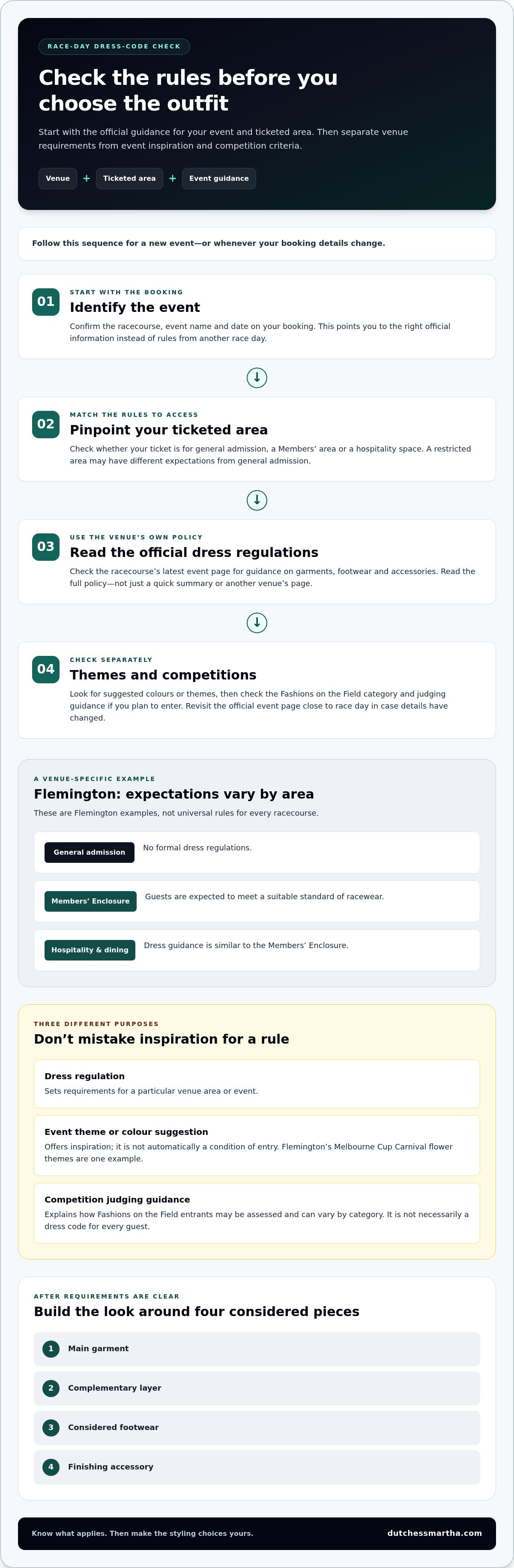
Racecourses divide spaces by access and purpose, so a general admission ticket, membership access or a hospitality booking may come with different standards. Flemington is one example: general admission has no formal dress regulations, while Members’ Enclosure guests are expected to meet a suitable standard of racewear. Hospitality and dining dress guidance is similar to the Members’ Enclosure, but these are Flemington-specific examples, not universal rules.
Before choosing an outfit, find the official guidance for your event and exact ticketed area. Don’t assume a rule from another racecourse, or another section of the same venue, applies to you.
What counts as general racewear etiquette?
Polished, event-appropriate dressing is useful guidance, not a formal rule for every Australian racecourse. Racewear can include a dress, considered separates, tailored trousers or a coordinated outfit. Choose a look that feels occasion-ready and comfortable, and use the event’s theme as inspiration if there is one. Trends can spark ideas, but they don’t replace venue requirements.
Unsure whether a particular garment, shoe or accessory is suitable? Use the venue’s policy to answer the rule question. That helps separate what’s required from what’s simply a styling choice, leaving room to express your taste with confidence.
How to Read Race-Day Dress Regulations Before Choosing an Outfit
Before choosing colours or trying on shoes, establish which guidance applies to your booking. Race day fashion rules can sit alongside event themes and competition criteria, but they serve different purposes. A quick check helps you distinguish a requirement from a suggestion, so you can plan with confidence instead of dressing by assumption.
A four-step check before you get dressed
Follow this sequence whenever you’re attending a new event or your booking details change:
- Identify the event. Confirm the racecourse, event name and date on your booking. This helps you find the right official information instead of relying on rules from another race day.
- Pinpoint your ticketed area. Check whether your ticket is for general admission, a Members’ area or a hospitality space. Access to a restricted area may come with different expectations from general admission.
- Read the official dress regulations. Use the racecourse’s latest event page and look for specific guidance on garments, footwear and accessories. Read the full policy rather than relying on a quick summary or another venue’s page.
- Check themes and competitions separately. Look for suggested event colours or themes, then find any Fashions on the Field category and judging guidance if you plan to enter. Revisit the official event page close to race day in case details have changed.
Rules, themes and judging criteria are not the same
A dress regulation sets the venue’s requirements for a particular area or event. A seasonal colour suggestion is inspiration, not automatically a condition of entry. Competition guidance has a separate purpose: it explains how Fashions on the Field entrants may be assessed, and can vary by category. Attending the races doesn’t necessarily mean you’re entering the competition, so don’t mistake its criteria for a dress code that applies to every guest.
Flemington’s Melbourne Cup Carnival flower themes offer an example of event inspiration. They can spark ideas for a colour or accessory, but they aren’t a universal rule for other racecourses or a substitute for checking the relevant event regulations. Australian racewear also reflects its own mix of local conditions and wider influences; the National Gallery of Victoria’s history of Australian fashion provides helpful context for that evolving style story.
Once you’ve confirmed the requirements, you can make the creative choices yours. For a polished starting point, explore race-day clothing and accessories and build a look around the event guidance, not just the theme.
Build a Race-Day Outfit That Feels Elegant and Personal
Once you know the event’s requirements, let them guide your outfit without dictating your personality. Dresses and separates can both feel polished and occasion-ready. Start with one piece you love, then bring the rest together with a simple formula: a main garment, complementary layer, considered footwear and finishing accessory. This creates an intentional look without requiring you to follow every trend.
Try this approach when planning your look:
- Main garment: Choose a dress, skirt, trousers or coordinated set that suits the event and its dress guidance.
- Complementary layer: Add a jacket, wrap or other layer that works with the outfit and the forecast.
- Considered footwear: Pick shoes that complement the silhouette and feel practical for the day’s plans.
- Finishing accessory: Use a handbag, jewellery or another detail to give the look a personal signature.
Keep the balance in mind. If your main piece has a bold print or vivid colour, simpler accessories can let it stand out. If your outfit is understated, a distinctive bag or piece of jewellery can add interest. Treat event colours and seasonal trends as inspiration, not rules. For more ways to choose a look for different occasions, explore this occasion-by-occasion dress guide.
Choose a dress or separates that suit the occasion
A dress creates an easy, cohesive starting point, while coordinated separates give you room to combine shapes, colours and textures. Neither is the only right choice. Let the venue’s requirements set any boundaries, then choose a silhouette that feels comfortable as you sit, walk and enjoy the day. A polished outfit should feel like you, not a costume.
For a more relaxed, distinctive direction, use ideas from this boho clothing style guide, adapting the details to suit the event and its dress expectations.
Finish the look with thoughtful accessories
Accessories bring an outfit into focus. A handbag can add a complementary colour, while jewellery can echo a detail in your shoes, print or neckline. If one piece is already making a statement, keep the other finishing touches balanced. The aim is harmony, not matching everything exactly.
Think about the outfit’s overall formality as you choose each detail. A refined accessory can lift a simple silhouette; a softer accent can bring ease to a more structured look. For more pairing inspiration, browse this women’s accessories style guide. With the race day fashion rules understood and the elements working together, you can make room for personal expression in every choice.
Race-Day Checklist: Comfort, Weather and Last-Minute Details
A polished outfit should work for your whole itinerary, not just the moment you leave home. Check the venue’s official dress code, the forecast and your transport plans, then test how your outfit feels as you sit, walk and spend time outdoors. A successful race-day outfit brings venue rules and practical comfort together, so you can enjoy the event with confidence.
Use this pre-event checklist to catch small details before they become race-day distractions:
- Dress code: Revisit the official guidance for your event and ticketed area. Pay particular attention to any footwear or clothing requirements.
- Forecast: Check the local forecast close to the event and plan a suitable layer for the conditions.
- Transport: Consider how you’ll travel and how much walking your plans may involve. Choose an outfit and shoes that suit the day’s movements.
- Outfit comfort: Try the full look together, including accessories and any layer, before race day.
Prepare for a full day on your feet
Race days can involve more standing and walking than a quick outfit try-on reveals. Wear shoes you can comfortably manage for your planned itinerary, and check the venue’s footwear guidance before settling on a pair, especially for Members’ or hospitality areas. Test new shoes in advance rather than making the event their first outing.
Move around in the complete outfit. Sit down, take a few steps and check whether anything shifts, pinches or restricts you. If you’ll be outdoors, consider how your clothes feel in the conditions shown in the forecast. An outfit that stays comfortable is easier to wear with poise.
A final check before leaving home
Give yourself one last review before race day. Event details can change, and the latest guidance is more useful than an old note or a friend’s memory of a different meeting. Set aside your clothes, accessories and suitable layer the night before, then leave enough time to get dressed and travel without rushed outfit changes.
- Confirm the event’s current dress requirements for your ticketed area.
- Check the forecast and adjust your layer accordingly.
- Make sure your footwear feels comfortable and suits the venue guidance.
- Set out your handbag, jewellery and other essentials with the outfit.
- Allow time for getting ready and travelling as planned.
With the practical details handled, you can focus on enjoying the day and feeling like yourself. Explore race-day outfit inspiration to find polished clothing and accessories that suit your personal style.
Make Race-Day Fashion Rules Work with Your Own Style
You’ve checked the event guidance, chosen an outfit and considered the practical details. Now make the look your own. Race day fashion rules create a framework for dressing appropriately, not a uniform to follow. Within the venue’s requirements, choose colours, prints and silhouettes that feel authentic to you. A polished look brings occasion-appropriate style, comfort and personal expression together.
There’s no single shape or trend that suits every racegoer. You might feel most like yourself in a vibrant dress, tailored trousers or a coordinated set. Choose colours you enjoy wearing and details that help you feel at ease. Style should be welcoming at every age and for every body shape, with room for individual preferences rather than pressure to copy a particular look.
A confident look does not need to follow every trend
Use trends as a starting point, not a checklist. If a seasonal colour appeals to you, try it in a garment or accessory that feels natural. Prefer prints or understated neutrals? Build around those instead. Keep the venue’s requirements in view, then focus on fit, comfort and the details that make the outfit feel like yours.
Find race-day inspiration at Dutchess Martha
Dutchess Martha is a female-owned Melbourne fashion and lifestyle boutique offering women’s clothing, dresses and accessories with an approachable, European-inspired point of view. Personal styling sessions at the Bentleigh East boutique can help you explore outfit ideas and bring pieces together in a way that feels polished and personal.
Dutchess Martha has been part of Melbourne’s fashion scene since 2012 and won the South East Melbourne Local Awards for Outstanding Fashion in 2024. These milestones sit alongside a considered approach to style and a welcoming boutique experience. Use the curated fashion collection as a starting point, then adapt the pieces and styling details to suit your event, comfort and taste.
Let the rules settle the practical questions, then enjoy the creative choices. Explore Dutchess Martha’s curated fashion for race-day outfit inspiration.
Make Your Next Race Day Unmistakably Yours
Your next race day is a chance to enjoy getting dressed with purpose. Let the race day fashion rules set the boundaries, then choose details that feel true to you. A favourite colour, a distinctive accessory or a silhouette you feel wonderful in can make the outfit memorable without making it complicated.
Give yourself room to enjoy the process. Try a few combinations, notice which one feels most natural and trust that sense of ease. The best choice isn’t simply the one that looks polished in a mirror. It’s the one that lets you move through the day feeling comfortable, poised and ready to be present.
For a fresh source of outfit inspiration, explore Dutchess Martha’s curated fashion and discover pieces to make your race-day look your own.
Choose what feels like you, and step into the day with confidence.
Frequently Asked Questions
What should a woman wear to the races in Australia?
Choose an outfit that suits your event, ticketed area and personal style. A dress, coordinated separates or tailored trousers can all work, provided they meet the venue’s requirements. For a daytime meeting, you might pair a printed dress with a light layer, or style tailored pants with an elegant top. Check any event theme for inspiration, then choose shoes and accessories that suit your plans.
Are there dress codes at every racecourse?
No, dress codes differ between racecourses and even between areas at the same venue. Flemington general admission has no formal dress regulations, while its Members’ Enclosure expects a suitable standard of racewear. At Royal Randwick and Rosehill Gardens, general admission guests are required to be neatly dressed. These examples show why race day fashion rules depend on your specific event and ticket.
Can you wear pants to a race day?
Yes, tailored trousers or a polished pantsuit can be a stylish race-day choice. For example, the Melbourne Racing Club permits formal dress pants for women aged 12 and over in its Members’ Reserve on major carnival days. Requirements can differ at other venues and events, so check the relevant policy before deciding on a cut, length or styling detail.
Can you wear flat shoes to the races?
Yes, flats can be a comfortable option, but your ticketed area’s footwear policy matters. Choose a refined pair that complements your outfit and feels secure for walking around the venue. Some Members’ areas prohibit casual footwear such as sneakers, so don’t assume every flat shoe is suitable. Try your shoes with the full outfit and check the official rules before race day.
Do you have to wear a hat or fascinator to the races?
No, headwear isn’t universally mandatory, particularly for general admission, although it’s often encouraged as part of traditional racewear. A hat or fascinator can add a distinctive finishing touch, but comfort and the event’s guidance should come first. If you’re entering Fashions on the Field, review the competition’s criteria separately, as those may influence your styling choices.
What should I wear to the Melbourne Cup Carnival?
Let the day’s traditional style cues inspire you, rather than treating them as universal dress rules. In 2026, the carnival runs from 31 October to 7 November at Flemington. Derby Day on 31 October is traditionally monochrome; Melbourne Cup Day on 3 November invites bold colour, while Oaks Day on 5 November leans towards florals and pastels. Stakes Day on 7 November has a more relaxed garden-party feel.
How do I find the dress code for my race day?
Start with the racecourse’s official website and find the page for your exact event. Match the guidance to your ticket, since general admission, Members’ areas and hospitality spaces may have different requirements. Look for details on clothing and footwear, then check any theme or Fashions on the Field criteria separately. Review the page again close to race day in case event information has changed.