

A polished wardrobe needs regular editing, not a constant overhaul. Use this wardrobe cleanout guide to clear your closet at least once a year, with seasonal rotations to separate spring/summer and fall/winter clothes. A full edit can take 2–5 hours or more, depending on how much you have to sort.
It’s easy for a closet to fill with clothes that no longer fit your life, even when getting dressed should feel simple and joyful. You don’t have to decide everything at once or part with pieces that hold special memories. A thoughtful wardrobe cleanout helps you see what you love, what you can pass on and what deserves more consideration.
Follow the steps below to prepare for your cleanout, sort clothes into clear categories, and decide what to keep, sell, donate or recycle. You’ll also find gentle ways to handle sentimental pieces and practical habits for keeping your wardrobe organised long after the edit is done.
Key Takeaways
- Sort each piece into a clear next step: keep, sell, donate, repurpose or recycle.
- Make space easier to maintain by grouping similar clothes and giving every item a designated place.
- Use a gentle decision test for uncertain pieces, and find a way to preserve memories without keeping every garment.
- Set up bags or boxes before you empty the wardrobe so each category stays separate during your edit.
- Build a simple cleanout rhythm around your wardrobe and the seasons, rather than waiting until the closet feels overwhelming.
Where should I sell my clothing?
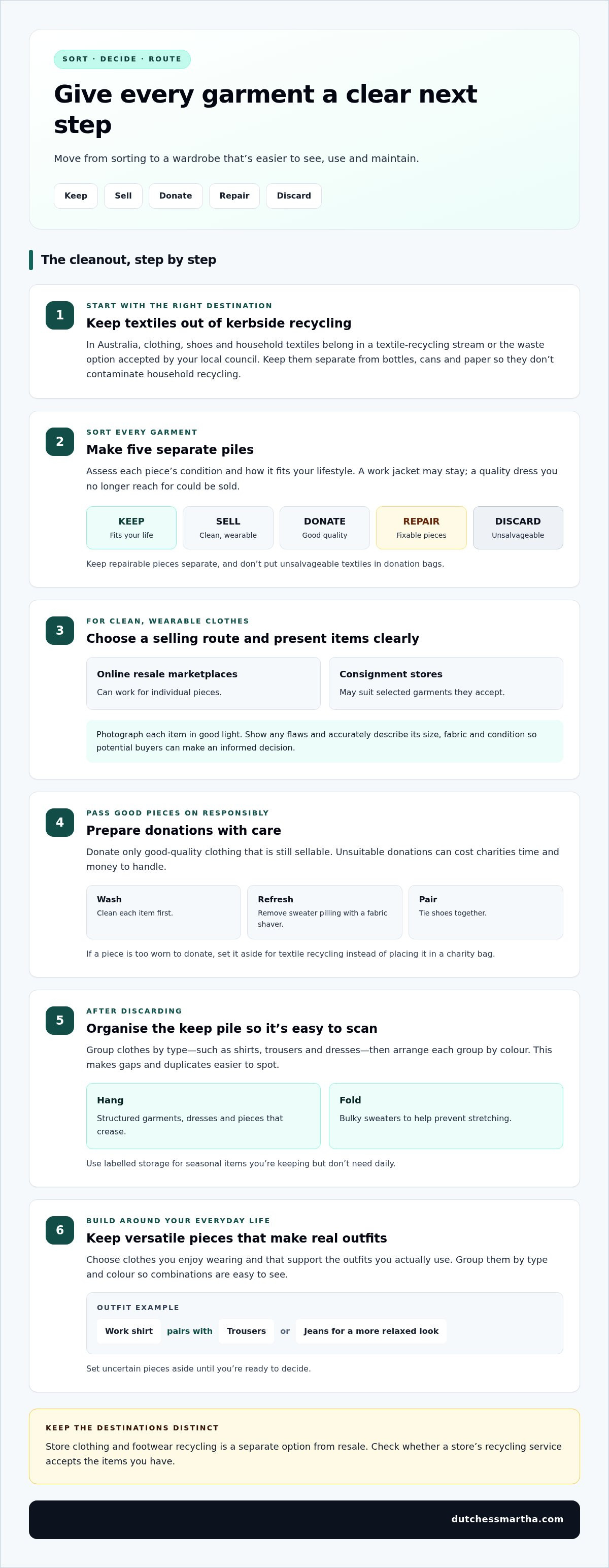
- Keep textiles out of Australian kerbside recycling bins. Clothing, shoes and household textiles belong in a textile-recycling stream or the waste option accepted by your local council. Separate these items from bottles, cans and paper so they don’t contaminate household recycling.
- Create five piles: keep, sell, donate, repair and discard. Assess each garment’s condition and how it fits your lifestyle. A jacket you wear to work may stay; a quality dress you no longer reach for could be sold. Set aside repairable pieces, and keep unsalvageable textiles out of donation bags.
- Choose a selling route for clean, wearable clothes. Online resale marketplaces can work for individual pieces, while consignment stores may suit selected garments they accept. Photograph each item in good light, show any flaws and describe its size, fabric and condition accurately. Clear details and a presentable garment help potential buyers make an informed decision.
- Donate only good-quality clothing that is still sellable, since unsuitable donations can cost charities time and money to handle. Wash each item first, remove sweater pilling with a fabric shaver and tie shoes together. If a piece is too worn to donate, set it aside for textile recycling rather than putting it in a charity bag.
- Finish all discarding before organising the keep pile. Group clothes by type, such as shirts, trousers and dresses, then arrange each group by colour. This makes gaps and duplicates easier to spot. Hang structured garments, dresses and pieces that crease; fold bulky sweaters to help prevent stretching. Use labelled storage for seasonal items you’re keeping but don’t need daily.
- Build a practical capsule wardrobe around your everyday life. Choose versatile pieces you enjoy wearing, then group them by type and colour so outfit combinations are easy to see. For example, a work shirt might go with trousers or be dressed down with jeans. Keep clothes that support outfits you actually wear, and set aside uncertain pieces until you’re ready to decide.
The guide recommends sorting clothes into keep, donate or alter piles during your edit. Use the alter pile for pieces that need changes before you decide whether to keep or pass them on. Keeping alterations separate from ready-to-wear garments makes it easier to see what still belongs in your wardrobe and what should move out.
Some stores offer recycling for clothing and footwear. Consider this route for items you won’t keep, donate or alter, and check whether the store’s recycling option accepts what you have. Treat recycling as a separate destination from resale: the goal is to find an appropriate next step for each item, not to offer every piece for sale.
Maintaining an organised wardrobe
Keep your system simple enough to use every day. A clear setup makes clothes easier to see, reach and return to their place.
-
Picture the Organised Wardrobe
Picture your ideal wardrobe before moving anything. Imagine opening the doors to see shirts together, shoes within reach and accessories in one place. Make sure the setup suits your actual life, from workwear to relaxed weekends. Don’t plan storage around clothes you no longer wear; aim for a useful arrangement, not a showroom that’s hard to maintain.
-
Add Wardrobe Organisers
Choose bins, shelf dividers and over-the-door organisers to solve specific storage problems. Use a bin for scarves, a divider to stop folded tops toppling or a door organiser for small accessories. Measure the available space before buying or placing an organiser. Keep frequently used items visible and accessible, and don’t fill every shelf just because you can.
-
Arrange Underwear and Socks
Give underwear and socks separate sections in a drawer or labelled bins. Fold pairs together or use small dividers to keep them separate from other items. Place everyday pairs near the front and less-used pieces elsewhere. This makes your go-to items easy to find without disrupting the whole drawer.
- Group similar clothes, then arrange each group from heavier to lighter items. For example, put jackets before lighter shirts so the rail looks orderly and pieces are easy to scan. Use thinner hangers for most clothes, saving wooden hangers for jackets and heavier garments. Fold bulky sweaters to help prevent stretching.
- Assign every item a home and return it there after wearing or washing. Keep work shirts together, give trousers their own section and reserve a shelf for folded knitwear. A defined place makes it easier to spot clothes that have drifted out of place and see what you use most often.
- Make the final arrangement fit your routine, not an imagined version of it. Put daily favourites at eye level, occasional pieces higher up, and seasonal clothing in separate storage. Keep accessories together so a belt or scarf is easy to find while dressing. For a finishing touch, explore fashion accessories that complement the looks you enjoy wearing.
Making decisions about uncertain or sentimental garments
Clean garments according to their care labels and make sure they’re completely dry before storing them. Fold bulky knits, and put each kept item on a suitable hanger or shelf so it’s ready to wear without adding clutter.
- Ask whether you’ll wear each uncertain item in the next 3–6 months. Then consider whether you’d buy it if you saw it in a shop today. If you’re still thinking, leave an everyday piece at the front of your wardrobe for a week or two. Notice whether you reach for it or pass it by.
- Try on clothes you’re considering keeping instead of relying on how they used to fit. Check the shoulder seams, waist and hem as you move naturally. Keep garments that fit now and suit your routine. If something pinches, slips or stays unworn, move it out of the keep section.
- Make a separate decision about sentimental clothing. Marie Kondo’s KonMari method recommends keeping items that bring joy, but you don’t have to keep every physical reminder. You might photograph a special-occasion dress or repurpose a collection of meaningful graphic shirts into a keepsake blanket with justtshirtquilts.com. Preserving memories this way keeps the sentimental value alive without taking up valuable storage space.
- Match hangers to each garment before returning clothes to the wardrobe. Use thinner hangers for most everyday pieces and save wooden hangers for jackets and heavier clothing. Fold bulky sweaters to help prevent stretching. A blouse that slips needs a hanger with a secure shape, while trousers need one that supports their fold.
- Care for each kept piece so it stays wearable. Follow its care label, avoid washing garments more often than needed and store them appropriately between wears. Mend a loose button or small seam before the damage grows. Keeping a sewing kit near your laundry supplies can make a quick repair easier to finish.
- Make mindful shopping part of your wardrobe routine. Before buying a top, identify the outfit it will complete and whether it suits your lifestyle. Try the one-in, one-out habit: remove a clothing item when a new one comes in. Check that the new piece fills a real gap rather than duplicating something you already own.
Preparing supplies and emptying the closet
Set a clear goal, prepare your sorting space and empty the closet before making decisions.
-
Prepare for the Cleanout
Gather bags or boxes for resale, donation, repairs and discard, plus labels and a laundry basket. Set a goal before starting, such as making everyday clothing easier to reach or clearing one shelf for seasonal storage. Allow 2–5 hours or more, depending on the closet’s condition. If one session feels impractical, divide the project into manageable sessions over a week.
-
Empty the Closet
Take everything out, including clothing and accessories stored on shelves, in drawers or in boxes. Lay it where you can see it instead of sorting inside the closet. This reveals forgotten pieces and shows you the storage space available. Keep the closet empty until you finish sorting, and don’t add anything new during the cleanout.
- Choose a sorting area where you can see each garment clearly. A bed can work for a small edit; a clear floor area suits a fuller closet. Keep labelled bags nearby, and separate seasonal clothes from everyday items only after reviewing them. Keep piles clear of doorways and avoid covering pieces you still need to assess.
- Set a seasonal goal based on what you actually wear. A cleanout at least twice a year can align with changes before spring/summer and autumn/winter. Review whether each item suits the coming season, fits your current routine and is ready to wear. This makes seasonal rotation a practical edit, not just a transfer between storage boxes.
- Schedule a mini closet review every 3–6 months to catch clutter before it builds. Look for pieces that no longer fit your everyday lifestyle, repairs you’ve postponed, and clothes you haven’t reached for. A short review can keep the next full cleanout focused. For example, set aside an unworn summer dress during a cooler-season review, then decide its next step.
- Finish sorting before returning clothes to the closet. Move each labelled bag to its next destination, and keep repair items together so they don’t disappear into storage. Wipe shelves and rails while the space is empty. Return only clothes you’ve decided to keep, placing everyday pieces within easy reach.
How often to clean out a wardrobe
A yearly edit is a useful starting point, but the right pace depends on your wardrobe. Use the seasons and changes in your routine to set a schedule you can maintain.
- Start with a full wardrobe clear-out at least once a year. Review every piece, including sweaters, shirts and occasion wear, rather than removing only what’s at the front. An annual edit helps you notice changes in fit, lifestyle and personal style. If your closet is still easy to use, keep the review focused instead of turning it into a major decluttering project.
- Use seasonal changes to decide when a deeper review makes sense. A spring/summer and autumn/winter rotation creates two natural chances to review what you’ve worn and what’s in storage. In Australia, weather can vary by region, so follow the conditions where you live. Bring relevant pieces within reach, then decide whether the rest should stay in storage or move on.
- Choose a more frequent rhythm if your wardrobe changes quickly. Some people find three to four clear-outs a year work best; Monique Thomas edits her wardrobe two to three times a year. These are personal routines, not targets everyone needs to match. If your work, activities or fit change, add a brief review between larger seasonal edits.
- Make a large decluttering project manageable by splitting it across a week. Review one category at a time, such as shirts first and sweaters next, and note what still needs attention. A short session can focus on damaged pieces, unworn items or clothes that no longer suit your routine. This keeps the task manageable without waiting for clutter to take over.
- Set a reminder after each review and note the reason for your next one. A seasonal wardrobe rotation may suit someone who stores clothes between weather changes; a yearly review may be enough when clothing needs stay steady. Look for signs such as crowded rails or repeated outfits that feel difficult to assemble. Once your next review date is set, find fresh wardrobe inspiration for the style you want to build.
Dutchess Martha: Women's Apparel
Dutchess Martha offers women’s apparel to refresh the pieces you’ve chosen to keep and build outfits that suit your style. After editing your wardrobe, explore fashion accessories and jewellery to complement your favourite looks, or homewares to bring a considered touch to your living space. These curated categories let you shape your personal style beyond the closet.
Turn to Dutchess Martha when you’re ready to fill a genuine wardrobe gap or find a fresh detail for an outfit you already love. Choose with intention and give each new piece a place in your wardrobe.
Explore Dutchess Martha at dutchessmartha.com.
Make room for the style you want
Your wardrobe can keep evolving with you. Let the pieces you choose reflect who you are now, rather than who you thought you should dress like. A clear closet creates space to notice what feels right, build outfits with intention and enjoy getting dressed each day.
Use this wardrobe cleanout guide as a starting point, then let your own taste shape what comes next. If you’re ready to fill a genuine gap, Dutchess Martha offers women’s apparel, fashion accessories and jewellery to bring a look together. Choose pieces that work with what you already love and give each new addition a place in your wardrobe.
Take your next step at Dutchess Martha. A thoughtful edit can open the door to a more personal, confident style. Make it yours.
Frequently Asked Questions
How do I clean out my closet?
Use this wardrobe cleanout guide to work through one category at a time. Choose a clear area where you can see each item, then sort clothes into practical next steps. Compare similar pieces, such as shirts or trousers, before deciding what stays. Note repairs or storage tasks that interrupt your sorting, then return to them after making the main decisions.
How do I decide what to keep?
Keep pieces that fit now, suit your current life and work with clothes you already wear. Try on an uncertain item and build an outfit around it, such as pairing a skirt with a top and shoes. If it feels uncomfortable or needs several pieces you don’t own, it may not earn space in your everyday wardrobe. Save sentimental decisions for a separate, unhurried moment.
How often should I clean out my wardrobe?
A full wardrobe review at least once a year is a useful rule of thumb. Seasonal rotation can make it more practical: separate spring/summer clothes from autumn/winter pieces, then bring the relevant group forward. Choose a rhythm that matches how often your clothing needs change. Regular reviews help you notice unwanted pieces before they crowd out clothes you enjoy wearing.
What’s worth selling and what should I donate?
Consider selling clean, wearable items in good condition that are likely to interest someone, such as an occasion dress you no longer wear. Donate clothes that remain good quality and sellable, not damaged items. Before either route, wash garments; if selling, describe any flaws honestly. Clear photos and accurate details help buyers understand what they’re considering.
How to declutter a wardrobe step by step
Choose a category, take those pieces out and assess each one individually. Sort them into keep, sell, donate, repair and discard, then move each finished pile into its own bag or box. Complete the decisions before returning kept clothes. This prevents items from drifting back into the wardrobe and makes it easier to see what still needs attention.
What items should you keep, donate, sell or discard during a wardrobe cleanout?
Keep clothing that fits and supports your current routine. Sell or donate pieces that are clean, wearable and in good condition; choose the route based on whether you want to list each item or pass it on. Set aside repairable garments only if you’ll actually mend them. Discard unsalvageable clothing, and set unsuitable textiles aside for recycling instead of donating them.
How often should you clean out your wardrobe?
Do a full edit at least once a year, then use brief reviews to catch changes between larger clear-outs. A mini cleanout every 3–6 months can help if your wardrobe shifts with work, lifestyle or the seasons. Use a simple trigger, such as noticing that laundry keeps returning unworn shirts to the rail. Review the category causing the clutter instead of restarting the entire project.
How to organise a wardrobe by clothing type, season and frequency of use
Group clothes by type first, then arrange each group by colour for easy scanning. Separate spring/summer and autumn/winter pieces when seasonal storage is useful. Place the clothes you wear most often in the easiest-to-reach spots, and store occasional or out-of-season items elsewhere. Give each group a consistent home, such as one rail for shirts and a shelf for folded knitwear.