

The most striking cable-knit vest isn’t always the chunkiest. A cable knit sweater vest can look cosy and substantial, neat and cropped, or delicate and intricate, depending on its fit and stitch pattern. Bulky, cropped, lace-cable, sleeveless, Celtic and honeycomb styles each bring a different feel to an outfit.
It’s easy to focus on the raised cables, but the vest’s shape and the spacing between its stitches matter just as much. A shorter hem creates a different silhouette from a roomy fit, while open lace details feel distinct from dense, sculptural braids. Knowing what sets each style apart makes it easier to choose one that suits your wardrobe and preferred layers.
Explore the defining features of each style, from interlaced Celtic-inspired motifs to honeycomb cables made up of repeating cells. You’ll also find practical tips for considering proportions, texture and layering, helping you choose a cable-knit vest that feels like your own.
Key Takeaways
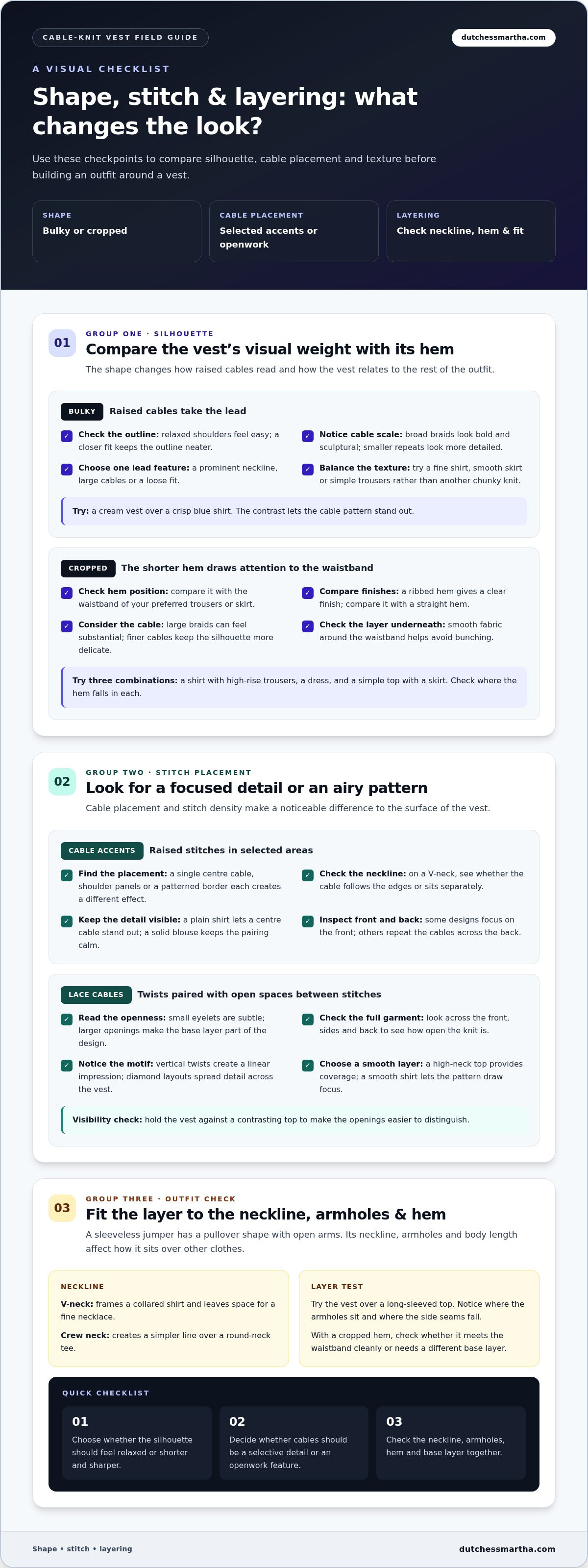
- Compare bulky and cropped silhouettes to decide whether you want a cosy, relaxed look or a shorter, sharper proportion.
- Look at how cables are placed: a few accents create a different effect from an all-over lace pattern.
- Use the neckline, armholes and overall shape to distinguish sleeveless jumpers and choose how you want to layer them.
- Recognise Celtic-inspired designs by their interlaced motifs, which bring a more intricate, heritage-inspired feel.
- Choose honeycomb cables for a dimensional, repeating texture, then consider how its visual weight works with the rest of your outfit.
Bulky and cropped cable vests
Bulky and cropped cuts change how cable texture reads. Compare the knit’s visual weight with the vest’s hem and your outfit’s proportions.
Bulky Cable Vests
A bulky vest makes raised cables a focal point. Its full texture adds dimension over a smooth shirt or fine knit. For example, layer a cream vest over a crisp blue shirt. The contrast lets the cable pattern stand out without competing textures.
Check the shoulder line, armholes and overall width. Relaxed shoulders create an easy silhouette, while a closer fit keeps the outline neater. Try the vest over a long-sleeved top and notice where the side seams sit. If it feels broad, pair it with a straighter bottom half, such as tailored trousers.
Consider the cable scale, too. Broad braids create a bold, sculptural look; smaller repeats make the surface more detailed. A high neckline adds another strong element, while a V-neck leaves room for a shirt collar. Choose one feature to lead: a prominent neckline, large cables or a loose fit.
Bulky texture works especially well as the outfit’s main layer. Wear the vest over a fine shirt rather than another chunky knit. A smooth skirt or simple trousers can balance its raised surface. For a more relaxed finish, leave the shirt hem visible below the vest.
Cropped Cable Vests
A cropped vest ends higher on the torso than a longer cut. That shorter hem draws attention to the waistband, so check where it falls against your preferred trousers or skirt. For example, wear one with high-rise jeans to define the waist. A longer shirt beneath creates a visible layered edge.
Look at how the hem relates to the cable pattern. Large braids can make a short vest feel visually substantial, while finer cables keep the silhouette more delicate. A ribbed hem adds a clear finish. Compare it with a straight hem to see which works better with your planned layers.
Length also affects styling. With a button-up shirt, keep the fabric smooth around the waistband to avoid bunching. Over a dress, the shorter vest can mark the waist and break up an uninterrupted fabric surface. A high-rise skirt creates a similar proportion, while a lower waistband leaves more space beneath the hem.
Before choosing, try three combinations: a shirt with high-rise trousers, a dress, and a simple top with a skirt. Check the hem in each look. If it meets the waistband cleanly, the vest creates a tidy proportion. If not, adjust the base layer or choose a different length.
Cable-accent and lace-cable vests
Some vests use cables as a small detail; others create airy patterns across the fabric. Compare their placement, stitch density and the layers beneath each design. A cable knit sweater vest with selective accents creates a different effect from one covered in openwork.
Cable-Accent Vests
A cable-accent vest places raised stitches in selected areas. Look for a single cable down the centre, shoulder panels or a patterned border. For example, a narrow front cable adds texture without covering the whole garment. Plain knitting around the detail gives it room to stand out.
Placement changes the visual effect. A vertical cable creates a clear line down the front, while shoulder cables draw the eye upwards. If the vest has a V-neck, check whether the cable follows its edges or sits separately. These details affect how the design works with a shirt collar or necklace.
Use the base layer to balance the outfit. A plain white shirt lets a centre cable remain visible; a fine-striped top introduces another pattern. For a calmer combination, pair the vest with a solid-colour blouse. Keep checks or florals small if you want the cable to remain the main feature.
Inspect the front and back before choosing. Some designs concentrate cables on the front, while others repeat them across the back. A front-only detail can feel understated beneath a jacket. An all-over pattern stays visible when you take that layer off.
Lace-Cable Vests
Lace cables combine raised twists with open spaces between stitches, creating a lighter effect than a dense, uninterrupted cable surface. Hold the vest against a contrasting top to see the openings clearly. For example, a dark top beneath a pale vest makes the lace pattern easier to distinguish.
Check how open the knit looks across the front, sides and back. Small eyelets create a subtle effect; larger openings make the base layer part of the design. A high-neck top provides coverage beneath an open front panel. A smooth shirt works well when you want the pattern, rather than another print, to draw focus.
Look at the cable direction, too. Twists may run vertically between openwork sections or form a repeating diamond motif. Vertical arrangements create a linear impression. Diamond layouts spread the visual detail across the vest, so plain trousers or a skirt can keep the outfit composed.
For a practical styling check, build the outfit from the inside out. Choose a base layer, add the vest, then assess the neckline and hem together. A collared shirt gives lace cables a crisp contrast; a simple top keeps the look softer. For a cable knit sweater vest with openwork, choose smooth layers that let its texture take centre stage. To shape the complete outfit, explore more style inspiration alongside your preferred knit texture.
Women's cable-knit sleeveless jumpers
A sleeveless jumper combines a pullover shape with open arms. Cable stitching gives this classic layer extra texture. In Australia, it may also be called a knitted vest. Focus on its neckline, armholes and body length, as these details shape how it sits over shirts, dresses and lightweight tops.
Start with the neckline. A V-neck frames a collared shirt and leaves space for a fine necklace. A crew neck creates a simpler line over a round-neck tee. For example, pair a navy V-neck sleeveless jumper with a white button-up shirt. Let the collar sit neatly above the neckline rather than bunching beneath it.
Next, check the armholes against your base layer. A closer opening keeps a slim blouse smooth; a more generous opening accommodates a shirt with fuller sleeves. Try lifting your arms and reaching forward. The fabric shouldn’t pull sharply across the shoulders or expose more of the underlayer than you prefer.
Body length changes the outfit’s balance. A hip-length style can sit comfortably over straight-leg trousers. A shorter cut works with a high-waisted skirt or jeans. When layering over a dress, compare the jumper hem with the dress’s waistline. A hem near the waist creates a clear break between the pieces.
- For a polished outfit: Layer a V-neck over a collared shirt and tailored trousers.
- For a relaxed look: Wear a crew-neck style over a plain tee and jeans.
- For a softer contrast: Add a cable-knit sleeveless jumper over a simple dress.
Look closely at how the cables meet the garment’s edges. A pattern that continues around the neckline and armholes gives the finish a considered look. Cables centred on the front create a stronger focal point. Keep other outfit details simple when the jumper has prominent stitching across the chest.
Consider fabric weight and the day’s layers. A lighter knit can sit over a long-sleeved cotton shirt without crowding the sleeves. A denser knit makes more of a statement over a fine top. In Australia’s changeable conditions, build an adjustable outfit: start with a breathable base, add the sleeveless layer, then bring a jacket for cooler moments.
Before settling on a style, try it with two outfits from your wardrobe. Check the armholes over a shirt, then test the neckline over a plain top. Notice whether the cable pattern competes with collars, prints or jewellery. These quick comparisons reveal which sleeveless jumper suits your preferred layers and everyday style.
Celtic cable vest designs
Celtic-inspired vests feature interlaced cables, linked twists and repeating motifs. Their surface often looks more intricate than a single straight braid. See how the pattern travels across the front. A central knot-like motif creates a focal point, while repeated cables give the vest an all-over design.
Look closely at how the stitches cross. Interlaced lines seem to pass over and under one another, creating a woven effect. Some designs place these lines inside diamonds or narrow panels. For example, a diamond at the centre front can draw the eye, while smaller twists frame it.
Pattern scale changes the overall impression. Broad, raised cables create bold texture across the torso. Fine, closely spaced twists produce a more detailed finish. Compare the motif with the vest’s neckline and hem. A dense front pattern can feel balanced with simple ribbing around the edges.
Colour also affects how clearly the design reads. A solid cream or charcoal vest makes the cable crossings easy to see. Marled yarn adds colour variation, softening the pattern’s outlines. To make the interlacing stand out, pair the vest with a plain shirt.
Neckline shape helps frame Celtic-inspired motifs. A V-neck leaves space for a shirt collar, while a crew neck creates a continuous line around the upper chest. Check whether the cables meet the neckline neatly. A motif that stops before the ribbing looks distinct from one that flows into it.
Let the outfit’s other textures guide your choice. For clear contrast, layer a patterned vest over a smooth white blouse. For a relaxed weekend look, try it with a plain tee and straight-leg jeans. Avoid competing with large checks or bold prints if the cable pattern is the main detail.
- Choose a focal motif if you want one central detail to lead.
- Choose repeated cables if you prefer texture across the full front.
Before choosing, inspect the front, back and side seams. Some vests concentrate their knot-like details on the front, while others continue the pattern around the body. Try the vest over a shirt and turn to each side in a mirror. This shows whether the pattern feels balanced from every angle.
For a polished combination, match one colour in the vest with another outfit piece. A charcoal cable vest sits neatly over a pale blue shirt, while a cream style pairs easily with darker trousers. Keep jewellery simple when the neckline and interlaced stitches already create plenty of detail.
Honeycomb cable vest designs
Honeycomb cables create a repeating pattern of raised, cell-like shapes. Unlike a single braid, the texture spreads across the knitted fabric. Look at the size and spacing of each cell. These details determine whether the vest feels subtle or visually bold.
In a classic honeycomb layout, crossed stitches form a grid of rounded shapes. The raised lines create depth, while the spaces between them define each cell. A close-set pattern can look refined across a vest front. Larger cells make the texture more prominent, especially across the chest.
Check where the pattern appears. Some designs cover the front, while others use honeycomb panels beside plain-knit sections. A full-front pattern creates a strong focal point. For example, choose a plain shirt underneath to keep the outfit’s textures distinct.
Consider the pattern’s scale when choosing a base layer. Fine honeycomb stitches can sit neatly over a smooth blouse. Larger, thicker cells may feel more substantial over a lightweight long-sleeved top. Try the vest with the shirt you plan to wear, then check whether the fabric lies smoothly at the armholes and sides.
Neckline and pattern placement work together. A V-neck can frame a central honeycomb panel, while a crew neck gives the pattern a continuous backdrop. Check the transition around the ribbed neckline. A neat edge helps distinguish the collar from the textured body.
Colour changes the visibility of the stitch pattern. A single-colour vest makes raised and recessed sections easier to distinguish. Flecked or marled yarn adds visual variation, softening the cell outlines. For a clear pattern, pair a solid-colour vest with a contrasting shirt.
Use these styling ideas to bring the texture into focus:
- For work: Layer a fine honeycomb vest over a plain collared shirt.
- For weekends: Wear a relaxed cut with a simple tee and jeans.
- For a balanced outfit: Combine a textured vest with smooth trousers or a plain skirt.
Before choosing, compare the front, back and side panels. A repeated pattern across the whole vest creates an uninterrupted surface. Honeycomb panels alongside plain sections offer more contrast. Turn in a mirror to see how the texture reads from different angles.
Finish the outfit with accessories that don’t compete with the knit. Small earrings or a simple pendant can complement a patterned neckline. For a complete look, explore fresh outfit inspiration and style a honeycomb texture your way.
Dutchess Martha: Women's Apparel
Dutchess Martha offers women’s apparel to help you build a wardrobe that reflects your personal style. After comparing cable textures and silhouettes, explore pieces that complement a vest, such as a smooth top or polished layering options. Fashion accessories and jewellery can add a considered finishing touch without competing with a bold knit pattern.
When you’re ready to bring outfit ideas together, explore Dutchess Martha’s collection, whether you’re styling a textured layer for everyday wear or refreshing your wardrobe with a coordinated look. The range also includes homewares for extending your personal style beyond clothing.
Visit dutchessmartha.com to explore the collection.
Make Your Next Outfit Your Own
Let your personal style guide the final choice. Think about the pieces you already enjoy wearing, then choose a vest that feels natural alongside them. A cable knit sweater vest can inspire fresh combinations, not dictate rules. Pair its texture with familiar wardrobe staples, then add an accessory that feels distinctly yours.
For inspiration beyond knitwear, explore Dutchess Martha’s women’s apparel, fashion accessories and jewellery. A considered detail can bring an outfit together while keeping your own taste at the centre. Choose what makes you feel comfortable, polished and ready for the day ahead.
Contact Dutchess Martha today to explore your next style inspiration. Step into your next outfit with confidence and make it your own.