

What if getting dressed for Melbourne’s “four seasons in one day” didn’t mean carrying a bulky spare outfit? The right trans-seasonal dressing tips can help you stay comfortable and polished as a cool morning gives way to a warmer afternoon, then turns breezy again.
If your outfit feels too warm one moment and too cool the next, you’re not alone. Seasonal pieces can be tricky to rewear, and layering doesn’t always feel effortless. A flexible wardrobe doesn’t need a complete seasonal overhaul. Start with pieces you already own and a simple formula for combining them.
In this guide, you’ll learn a repeatable three-part approach: choose a comfortable base, add a versatile mid-layer, then finish with an outer layer you can remove as the weather shifts. You’ll also find ways to rework dresses, blouses, pants and other staples across the seasons, so you can build adaptable outfits with less fuss.
Key Takeaways
- Use these trans-seasonal dressing tips to choose pieces that work across more than one season.
- Keep layers comfortable by balancing proportions and choosing lighter-feeling pieces.
- Compare dresses, tops, pants and light outer layers by how well they fit your wardrobe and routine.
- Audit what you own before adding anything new, then focus on a genuine wardrobe gap.
Why trans-seasonal dressing works for Melbourne’s changeable weather
Melbourne can bring a cool start, a warmer stretch and a breezy finish in a single day. Dressing for that variety doesn’t mean carrying a full change of clothes or keeping winter outfits in rotation through warmer months. Choose pieces that suit the season, then make small adjustments as conditions shift. The best trans-seasonal dressing tips focus on flexibility, comfort and personal style, not rigid rules about what to wear in each month.
A blouse and pants can make a comfortable foundation. Add a light layer for time outside, then remove it in a heated office or a sunny café. Dresses can work the same way, with a layer added or removed to suit the moment. This approach helps you rewear pieces you already love instead of replacing your wardrobe whenever the season changes.
What does trans-seasonal dressing mean?
Trans-seasonal dressing means adapting outfits across seasonal changes by combining versatile clothes and removable layers, rather than replacing your whole wardrobe. Keep the base outfit and adjust how warm or covered you feel with a mid-layer or outer layer. In simple terms: dress in pieces you can add, remove and restyle as the day changes.
Layering works best when each piece has a clear purpose and you can remove it without disrupting the look. For a closer look at how to layer trans-seasonal outfits, explore the basic role of different clothing layers. The aim isn’t to wear heavy winter clothing in warm weather. It’s to build a balanced outfit that suits the conditions and still feels like you.
Why Melbourne outfits benefit from flexibility
Outdoor conditions can feel different from the temperature inside a workplace, shop or café. A change in sunshine, wind or a passing shower can also affect what feels comfortable. An outfit you can adjust makes it easier to move through the day without feeling overdressed or underprepared.
Keep the core outfit comfortable on its own, then choose a layer that’s easy to carry or remove. A blouse with pants might feel right indoors, while a light outer layer adds coverage outside. With a dress, a removable layer can provide extra warmth without making the whole outfit feel like winter wear. These small styling choices keep your look polished while giving you room to respond to the day.
How to layer trans-seasonal outfits without bulk
Layering feels polished when each piece has a purpose and the outfit still works if you take one off. Start with a comfortable base, add a flexible mid-layer, then finish with an outer layer you can carry or remove. This gives you options without stacking heavy pieces or hiding the shape of your outfit.
What order should you layer clothes in?
Begin with the base: choose a top or blouse that feels comfortable on its own and suits the day’s conditions. Next, add a mid-layer such as a cardigan, light jumper or kimono for extra coverage. Finish with an outer layer that’s easy to take off when you’re indoors or feel warm. Each piece should work with the others and make sense on its own.
For example, wear a blouse with pants, add a kimono as the mid-layer, then finish with a light jacket. If the day warms up, remove the jacket first. If you’re still warm, take off the kimono and keep the blouse-and-pants base intact. Choose layers that look complete together and still feel intentional when worn separately.
How to keep layered outfits light and polished
Pay attention to proportion. If your mid-layer has a relaxed shape, balance it with a more defined silhouette elsewhere, such as a neat base top or a clear waistline. Lighter-feeling pieces can be more comfortable than piling on several thick items. Let one piece bring softness or movement, then keep the rest of the outfit visually simple.
Colour and texture help layers feel connected. Repeat a colour between your base and outer layer, or pair a smooth fabric with a piece that adds gentle texture. That way, removing a layer doesn’t make the outfit feel unfinished. A versatile top can be especially useful as the foundation. This guide to stylish tops offers ideas for choosing a base that works across outfits.
- Before heading out: check that your base looks finished without the outer layer.
- As you adjust: remove the outermost piece first, then reassess your comfort.
- Keep the look cohesive: carry the removed layer neatly and let the base outfit stand on its own.
These trans-seasonal dressing tips make flexibility part of the style, not a last-minute fix. If a versatile base or light layer is missing from your rotation, explore women’s tops and layering pieces as you refine your wardrobe.
Which trans-seasonal clothes are worth wearing across seasons?
The most useful pieces suit your routine, feel comfortable and work with clothes you already own. There’s no universal checklist. A relaxed blouse may earn more wear in one wardrobe, while a dress or light outer layer may be a better fit in another. Assess each piece by its role in an outfit, layering potential, care needs and how often you can picture wearing it.
| Category | Outfit role | Layering potential |
|---|---|---|
| Dresses | A complete base for casual or polished outfits | Add a blouse or light outer layer, depending on the dress shape |
| Tops | Everyday foundations that pair with pants or skirts | Wear alone or under a cardigan, kimono or jacket |
| Pants | A versatile anchor for a range of tops | Pair with lighter tops in warmer conditions or add layers above |
| Light outer layers | Extra coverage and a finishing touch | Wear over tops or dresses, then remove as needed |
How to choose versatile pieces for your routine
Consider whether a piece can work for the plans you actually have, from relaxed daytime outings to occasions that call for a more polished look. Check that its shape leaves room for a comfortable base layer or an added layer without restricting movement. Think about care, fit and whether its colour or texture works with several items already in your wardrobe. Start with a gap you’ve noticed, not a fixed shopping list.
How dresses and accessories can shift with the weather
A dress can keep its character while a removable layer changes the outfit’s warmth and finish. Wear it on its own when that feels comfortable, or add a blouse, kimono or light outer layer to adjust the coverage. The right combination depends on the dress’s shape and how the layers sit together.
Accessories offer another easy adjustment. A scarf can add warmth or colour; jewellery can give a simple outfit a more considered finish; and a handbag can shift the overall mood. Choose accessories you enjoy wearing and can pair with multiple outfits, rather than buying pieces for a single look. These trans-seasonal dressing tips are most useful when they help you get more from what you already own.
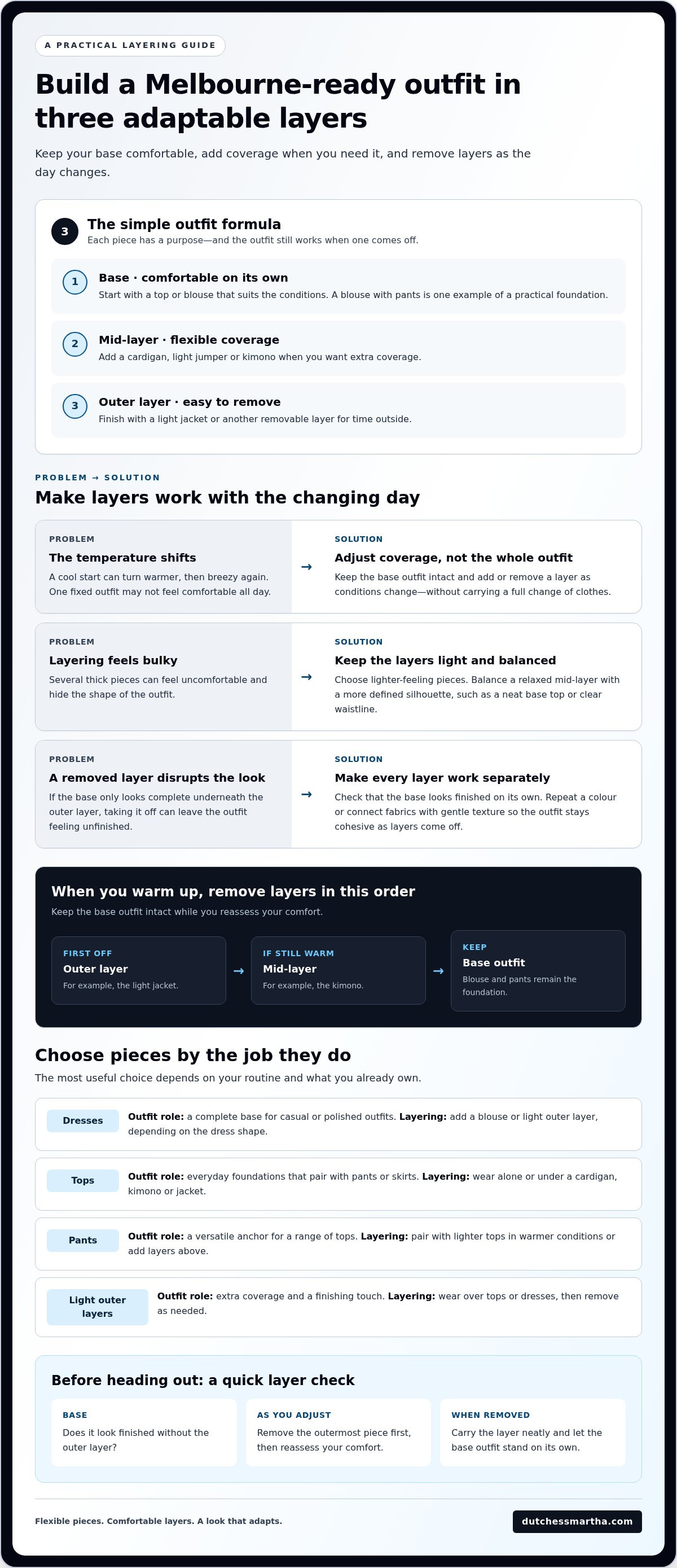
How to build a Melbourne-ready outfit with three adaptable parts
A reliable outfit doesn’t need complicated planning. Build it in three parts, then check that you can adjust it as the day shifts from cool to mild. These trans-seasonal dressing tips work with clothes you already reach for, whether your base is a top and pants or a dress.
The three-part outfit formula
- Choose your base. Start with a comfortable top, blouse or dress that suits your main activity. If you’ll be moving around, choose something easy to wear on its own indoors as well as outside.
- Add a flexible layer. Pick a cardigan, light jumper or kimono that adds coverage but can be carried or removed without fuss. Check that it sits comfortably over your base.
- Finish with an outer layer. Add a practical jacket or other light outer layer for extra protection. Before leaving, check the full outfit in the mirror and make sure the proportions feel balanced with every layer on.
For a cooler morning, try a blouse with pants, a cardigan and a light jacket. As the afternoon warms up, take off the jacket first and carry it. If you’re still warm, remove the cardigan too. The blouse-and-pants base remains a complete outfit. With a dress, follow the same order: wear it with a flexible mid-layer and outer layer, then remove pieces as needed. The formula stays consistent, while the pieces and silhouette remain your choice.
A quick outfit check before leaving home
Pause and think through your plans. How much time will you spend outdoors? Will you move between open-air settings and heated interiors? Choose layers that suit your comfort needs and are easy to manage on the go.
- Test each layer: the base should feel finished on its own, and the mid-layer should work without the outer layer.
- Check movement and comfort: sit, walk and reach naturally in the complete outfit.
- Keep accessories adaptable: choose a handbag, jewellery or scarf that complements your look without making a removed layer awkward to carry.
There’s no single Melbourne-ready silhouette or colour palette. The best outfit feels like you and can flex with your day. Explore women’s apparel and accessories for ideas to complement the pieces already in your wardrobe.
How to refresh your trans-seasonal wardrobe with Dutchess Martha
A wardrobe refresh can start without a shopping list. Notice which pieces already help you feel comfortable across different conditions and how you wear them. A quick audit can show that your wardrobe is more adaptable than it seems, or pinpoint one genuine gap that makes getting dressed harder.
A simple wardrobe audit for seasonal transitions
Set aside the pieces you’ve worn comfortably in more than one type of weather. Look at how you combine them, not just at each item on its own. Which outfits work as they are? Which feel incomplete when you need extra coverage or a finishing touch?
- Keep in view: clothes you reach for often and can style in more than one way.
- Spot the gap: note where an outfit needs a useful layer, a versatile top or an accessory that brings the look together.
- Check for duplicates: before adding a similar piece, consider whether something you own already serves the same role.
This simple edit helps separate a practical need from the appeal of something new. If you can’t think of several outfits a potential addition would work with, pause and revisit what’s already in your wardrobe.
Choosing a thoughtful next addition
Once you’ve identified a real gap, look for a piece that complements multiple items you own and suits the way you dress. A top might become a reliable base, while a dress could work for different plans with a change of layers or accessories. A kimono or kaftan can offer another way to add coverage while expressing your personal style. Comfort, fit and care still matter: a versatile piece should feel as good to wear as it looks.
Use trans-seasonal dressing tips as a guide, not a set of rules. There’s no need to replace your wardrobe or buy every category. A considered addition should make existing outfits easier to wear, more comfortable or more distinctly yours. Dutchess Martha’s curated women’s clothing offers category-level inspiration, including dresses, tops, pants, kimonos and kaftans, alongside accessories.
Ready to find an idea that suits your wardrobe? Explore Dutchess Martha’s curated clothing and look for a piece that works with what you already love.
Make Changeable-Weather Dressing Your Own
Melbourne’s shifting conditions are easier to dress for when your outfit has room to adapt. Start with a comfortable base, add a flexible layer, then choose an outer layer you can take off as the day changes. These trans-seasonal dressing tips are about making your existing wardrobe work harder, not following strict seasonal rules.
Choose versatile pieces that fit your routine and feel good together and on their own. Before shopping, review what you already wear, spot a genuine gap and look for an addition that pairs with several pieces you own. A considered wardrobe refresh can be as simple as finding a useful top, a dress you can layer or a light extra layer.
Dutchess Martha brings together curated women’s apparel in a modern, boho-chic style, with new arrivals featured weekly. If you’re ready to explore fresh outfit ideas, explore Dutchess Martha’s curated women’s clothing. Build on what you love, and step into changing weather with confidence.
Frequently Asked Questions
How do you dress for Melbourne’s unpredictable weather?
Dress for the range of conditions you may encounter, rather than relying on one outfit temperature all day. Consider how much time you’ll spend outdoors, whether you’ll move between indoor and outdoor spaces, and what feels comfortable for your plans. Build an outfit from a base and one or two removable layers. A layer you can carry easily gives you a simple way to respond if the day feels warmer or cooler than expected.
What should you wear when mornings are cold and afternoons are warm?
Choose a comfortable base, then add layers you can remove as the day warms up. A top with pants under a cardigan and light jacket gives you options without needing a full change of clothes. Take off the outer layer first and carry it. If you’re still warm, remove the cardigan too. A dress can work similarly with a removable mid-layer and jacket. Make sure the base outfit feels complete on its own.
How can you layer clothes without looking bulky?
Keep layers purposeful and balance their proportions. Wear a lighter-feeling base, add a mid-layer that sits comfortably over it, then choose an outer layer that doesn’t restrict movement. If one piece is loose or flowing, keep another part of the outfit more defined. A repeated colour or complementary texture can make separate pieces look connected. Before heading out, check that the outfit still feels polished after removing each layer.
What are the best fabrics for trans-seasonal dressing?
The best fabric depends on your comfort, the conditions and how you’ll care for the garment. Breathable options such as linen, cotton and bamboo can feel comfortable as layers, while knitwear can provide extra warmth when temperatures dip. Consider fabric weight as well as fibre: a lighter piece may layer more easily than a thick one. Check the garment’s care instructions and choose materials you enjoy wearing across more than one season.
Can you wear summer dresses in autumn or winter?
Yes, a summer dress can often be adapted for cooler weather with layers. Try adding a blouse or light jumper over or under it, then finish with an outer layer when you need more coverage. The best combination depends on the dress’s shape, fabric and how comfortable it feels with layers. Accessories such as a scarf or jewellery can also adjust the outfit’s finish without changing the dress itself.
How do you build a trans-seasonal wardrobe without buying everything new?
Start by auditing the clothes you already wear comfortably in different conditions. Put together outfit combinations and note where you’d benefit from a practical addition, such as a versatile top, dress or light layer. Avoid buying something that duplicates a piece you already own, and prioritise items that work with several parts of your wardrobe. These trans-seasonal dressing tips help you build on your existing style instead of starting from scratch.