

The belt that looks most defining on the hanger may not be the one that feels best on you. Choosing a shirt dress with belt is about more than cinching the waist: the dress’s cut, belt position and fabric all affect how comfortable and versatile it feels.
If you’re deciding between a relaxed or tailored silhouette, consider how you want the dress to move and where you plan to wear it. Fabric can crease, cling or feel warm, while belt width and placement change the balance of the outfit. The right choice should feel easy to move in, not leave you adjusting it all day.
This guide compares dress shapes, fabrics and belt styles to help you find an option that works for your wardrobe. You’ll also find practical ways to style one dress for casual plans, work or an evening out by changing your shoes, layers and accessories.
Key Takeaways
- Choose a shirt dress with belt by considering how its silhouette and belt placement affect the look and feel.
- Compare cotton, linen, denim and fluid fabrics for their drape, care needs and suitability for different settings.
- Use belt width to adjust the outfit’s visual emphasis, then choose a relaxed, straight or shaped cut that feels comfortable.
- Shift the dress from daytime to smart-casual or dressier plans with thoughtful footwear, layers and accessories.
- Decide what you need from the dress, check its fit and fabric, then choose the belt and finishing touches.
What Makes a Shirt Dress with Belt So Easy to Wear?
A shirt dress with belt is a collared, button-front dress that can be shaped at the waist with a belt. It brings familiar shirt details into an easy one-piece outfit, while the belt offers a simple way to add definition. The result can feel polished without losing the relaxed character of a shirt.
Small details change the impression. A crisp fabric and neat collar may feel more refined, while a softer drape can look more relaxed. Length and cut matter too: a longer hem creates a more fluid line, while a shorter one may feel casual and easygoing. There’s no single right version. Consider where you’ll wear it and look for comfortable movement as well as a style you enjoy.
A belt adds styling flexibility without requiring a different garment. Fasten it for a more defined waist or loosen it for a laid-back line. If the design allows, wear the dress open over a simple outfit as a light layer. The belt should feel secure, not restrictive.
How a belted shirt dress differs from other dress shapes
The shirt-inspired details are the clue: a collar, a button-front fastening and often a more structured upper half. The waist can be adjusted with a belt, unlike shapes that rely mainly on seams or elastic for definition. For a broader look at how dress silhouettes vary, explore this dress style guide. You can also discover the history and features of the shirtdress.
What the belt changes about the look
Cinching a belt shapes the fabric at the waist, creating definition without changing the garment itself. Wear it fastened for a more composed outline, or loosen it for a relaxed feel. If the buttons allow, wearing the dress open over a simple outfit gives it a light, layering role.
Belt placement sets the silhouette’s focal point: wear it higher, at the natural waist or lower to shift the outfit’s visual balance. The best position depends on the dress’s proportions and what feels comfortable as you move. Sit, walk and raise your arms when trying the fit. If the fabric pulls across the buttons or the belt needs constant adjustment, try a different fit or placement.
How to Compare Shirt-Dress Fabrics, Fit and Construction
Fabric and fit affect how a dress feels throughout the day, not just how it looks on a hanger. For a shirt dress with belt, consider how the material moves under the belt, whether the cut allows comfortable movement and what care the garment needs. Check the garment label for its exact composition and care instructions.
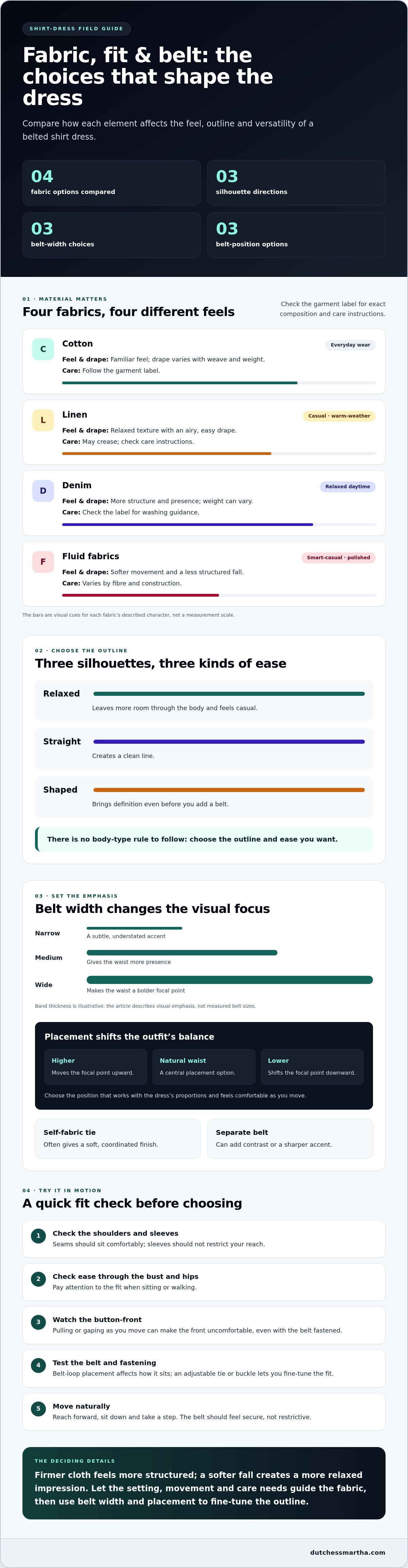
| Fabric option | Feel and drape | Care considerations | Possible settings |
|---|---|---|---|
| Cotton | Familiar feel; drape varies with weave and weight | Follow the garment label | Everyday wear, depending on cut and finish |
| Linen | Relaxed texture with an airy, easy drape | May crease; check care instructions | Casual outings and warm-weather looks |
| Denim | More structure and presence; weight can vary | Check the label for washing guidance | Relaxed daytime outfits |
| Fluid fabrics | Softer movement and a less structured fall | Care varies by fibre and construction | Smart-casual or more polished styling |
Choose a fabric for comfort and the occasion
Think about how you want the dress to move. Structured denim can hold a more defined outline, while a lighter fabric may feel less rigid and fall closer to the body. Cotton is familiar, but its feel and care depend on the composition and weave. Linen has a relaxed texture and may crease during wear. For visual context on how texture, line and shape work together, explore the fashion design principles for fit and silhouette. Let the setting guide you, then use the label to understand the garment’s fabric and care needs.
Check fit and finishing details before choosing
Start at the shoulders: seams should sit comfortably, and sleeves shouldn’t restrict your reach. Check for ease through the bust and hips, especially when sitting or walking. Buttons offer a useful fit test. If they pull apart or gape as you move, the front may feel uncomfortable even with the belt fastened. Check the belt loops and fastening too. Their placement affects how the belt sits, while an adjustable tie or buckle lets you fine-tune the fit.
Try a few natural movements rather than judging the dress while standing still. Reach forward, sit down and take a step. A dress that stays comfortable through these motions is more likely to become a regular wardrobe choice. Fabric weight and drape set the mood: a firmer cloth feels more structured, while a softer fall creates a more relaxed impression.
As you explore different cuts and materials, browse Dutchess Martha’s curated women’s fashion for fresh inspiration.
Which Belt and Shirt-Dress Silhouette Should You Choose?
The most flattering choice isn’t dictated by a body-type rule. It’s the one that gives you the look and ease you want. A relaxed cut leaves more room through the body and feels casual; a straight cut creates a clean line, while a shaped cut brings definition even before you add a belt. Think about how you want the dress to feel as well as the outline you see in the mirror.
Belts offer another way to adjust that outline. A narrow belt adds a subtle accent, a medium-width belt gives the waist more presence, and a wider belt makes a bolder focal point. Width changes visual proportion: a wider band draws more attention to the waist, while a narrow one keeps the look understated. For a useful lens on how shape and texture influence clothing, explore these elements of fashion design and fabric selection.
Match belt width and fastening to the look you want
A self-fabric tie often creates a soft, coordinated finish; a separate belt can introduce contrast or a sharper accent. Try tying a fabric sash in a relaxed knot for an easy feel, or fasten a separate belt neatly for a more defined finish. Leave enough ease to sit, breathe and move comfortably.
- Narrow: a light touch that keeps the outfit feeling simple.
- Medium: a balanced accent that defines the waist without dominating.
- Wide: a confident focal point that gives the outfit stronger emphasis.
Choose a silhouette for ease or definition
A relaxed shirt dress can feel breezy and unfussy, whether you wear it loose or add a belt for shape. A more tailored or shaped waist creates a polished impression, while a straight cut offers a middle ground that’s easy to adapt. The best option is the one whose proportions feel right to you and suit the way you plan to wear it.
Test the silhouette both ways. Fasten the belt, then remove it or loosen it, and notice whether the dress still feels like something you’d reach for. Check that the belt doesn’t ride up or restrict your stride. Walk, sit and take a few steps to see how the skirt moves and whether the hem feels comfortable. This helps you judge whether the dress works as a flexible wardrobe piece or depends on one particular styling choice.
The silhouette sets the overall line, while belt width adjusts the emphasis. A shirt dress with belt can shift from relaxed to more defined with a quick change, but comfort should lead the decision. Choose the fit that lets you move with ease and feel like yourself.
How to Style a Shirt Dress with Belt for Different Occasions
A shirt dress can move between casual plans, smart-casual outings and dressier occasions. Adjust the belt, footwear, jewellery and layers to suit the setting, while keeping comfort in view. In Australia, a light layer can be useful when the weather changes or indoor air-conditioning feels cool.
Create an easy daytime outfit
For relaxed daytime wear, tie the belt loosely or wear the dress without cinching it tightly. Choose comfortable shoes that suit your plans, such as casual flats or simple sneakers, and add a light layer if needed. Keep accessories in proportion: a bold collar or noticeable belt may already give the outfit enough detail.
- Weekend errands: a relaxed dress, easy shoes and a practical handbag.
- Lunch with friends: gentle waist definition, comfortable flats and understated jewellery.
- Changeable weather: add a removable layer that’s easy to carry when you don’t need it.
Make the same dress feel more polished
For smart-casual plans, neaten the belt finish and choose refined footwear, such as a simple loafer or low heel. A jacket or cardigan can add polish and provide a flexible layer for cooler interiors. Keep jewellery selective so it works with the shirt collar rather than competing with it. A pair of earrings or a delicate necklace can be enough.
Outfit formula: relaxed belt and casual shoes for daytime; neater belt, refined footwear and a considered layer for a more polished feel.
For a dressier occasion, start with the same clean foundation and make one or two intentional changes. Try a more defined belt fastening, elegant shoes and a compact handbag. If the collar is already a strong feature, let it remain the focus and keep jewellery simple. If the dress has a quieter finish, a statement accessory can bring extra personality. For ideas on choosing jewellery and other finishing touches, explore this women’s accessories guide.
Use the occasion as a guide, not a strict dress code. A shirt dress with belt can feel relaxed or more elevated depending on the details you choose. Consider how much walking, sitting and travel your day involves before settling on footwear. The best outfit looks considered and still feels comfortable as your plans unfold.
Ready to explore outfit inspiration? Discover curated women’s fashion at Dutchess Martha.
Find Your Shirt-Dress Style with Dutchess Martha
Choosing a shirt dress with belt is easier when you decide what matters most before getting caught up in styling details. Start with the occasions you have in mind, then look for a comfortable fit and a fabric that suits your plans. Once those essentials feel right, consider how the belt, shoes and layers can make the outfit your own.
Use a quick checklist before settling on a style
Think about the settings where you’ll wear the dress, then assess how it feels and moves. A promising look should work for real plans, not just a still moment in front of a mirror.
- Intended use: Picture the occasions you want the dress to suit, from relaxed outings to more polished plans.
- Fabric feel: Consider whether the weight and texture feel comfortable for the weather and your day ahead. Use the garment label for composition and care details.
- Movement: Walk, sit and reach. Notice whether the shoulders, bust and skirt feel easy, and whether the buttons lie comfortably.
- Belt comfort: Fasten or tie the belt as you’d wear it. It should stay comfortable as you move, rather than feeling restrictive.
- Wardrobe fit: Imagine the dress with shoes and layers you already enjoy wearing. This helps you judge how naturally it will fit into your routine.
These details help you assess the whole garment, not just its shape on a hanger. If you’re deciding between two options, try each with the belt styled as intended, then consider whether it still feels appealing without that finishing touch. Your favourite should feel wearable in the way you want, whether relaxed, defined or somewhere in between.
Explore a considered edit of women’s fashion
There’s no universal fit rule to follow. Personal style, comfort and the occasions you dress for matter more than choosing a silhouette because it’s said to suit everyone. Dutchess Martha brings a modern, boho-chic sensibility to its curated women’s fashion, with clothing, jewellery, accessories and homewares to inspire a distinctive personal style.
Use the checklist as a guide, not a test. Choose the details that feel right to you, and let the belt and styling express your point of view. The best dress is one you feel confident reaching for.
Explore Dutchess Martha’s curated women’s fashion assortment and discover pieces to inspire your personal style.
Make Your Next Outfit Feel Like You
Let your wardrobe work around the way you live. As you consider a shirt dress with belt, think beyond one occasion: choose pieces you can style in ways that feel natural, comfortable and distinctly yours. A favourite outfit often starts with a small detail that helps you feel put together.
Dutchess Martha brings a modern, boho-chic point of view to its curated women’s apparel, with new arrivals featured weekly. Browse for ideas to refresh your everyday style or inspire new combinations.
Explore Dutchess Martha’s curated women’s fashion and find inspiration for your next look. Choose what feels right, wear it your way and enjoy expressing your personal style.
Frequently Asked Questions
Can you wear a shirt dress with a belt if you prefer not to emphasise your waist?
Yes. Wear the tie loose, or avoid cinching the belt if the design allows. Check how the collar, shoulders and hem sit together so the relaxed shape still feels balanced. If the dress has belt loops, you can leave the belt loosely tied or remove it, depending on the design. Choose the version that lets you feel at ease.
Should a shirt dress belt sit at the natural waist?
It can, but that isn’t the only comfortable option. The natural waist may give the dress a more defined outline, while a lower or looser placement can create a less structured feel. Use the garment’s belt loops as a guide, then test the position while sitting and reaching. If the belt shifts or digs in, try another placement or loosen the fastening.
Can you replace the belt that comes with a shirt dress?
Often, yes. A separate belt can change the outfit’s mood, but check the loops first: a belt that’s too wide may bunch the fabric or not pass through smoothly. If there are no loops, fasten it gently over the dress and make sure it stays in place as you walk. A colour or texture contrast can add interest without needing to match every accessory.
What shoes go best with a belted shirt dress?
Choose shoes to suit the hem length, your plans and how much walking you’ll do. For a casual day, try flat sandals or comfortable sneakers; for a more polished setting, consider loafers or a low heel. If the hem is long, check that it won’t catch underfoot as you move. The shoes don’t need to match the belt exactly; repeat a colour or texture elsewhere for a considered finish.
How do you keep a shirt dress from gaping between buttons?
First, check whether the front pulls when you stand naturally or move your arms. Strain across the bust or hips can cause buttons to separate, so a more comfortable fit may help. You can add a camisole underneath for extra coverage, especially if you’ll be moving around. Don’t tighten the belt to hold the placket closed, as that may add more tension across the front.
Can a belted shirt dress work for a smart-casual occasion?
Yes. A tidy fit, neatly fastened belt and refined shoes can make the outfit feel more polished. Add a simple jacket or cardigan if the setting calls for a layer, and keep accessories intentional rather than overly formal. Consider the venue and the dress’s finish before deciding: a softer, very casual style may read differently from a crisp, structured one. Choose details that feel comfortable for the occasion.