

A beautiful woven finish doesn’t guarantee outdoor durability. Rattan home accessories are intended for indoor use: rain, frost and direct sun can make them fade and deteriorate more quickly. In bathrooms, keep them away from standing water because rattan homeware isn’t fully waterproof.
That doesn’t mean you have to miss out on rattan’s relaxed texture. With thoughtful placement and care, it can bring warmth and natural character to a bathroom or sheltered outdoor setting.
Discover where rattan works best, how to care for it, and what to look for in handwoven craftsmanship and provenance. We’ll explain the difference between rattan and wicker, share practical styling ideas, and highlight details that can help you choose accessories with confidence.
Key Takeaways
- Keep woven pieces protected from rain, frost and prolonged direct sun to help preserve their colour and condition.
- Style them in bathrooms with care: avoid standing water and choose a spot away from splashes.
- Use a soft, dry cloth or brush for routine dusting, and let pieces air-dry away from direct heat after a gentle clean.
- Look beyond appearance when choosing a piece: understanding the difference between rattan material and wicker weaving can help you appreciate its craft and provenance.
Can rattan be used outdoors?
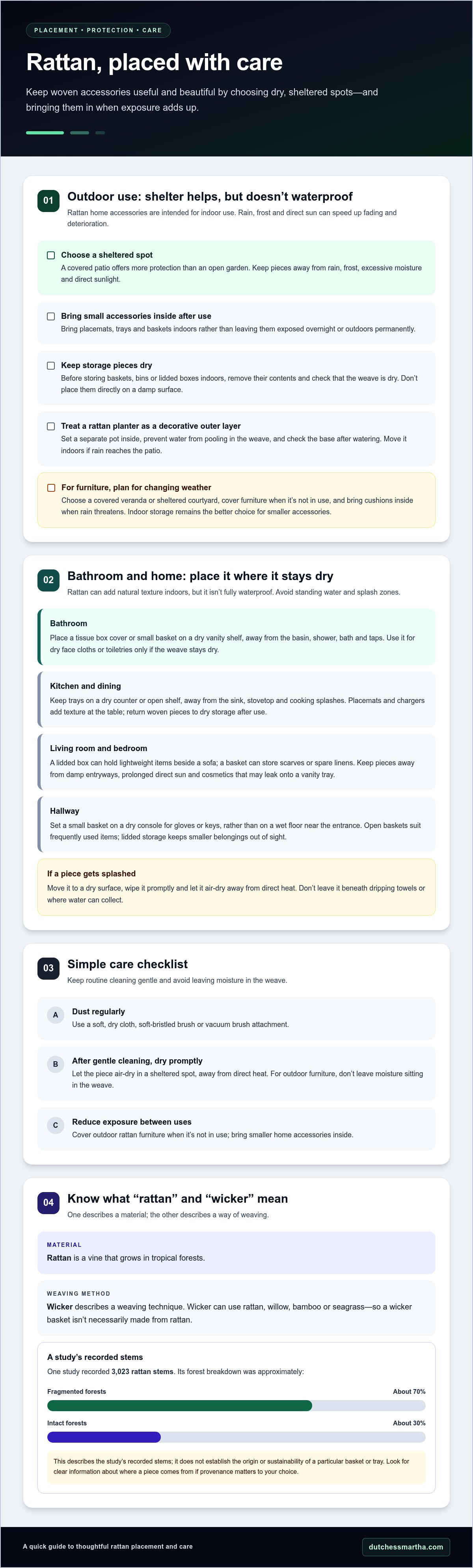
Rattan home accessories are intended for indoor use, not exposed outdoor conditions. Rain, frost and direct sun can make them fade and deteriorate more quickly, so bring placemats, trays and baskets inside after outdoor use.
A covered patio offers more protection than an open garden, but shelter doesn’t make rattan waterproof. Keep pieces protected from the weather, and choose another material for items that need to stay outdoors.
Rattan Table and Storage Pieces
Rattan placemats and trays add woven texture to an outdoor table for a meal or gathering. Use them in a sheltered spot, then bring them inside rather than leaving them exposed overnight. A set of two serving trays can help organise food and drinks, but both trays need protection from rain and direct sun.
Baskets, bins and lidded storage boxes can hold napkins or lightweight outdoor dining essentials while in use. Before storing a piece indoors, remove its contents and make sure the weave is dry. Avoid placing storage directly on a damp surface.
Rattan Baskets and Planters
Use a rattan basket to gather cushions or accessories before bringing them indoors. Its woven sides suit a sheltered patio, but prolonged sun can affect its colour and rain can accelerate wear. Keep baskets off wet ground and bring them inside when they’re no longer in use.
For a planter, treat the rattan as a decorative outer layer, not a waterproof container. Place a separate pot inside and prevent water from pooling in the weave. Check the base after watering, and move the planter indoors if rain reaches the patio.
Outdoor care starts with placement. Keep rattan away from excessive moisture and direct sunlight, and cover outdoor rattan furniture when it’s not in use. These steps reduce exposure, but indoor storage is still the better choice for smaller home accessories.
Material provenance matters, too. A study recorded 3,023 rattan stems, with about 70% in fragmented forests and about 30% in intact forests, according to the National Center for Biotechnology Information. That finding describes the study’s recorded stems; it doesn’t establish the origin or sustainability of a particular basket or tray. Look for clear information about where a piece comes from when provenance informs your choice.
Rattan use in bathrooms and outdoor spaces
In a bathroom or on a patio, placement determines how well rattan works in the space. Choose a spot where each piece is useful but protected from water and harsh exposure.
Consider your daily routine. A tray beside the basin can hold everyday essentials, while a rattan chair on a covered veranda can create a relaxed reading spot. Keep both away from splash zones and places exposed to the weather.
Bathroom Placement and Everyday Use
Use rattan as an accent in a dry part of the bathroom. A tissue box cover or small storage basket can add texture to a vanity, provided it stays clear of the basin and shower. Keep towels and toiletries inside only if the weave remains dry.
After a splash, move the accessory to a dry surface and let it air-dry. Avoid placing a basket beneath dripping towels or beside a bath where water can collect. These simple steps help keep the weave from staying damp.
Outdoor Furniture and Shelter
For outdoor furniture, choose a covered veranda or sheltered courtyard rather than an exposed lawn. A roof and a spot away from direct sunlight reduce exposure during everyday use. Cover outdoor rattan furniture when it’s not in use, and keep it away from excessive moisture and direct sunlight.
Plan the layout with changing weather in mind. Place a rattan chair where you can move it indoors without crossing a wet garden, and bring cushions inside when rain threatens. On an open patio, bring smaller accessories indoors after use instead of leaving them outside permanently.
After cleaning, dry furniture promptly and let it air out in a sheltered spot to avoid leaving moisture in the weave. Regular dusting with a soft cloth or vacuum brush attachment also keeps outdoor furniture presentable between uses.
For a coordinated indoor look, explore homewares with natural texture alongside your patio styling.
Is rattan suitable for use in the bathroom?
Yes, rattan can add warmth to a bathroom when placed in a dry area. Rattan homeware isn’t fully waterproof, so don’t leave accessories in standing water or beside a basin prone to splashes.
Use a tissue box cover on a vanity shelf or a small basket for dry face cloths. Keep both away from the shower, bath and taps. If water splashes onto a piece, wipe it promptly and let it air-dry away from direct heat.
In the kitchen, choose a dry counter or open shelf for a rattan tray holding sealed tea tins or napkins. Keep woven pieces away from the sink, stovetop and areas where cooking splashes collect. At the dining table, placemats and chargers add texture beneath plates, while a serving tray can carry dry table accessories. Return these pieces to a dry storage spot after use.
A living room offers more placement options. Set a lidded rattan box beside a sofa for lightweight items, or use a tray on a coffee table to group coasters and reading glasses. Keep the box away from damp entryways and spots exposed to direct sun for long periods.
In a bedroom, a basket can hold folded scarves or spare linens at the foot of the bed, or sit alongside a statement mirror from Living Chic to brighten a dressing space. A rattan vanity tray can organise a hairbrush and jewellery on a dressing table. Keep the tray clear of cosmetics that may leak, as residue can settle between the woven strands.
In a hallway, place a small basket on a dry console for gloves or keys rather than on a wet floor near the entrance. Match the accessory to its use: open baskets suit frequently used items, while lidded storage keeps smaller belongings out of sight. In every room, dust the weave with a soft, dry cloth or soft-bristled brush rather than soaking it.
Handwoven rattan craftsmanship and provenance
Distinguish the material from the weaving method. Rattan is a vine that grows in tropical forests; wicker describes a weaving technique. Wicker can use rattan, willow, bamboo or seagrass. So a wicker basket isn’t necessarily made from rattan, and the word “woven” alone doesn’t identify the material.
Look closely at the weave on a tray, basket or storage box. Check how the strands cross, whether the pattern is consistent, and how the edges are finished. Inspect the handles and joins, too. A tidy rim and secure-looking joins suggest attention to detail, while small variations can reflect handwork rather than a machine-made pattern.
Provenance adds another layer to your choice. Look for information that names the material and explains where it comes from or how the item was made. A description that says “woven natural fibre” leaves the material unclear. Clearer wording distinguishes rattan from other fibres and describes the craft without relying on vague labels.
Assess sustainability claims separately from appearance. A natural finish, handwoven construction or tropical origin doesn’t by itself establish responsible sourcing. Read the product description for specific details about origin and material, and don’t rely on broad phrases such as “eco-friendly” alone. The practical approach is to identify the fibre, understand the weave, then assess provenance from the details provided.
For an Australian home, compare a handwoven rattan tray with a seagrass basket before choosing. The materials differ, even if the weave looks similar at a glance. Matching the material to the item helps you make an informed choice; considering the finish and construction helps you find a piece that suits your room and routine.
Explore homewares for a considered finishing touch as you bring natural textures into your space.
Dutchess Martha: Women's Apparel
Dutchess Martha offers Homewares alongside Women's Apparel, Fashion Accessories and Jewellery, making it a natural next stop after exploring how woven details shape a room. Turn to the curated selection when you’re pairing home textures with personal style or looking for a thoughtful finishing touch across your wardrobe and living space.
Choose accessories that complement your palette, then bring the same considered feel into everyday spaces with distinctive homewares. The aim is an easy connection between what you wear and how you style your home, without matching every detail.
Explore the collection or contact Dutchess Martha through dutchessmartha.com.
Make Your Space Feel Like Yours
Let a woven accent inspire your room, rather than dictate its design. Pair its natural texture with colours and objects you already love, then echo one detail elsewhere, perhaps a warm tone in a cushion or a simple shape on a shelf. This creates a personal link between your home and everyday style without making everything match.
Dutchess Martha brings together women’s apparel, fashion accessories and jewellery for a considered personal look. For the same thoughtful approach at home, explore the store’s homewares as part of your wider style inspiration. Choose pieces that feel at home in your space and reflect how you want to live in it.
Ready to discuss rattan home accessories and your interior ideas? Contact Dutchess Martha about rattan, and take the next step towards a home that feels beautifully your own.
Frequently Asked Questions
How does rattan compare to seagrass or bamboo?
Rattan, seagrass and bamboo are different materials, even when their woven finishes look similar. Rattan is a tropical forest vine; bamboo can also be used in wicker weaving. Compare the texture, colour and intended use of each piece, then read its material description carefully. If it only says “woven” or “natural fibre”, you can’t tell which material it contains.
How should I care for rattan homeware?
Dust rattan with a soft, dry cloth or soft-bristled brush, working gently along the weave. For a deeper clean, use a slightly damp cloth, then let the piece air-dry away from direct heat. For rattan furniture, a vacuum brush attachment can reach dust between strands. If you clean furniture with mild soap and water, wipe it dry immediately afterwards.
What's the difference between rattan and wicker?
Rattan names a material, while wicker names a weaving technique. Wicker can be made using rattan, willow, bamboo or seagrass, so the terms aren’t interchangeable. For example, a basket described as wicker may be made with another fibre. Check the material description when the specific fibre matters to your styling, care routine or preference for natural materials.
Will rattan baskets hold heavy items like laundry?
Whether a rattan basket works for laundry depends on its construction, base and handles. A compact basket designed for display may be less practical than a sturdy hamper with reinforced handles. Start with a small, dry load and lift from the base, not just one handle. Avoid overfilling, which can strain the weave and make carrying awkward.
Will rattan change colour over time?
Prolonged direct sunlight can make rattan fade more quickly, so keep a piece out of strong window light if you want to preserve its appearance. Colour may also vary naturally between woven strands, giving a piece a slightly varied finish from the start. Treat that variation as part of its character, and avoid placing it beside a window with persistent sun exposure.
How can I tell whether a rattan accessory is sustainably sourced?
Look for product details that identify the material and explain its origin or sourcing practices. A handwoven finish or natural appearance alone doesn’t prove responsible sourcing. Prefer descriptions with specific, traceable information over broad claims such as “eco-friendly”. If provenance matters to your decision, compare the available material and origin details rather than relying on appearance alone.