

What if those tiny, fuzzy bobbles on your favorite cashmere aren't a sign that it's time to say goodbye, but simply a milestone in its life cycle? It's heartbreaking to see a designer-inspired piece lose its lustre after just one wear. However, learning how to stop jumpers from pilling is the secret to maintaining a sustainable, high-end wardrobe that looks pristine for years. We understand the frustration of seeing a premium investment look old before its time or feeling baffled by complex laundry symbols that seem to speak a different language.
You deserve to feel confident every time you reach for your favorite knitwear. This guide promises to reveal the professional secrets to keeping your collection looking brand new, turning laundry day from a source of stress into a simple act of care. We will walk you through a gentle cleaning routine and the best tools for pilling removal, ensuring your jumpers stay smooth and your style remains effortlessly elegant for seasons to come. Get ready to rediscover the joy of a perfectly maintained wardrobe.
Key Takeaways
- Understand the science behind fabric friction and why certain fibres are more prone to tangling than others.
- Master our pro-active care checklist, including the golden rule of washing inside out, to learn exactly how to stop jumpers from pilling before it starts.
- Discover why synthetic fibres hold onto bobbles more tightly and how to choose materials that age with grace.
- Learn professional restoration techniques to safely remove existing pilling without damaging your delicate knits.
- Elevate your wardrobe by choosing hand-picked, designer-inspired pieces that prioritize quality over mass-market trends.
What is Pilling? Understanding the Science of Fabric Friction
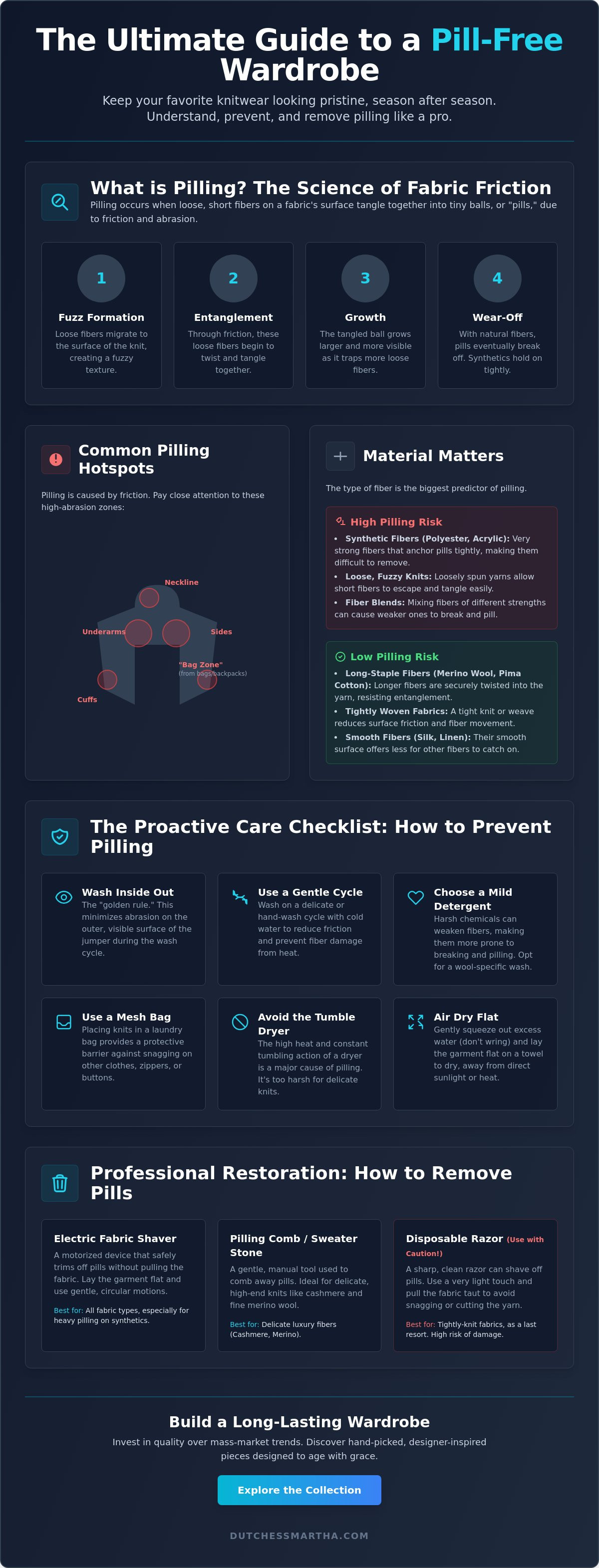
Ever wondered why your softest knits develop those annoying little bobbles after only a few wears? What is pilling? Essentially, it is the formation of tiny balls of tangled fibres on the surface of your fabric. These pills occur when loose fibres migrate to the surface and twist together due to friction. If you want to master how to stop jumpers from pilling, you must first respect the physics of the fabric itself.
The secret lies in the length of the fibres. Short fibres, often found in less expensive or heavily processed wools, are much more likely to poke out and tangle. Long-staple fibres, such as premium Egyptian cotton or high-grade wool, stay tucked into the yarn. However, even the most luxurious pieces can experience this. Pilling typically progresses through four distinct stages:
- Fuzz formation: Loose fibres rise to the surface of the knit.
- Entanglement: These loose fibres begin to twist into a tiny ball.
- Growth: The pill becomes larger and more visible as it traps more fibres.
- Wear-off: The pill eventually falls away, though this happens much slower with synthetic blends.
There is a common misconception that bobbling always equals low quality. In reality, natural luxury fibres like cashmere or fine merino often pill initially as they shed excess fuzz. This is a natural cycle for premium knitwear. Knowing how to stop jumpers from pilling starts with accepting this temporary phase and treating your garments with the care they deserve.
Why Do Jumpers Bobble? The Main Culprits
Abrasion is the primary trigger for pilling. Every time you move, your clothes rub against your skin or other layers. Fiber twist also plays a significant role. Loosely spun yarns, which are common in relaxed boho knits, offer a beautiful drape but provide more opportunities for fibres to escape the yarn. Additionally, heat and moisture from incorrect washing temperatures can weaken the fibre structure. This makes individual strands more prone to breakage and entanglement during the drying process.
Common Pilling Hotspots to Watch
Keep a close eye on the underarms and sides of your garment. These are the primary friction zones where your arms swing naturally as you walk. Cuffs and necklines are also vulnerable because they are in constant contact with your skin, watches, and jewellery. Finally, pay attention to the "Bag Zone." This is the specific area where your leather handbag or backpack rubs against your hip or shoulder. This concentrated friction can cause bobbles to form much faster than in other areas of the jumper.
Material Matters: Which Fabrics are Prone to Pilling?
Understanding the DNA of your knitwear is the first rule of care. When you are looking for how to stop jumpers from pilling, your choice at the checkout is just as important as your laundry routine. Natural fibres and synthetic blends behave very differently once they hit your wardrobe. Some materials are designed for longevity, while others require a bit more vigilance to stay pristine.
Synthetic fibres like polyester and acrylic are essentially long strands of plastic. While they offer durability and hold colour beautifully, they are notorious for persistent bobbling. Because these plastic fibres are incredibly strong, the pills don't break away during wear. They stay anchored to the surface, creating a fuzzy texture that is difficult to clear without the right tools. This "strength" is exactly what makes synthetic pilling so frustrating for the modern woman.
If you love a boho aesthetic, you likely gravitate toward mixed-media knits and crochet textures. These "Boho Blends" often combine different fibre lengths and weights, which naturally increases the chance of friction. To maintain that effortless elegance, look for low-pill alternatives like silk-blends, linen, or high-twist cotton when building your hand-picked collection of women's apparel. These smoother surfaces offer fewer "hooks" for fibres to grab onto.
The Luxury of Wool and Cashmere
Don't be alarmed if your new cashmere piece shows a few bobbles after the first wear. This is a natural migration of loose, short fibres to the surface. High-quality natural fibres have a unique advantage; these bobbles are often "soft" and can be easily removed with a gentle comb. Premium Merino wool is a particularly smart choice for longevity. Its fibres are naturally longer and smoother, which helps them resist the urge to tangle into knots. This is why investing in quality over mass-market knits pays off in the long run.
Synthetics and Blends: The Persistent Pill
Acrylic jumpers often pill within hours of wear. These bobbles feel hard to the touch and cling to the garment like glue. Polyester blends can also suffer from "fuzzing," where a halo of loose fibres appears across the entire chest or back. This is often a sign of shorter, lower-grade fibres being used in the weave. High-twist yarns keep individual fibres tightly bound, leaving no loose ends to tangle into unsightly bobbles. Selecting these tightly woven pieces is a proactive way to ensure your style remains sharp and sophisticated for seasons to come.
How to Prevent Pilling: The Proactive Care Checklist
Prevention is a quiet luxury. While restoration is possible, knowing how to stop jumpers from pilling starts long before you reach for a fabric shaver. It begins with a mindful care routine that respects the delicate nature of high-quality yarns. By adopting a few simple habits, you can keep your collection looking fresh and sophisticated for years. This proactive approach is the most effective way how to stop jumpers from pilling over time.
The golden rule of knitwear care is simple: always wash your knits inside out. Friction is the primary cause of pilling, and most of that friction occurs inside your washing machine. By turning your garment inside out, you ensure that any inevitable rubbing happens on the hidden side of the fabric. This protects the "fashion side" from developing those unsightly bobbles. Additionally, always choose liquid detergent over powder. Powdered detergents often contain abrasive undissolved particles that act like tiny pieces of sandpaper on soft fibres.
It might sound counter-intuitive, but you should skip the fabric softener. While softeners make clothes feel plush, they actually encourage pilling. These chemicals coat the fibres, making them slippery and more likely to slide out of the yarn twist. Once a fibre becomes loose, it is only a matter of time before it tangles into a pill. For storage, folding is essential. To maintain your collection, you can explore Chest of Drawers & Commodes for high-quality storage. Never hang your jumpers. Gravity is a persistent force that stretches the shoulders and weakens the fibre structure, creating the perfect environment for fuzz to form.
Laundry Day: A Step-by-Step Guide for Jumpers
Transform your laundry routine into a ritual of care. Use a mesh laundry bag for every knitwear piece. This creates a physical barrier that prevents your jumpers from tangling with abrasive zips, hooks, or buttons from other clothes. Set your machine to the "Delicate" or "Hand Wash" cycle and keep the temperature below 30°C. High heat is a major stressor for natural fibres. When the cycle finishes, don't wring the water out. Instead, lay the jumper flat on a clean, dry towel and reshape it gently. This prevents the fibre stress that leads to premature pilling.
Daily Wear and Friction Management
Your daily environment affects the lifespan of your tops. To reduce surface abrasion, choose smooth-lined coats or blazers to wear over your knits. Rough wool or unlined jackets can cause heavy pilling on the chest and back. Mind your accessories as well. Chunky jewellery or textured handbag straps can act as abrasives. Finally, give your knits a rest. Avoid wearing the same jumper two days in a row. Fibres need at least 24 hours to bounce back to their original shape after being stretched by body heat and movement.
How to Remove Bobbles: Professional Restoration Techniques
Even the most meticulously cared-for knitwear can develop a few bobbles over time. It is not a sign of failure; it is simply part of the natural life cycle of high-quality fibres. Discovering how to stop jumpers from pilling involves more than just prevention; it requires a steady hand and the right restoration techniques. By taking the time to carefully remove these small imperfections, you breathe new life into your favourite pieces, ensuring they remain staples in your wardrobe for years.
Restoration is an art that begins with the right environment. Lay your garment on a flat, hard surface like a dining table or a clean floor. Avoid soft surfaces like beds, as they don't provide the tension needed for a clean shave. Ensure you have bright, natural lighting or a strong desk lamp directed at the fabric. You must be able to see every tiny entanglement clearly. First, identify the fibre type to choose your tool. Work in small, manageable sections, moving your tool gently in the direction of the knit. Once you've finished, use a lint roller to pick up the loose fibres and "dust" you've just detached. A crucial warning: never pull bobbles off with your fingers. This yanks more fibres out of the yarn, creating a fuzzy path for even more pilling to form later.
Choosing the Right Tool: Combs vs. Shavers
Selecting the correct instrument is vital for protecting your investment. A fabric comb is a sophisticated, manual tool best suited for fine natural fibres like cashmere and silk blends. It gently "teases" the pills away without risking the integrity of the weave. For heavier knits or stubborn synthetic pills, electric fabric shavers are the gold standard. They offer a precise, uniform finish that makes the fabric feel smooth to the touch again. You might hear about the "pumice stone" method, but use it with extreme caution. It is highly abrasive and should only be reserved for very sturdy, heavyweight wools where a shaver might struggle.
DIY Hacks: What to Use and What to Avoid
While professional tools are always preferred, you might find yourself in an emergency. The safety razor hack is a high-risk, high-reward method for quick de-pilling. Use a fresh, sharp blade and keep the fabric extremely taut, skimming the surface with a feather-light touch. However, avoid using kitchen sponges or Velcro to remove pills. These materials are far too aggressive. They don't just remove the bobbles; they shred the healthy fibres, leading to a permanent "fuzzy" look that ruins the elegance of the piece. A quality fabric shaver is a $20 investment that saves a $200 jumper. Mastering these techniques is the ultimate secret for how to stop jumpers from pilling from ruining your signature style.
Ready to refresh your wardrobe with high-quality pieces designed to last? Explore our latest collection of women's apparel today.
Building a Long-Lasting Wardrobe with Dutchess Martha
At Dutchess Martha, we believe your clothes should tell a story of longevity and careful selection. Choosing quality over mass-market fast fashion is the ultimate strategy for anyone wanting to learn how to stop jumpers from pilling. Our commitment to hand-picked, designer-inspired boho clothing means every piece is chosen with both style and durability in mind. When you invest in better materials, you significantly reduce the daily frustration of bobbling and wear. It is about building a collection that reflects your standards.
We invite you to view knitwear care as more than just a laundry chore. It is a ritual of self-care and a sign of respect for the pieces you love. Taking the time to wash, dry, and de-pill your favourite items empowers you to take control of your personal style. Our philosophy is rooted in the belief that every woman deserves to feel self-assured and attractive in garments that stand the test of time. Understanding how to stop jumpers from pilling is just one part of that journey toward a more mindful, elegant lifestyle. Your wardrobe is an investment in your confidence.
Selecting Your Next Favourite Jumper
Browse our weekly new arrivals to find pieces that blend modern femininity with timeless appeal. Look for tightly twisted yarns and premium natural blends that promise a low-maintenance look without sacrificing softness. These knits are perfect for layering over our sophisticated dresses for a polished, layered aesthetic. If you're ever unsure about a specific fabric or care instruction, our founder-led team is always here to offer personal, expert advice on garment longevity and styling.
Final Style Inspiration
A beautifully maintained jumper is the perfect partner for our curated skirt collection. Whether you are pairing a soft merino knit with a flowing maxi or a structured midi, the result is effortless grace. By following this professional care guide, you ensure your wardrobe remains a source of joy rather than stress. You now have the secrets to keep your knits looking brand new, season after season. It's time to step out with the confidence that comes from a perfectly curated, pill-free look.
Explore our latest curated knitwear collection at Dutchess Martha
Master the Art of a Pristine Wardrobe
Maintaining a flawless collection is about choosing quality and respecting the life cycle of your garments. You now have the professional secrets to protect your investment. By washing your knits inside out and selecting long-staple natural fibres, you've already won half the battle. Remember that a gentle restoration with a fabric comb or shaver can make an older piece feel brand new again. Mastering how to stop jumpers from pilling is not just a laundry skill; it is a commitment to sustainable, high-end style that lasts for seasons.
At our founder-led Australian boutique, we curate weekly new arrivals with a focus on designer-inspired, boho-chic aesthetics that prioritize quality. We want you to feel self-assured and graceful in every piece you wear. Your style journey is a source of joy, and we are here to support you with hand-picked selections that stand the test of time. Shop our hand-picked collection of premium knitwear and tops today and discover the difference that mindful selection makes. Wear your favourite knits with confidence and let your personal expression shine through.
Frequently Asked Questions
Why do my jumpers pill even if they are expensive?
Pilling is a natural characteristic of certain high-quality fibres like cashmere and fine wool, rather than a sign of low quality. Expensive knits often use soft, short-staple fibres that migrate to the surface during the first few wears. This initial shedding phase is normal and usually settles after the first few de-pilling sessions. It's a trade-off for the exceptional softness and warmth these luxury materials provide.
Can I stop pilling completely?
No, you cannot stop pilling entirely because it is caused by the natural friction of wearing the garment. However, you can significantly reduce its frequency by following a strict care routine. Learning how to stop jumpers from pilling involves minimizing abrasion through inside-out washing and choosing high-twist yarns. While some fuzz is inevitable, proactive maintenance ensures your knitwear stays smooth and elegant for many seasons.
Is it safe to use a razor to remove bobbles from a jumper?
It is safe only if you use extreme caution and a very light touch. A sharp, single-blade safety razor can effectively skim the surface of sturdy knits to remove persistent bobbles. However, the risk of cutting the fabric is high, especially on fine cashmere or loosely woven pieces. For the safest results, we recommend investing in a dedicated electric fabric shaver designed specifically for delicate textiles.
Should I use fabric softener on my knitwear?
You should avoid using fabric softener on your knitwear because it actually encourages fibres to loosen. Softeners coat the strands in a slippery chemical layer, making it easier for them to slide out of the yarn twist and tangle into pills. Instead, use a gentle liquid detergent specifically formulated for wool and delicates. This keeps the fibres strong and securely bound within the knit structure.
How often should I de-pill my clothes?
You should de-pill your clothes whenever you notice visible bobbles affecting the garment's appearance, typically every three to five wears. For new natural fibre jumpers, you might need to do this more frequently during the initial shedding phase. Regular maintenance prevents small pills from growing into larger tangles that are harder to remove. Keeping a fabric comb in your dressing area makes this a quick, five-minute task.
Does washing jumpers in a mesh bag really work?
Yes, washing jumpers in a mesh bag is one of the most effective ways to protect them from mechanical friction. The bag acts as a protective shield, preventing the delicate knit from rubbing against the machine drum or snagging on zips and buttons from other items. This simple step is a cornerstone of how to stop jumpers from pilling during the laundry cycle, preserving the smooth finish of your favourite pieces.
What is the best way to store jumpers to prevent pilling?
The best way to store jumpers is to fold them neatly and place them on a shelf or in a breathable cotton storage bag. Never hang your knitwear, as hangers cause the fabric to stretch and weaken the fibres at the shoulders. Weakened fibres are more prone to breaking and tangling into pills. Ensure your storage area is cool and dry to maintain the integrity of the natural yarns.
Can a dry cleaner remove pilling for me?
Yes, most professional dry cleaners offer de-pilling services as part of their knitwear maintenance packages. They use industrial-grade steamers and specialized tools to safely restore the surface of your garments. If you are nervous about using a shaver on a particularly expensive designer piece, trusting a professional is a wise choice. They can often achieve a level of smoothness that is difficult to replicate with home tools.