

Gentle washing protects the shape of knitwear. To learn how to wash knitwear by hand, use cool water with a little wool wash if desired, and soak the garment for 10-15 minutes. Lift it with its weight supported, gently squeeze out excess water, then dry it flat and reshape it.
It’s natural to worry that water, handling or a stubborn spill could leave a favourite knit stretched or misshapen. A careful routine makes washing simpler: let the water do the work, handle the fabric gently and never wring it.
Learn how to choose the water temperature and soaking time, treat spills without rubbing, and remove moisture with a towel. Then follow the flat-drying and reshaping steps to help your knitwear keep its shape.
Key Takeaways
- Use cool water and let knitwear soak for 10-15 minutes to help clean it gently.
- For spills, treat only the affected area with care instead of rubbing the knit.
- Press out moisture gently, then use a towel to help remove more water without wringing.
- Dry knitwear flat and reshape it while damp to help it keep its form.
Choose water temperature and soaking time
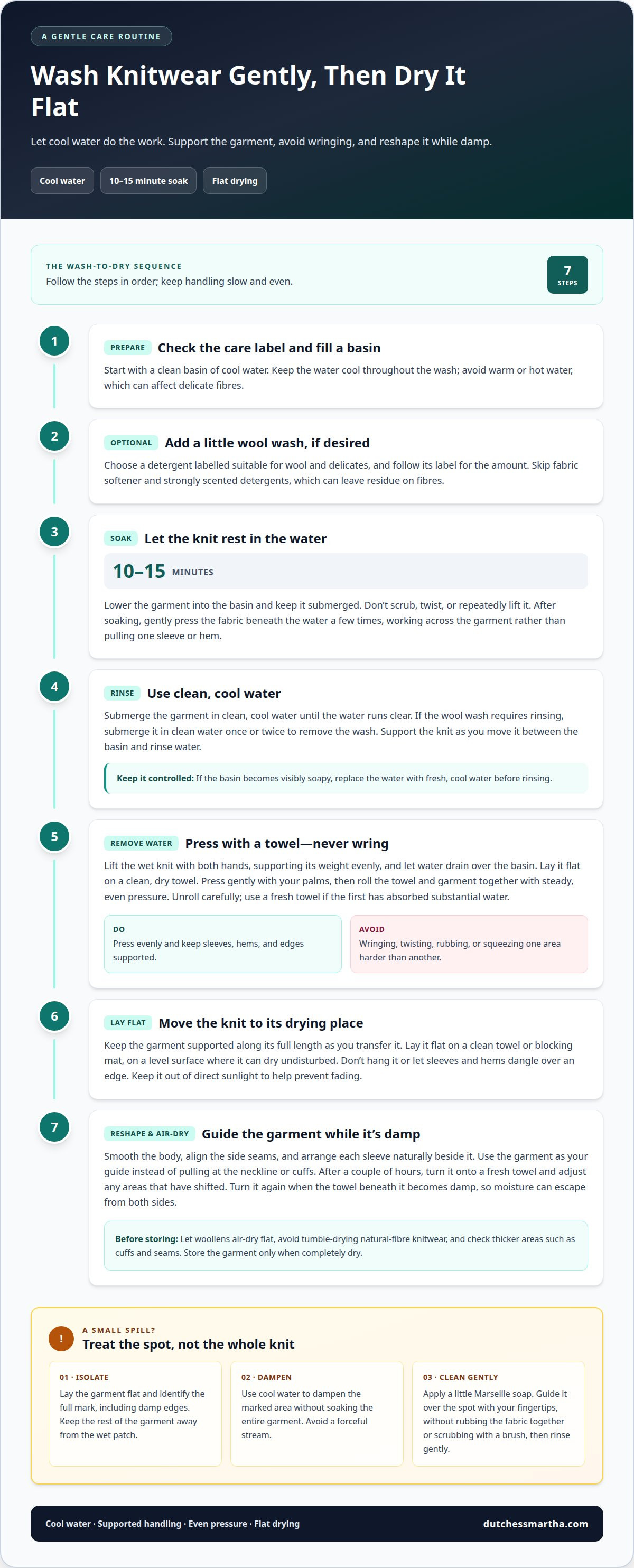
Start by checking the garment’s care label, then prepare a basin of cool water. Gentle handling and the right soaking time matter more than vigorous movement.
- Fill a clean basin with cool water before adding the knitwear. Avoid warm or hot water, which can affect delicate fibres. Keep the water cool throughout the wash instead of adding warmer water partway through.
- If desired, add a little wool wash, following its label for the amount. Choose a detergent labelled suitable for wool and delicates. Skip fabric softener and strongly scented detergents, which can leave residue on the fibres.
- Lower the knitwear into the basin and let it soak for 10-15 minutes. Keep the garment submerged without scrubbing, twisting or repeatedly lifting it. This gives the cool water and wool wash time to loosen everyday soil.
- After soaking, gently press the fabric beneath the water a few times. Work across the garment rather than pulling at one sleeve or hem. This gentle movement lets water pass through the knit without rough agitation.
- Rinse by submerging the garment in clean, cool water until the water runs clear. If you used wool wash that isn’t rinseless, submerge the knitwear in clean water once or twice to remove it. Support the garment as you move it between the basin and rinse water.
For example, move a wool jumper washed with a rinse-required wool wash from its soak into clean water, rather than holding it under a forceful tap. Let the water do the work. If the basin becomes visibly soapy, replace the water with fresh, cool water before rinsing. Move slowly and deliberately, especially around cuffs and hems, where pulling can change the shape. This keeps the process controlled from the first cool soak to the final rinse.
Drying and shaping knitwear
Hand washing is gentler on wool garments than machine washing. Gather a clean towel, fresh towels for changing, a flat drying surface and wool wash if needed.
-
Dry Knitwear Flat
Lay the damp garment flat on a clean towel or blocking mat, supporting its full length. Choose a level surface where the knit can dry undisturbed, rather than hanging it over a rail. Make sure sleeves and hems don’t dangle over the edge, where their weight could stretch the fabric. Keep the knit out of direct sunlight to help prevent fading.
-
Reshape Knitwear While Drying
While the knit is damp, gently guide it towards its original shape. Smooth the body, align the side seams and arrange each sleeve naturally beside it. Use the garment itself as a guide instead of pulling at the neckline or cuffs. After a couple of hours, turn it onto a fresh towel. Check its outline and adjust any areas that have shifted.
-
Air-Dry Woollens
Leave woollens flat to air-dry on fresh towels or a blocking mat. Turn the garment when the towel beneath it becomes damp, so moisture can escape from both sides. Avoid tumble-drying natural-fibre knitwear and keep it out of direct sunlight. Check thicker areas, such as cuffs and seams, before putting the garment away. Store it only when completely dry.
ME+EM recommends drying knitwear flat over a clean towel and reshaping it gently. A commenter says woollens on a drying rack positioned near a boiler dry in about 24 hours, and describes a drying rack positioned 4 inches above the ground.
Keep hand knits out of direct sunlight while drying to help prevent fading. After a couple of hours, turn the garment onto a fresh towel. When lifting wet wool knitwear, support its weight evenly to help prevent sagging and stretching.
Removing excess water without wringing
After rinsing, remove excess water with pressure, not twisting. Wringing and rough agitation can felt hand knits and distort their shape.
- Lift the knitwear with both hands, supporting its weight evenly from underneath. Wet fibres are heavier, so holding only a shoulder or cuff can pull that area out of shape. Let water drain over the basin before moving the garment to a towel. Keep sleeves and hems supported rather than letting them hang.
- Lay the garment flat on a clean, dry towel. Smooth it into a relaxed shape, then place another section of the towel over it if needed. Press gently with your palms across the fabric, working from the centre towards the edges. Don’t rub, knead or twist the knit to force water out.
- Roll the towel and knitwear together, starting at one end. Apply steady, even pressure along the roll so the towel absorbs moisture. Keep the roll loose enough to prevent the garment bunching or folding sharply. Unroll it carefully and check whether the towel is damp. Use a fresh towel if it has absorbed substantial water.
- If the knit still feels very wet, repeat the gentle pressing or rolling process with a dry cotton towel. Avoid squeezing one area harder than another, especially around the neckline, cuffs and hem. These edges can stretch when handled on their own. An even press removes moisture without the friction that can cause pilling on delicate surfaces.
Once the towel has absorbed water, move the knitwear while supporting its full length. Keep it flat as you transfer it to the drying surface, rather than lifting it by one edge. This careful transition helps preserve the shape you’ll arrange as it dries.
Spot-clean spills without rubbing
For a local spill, treat the affected patch rather than scrubbing the whole knit. Use cool water, a little Marseille soap and a gentle rinse to clean the spot while limiting handling.
- Lay the knit flat on a clean surface and identify the full mark, including any damp edges. If there’s a small splash on a sleeve, keep the rest of the garment away from the wet patch. This makes it easier to treat only the affected area and avoid spreading the spill.
- Wet the marked area with cool water. Use enough to dampen the fibres around the spill without soaking the entire garment. Keep the water gentle: a forceful stream can disturb the knit and carry residue into nearby stitches. If the mark is on a cuff, support it so it doesn’t hang under its own weight.
- Apply a little Marseille soap directly to the damp spot. Use your fingertips to guide the soap over the stain instead of rubbing the fabric together or scrubbing with a brush. For a food mark on a jumper, work gently from the outside of the mark towards the centre. Avoid pulling at loose fibres.
- Rinse the treated area with clean, cool water until the soap is gone. Let water pass gently through the patch, supporting the knit as you do. Don’t twist or wring the spot. Press it softly between your hands to release water, then use a clean towel to absorb any remaining moisture.
- Check the patch in good light before laying the garment flat to dry. If the mark remains, repeat the careful wetting, soaping and rinsing steps rather than increasing pressure. A small, deliberate treatment is easier to control than rubbing the stain across a wider area of knitwear.
Dutchess Martha: Women's Apparel
Dutchess Martha is a natural next step when you’re refreshing your wardrobe with considered women’s apparel. After learning how to care for knitwear, explore clothing and fashion accessories to bring a personal look together. Jewellery and homewares offer more ways to express your style beyond everyday outfits.
When you’re ready to discover pieces that feel polished, individual and easy to make your own, explore Dutchess Martha’s curated fashion and lifestyle selection for inspiration as you build a wardrobe that reflects your taste.
Visit dutchessmartha.com to explore.
Make thoughtful care part of your wardrobe routine
Caring for knitwear can become a small ritual that helps you enjoy the pieces you already own. As you learn how to wash knitwear by hand, let the care label and fabric guide your choices. A little patience can make caring for delicate garments feel more considered and less like a chore.
Use the same thoughtful eye when choosing what to wear next. Dutchess Martha brings together women’s apparel, fashion accessories and jewellery for a polished, expressive personal style. Explore the collection when you’re ready to find pieces that complement your wardrobe.
Explore Dutchess Martha’s collection and enjoy building a look that feels like you.
Frequently Asked Questions
How do I hand wash?
Hand wash knitwear as a delicate fabric, not ordinary laundry. Check the care label first, then use a clean basin and cool water. Handle the garment gently, especially around necklines, cuffs and seams. For instance, don’t lift a wet jumper by its collar. Support its weight and follow the garment’s fibre-specific care instructions if they differ.
Why does knitwear shrink?
Knitwear can shrink when fibres felt and compact, changing the garment’s dimensions. Agitation during washing can contribute to felting, so avoid scrubbing, twisting or wringing wool knits. Heat can also affect delicate fibres, which is why cool water is a safer choice for washing. If a jumper feels tighter after washing, rough handling or unsuitable heat may have changed its structure.
When do my knits need washing?
Wool hand knits usually don’t need washing after every wear. Air them between uses, and wash them when soiled or no longer fresh. Hand-knit sweaters can be washed once a year before summer storage, while newly finished hand-knit items should be washed after coming off the needles to remove hand oils and residue. Check for spots before putting a knit away.
How do you hand wash knitwear step by step?
First, read the care label and prepare a basin of cool water. Add wool wash if desired, then submerge the knit and let it soak. Press the fabric gently instead of scrubbing. Rinse as needed, lift the garment with its full weight supported, and use a towel to absorb moisture. For a small spill, treat the spot separately with Marseille soap.
What water temperature should you use to wash knitwear by hand?
Use cool water to hand wash knitwear. Avoid temperature changes during the wash, since moving a garment between water temperatures can stress delicate fibres. For example, prepare rinse water at a similar cool temperature to the soaking water. Cool water also pairs well with gentle handling, helping you clean the fabric without vigorous movement that could encourage wool to felt.
Which detergent is best for hand washing wool and other knitwear?
Choose a detergent labelled suitable for wool and delicates. Use a little, following the product label, and avoid fabric softener or strongly scented detergent. Wool wash is another option for wool knitwear. If the wash isn’t rinseless, rinse the garment in clean water to remove it. Use Marseille soap on a damp, localised spill rather than across the whole knit.