

A mood board that feels like you starts with a purpose, not a pile of pretty pictures. Creating a mood board for your personal style means bringing together outfit images, colours, textures and words that express how you want to dress and feel. Arrange them to make recurring details stand out, leaving enough space for each element to breathe.
It’s easy to save images you love and still wonder what they have in common. Start with a thoughtful brief: consider your everyday life, the occasions you dress for and the details that make you feel most like yourself. Your board should inspire you while helping you make practical wardrobe choices.
Learn how to define your board’s purpose, draw inspiration from your experiences and organise ideas in a physical or digital collection. Then edit your selections into a clear visual guide that helps you recognise your personal style and bring it into everyday outfits.
Key Takeaways
- Set a clear purpose for your board by connecting the style you want with the way you actually dress day to day.
- Look for recurring colours, prints and silhouettes to spot the details that make your inspiration feel personal.
- Gather ideas from art, nature, culture and memories, then choose a physical or digital format that suits how you like to create.
- Arrange images, textures and words with intention, leaving space so the overall direction feels clear rather than crowded.
- Use your finished board to shape outfit ideas, notice wardrobe gaps and refine your style as it evolves.
What does a mood board look like?
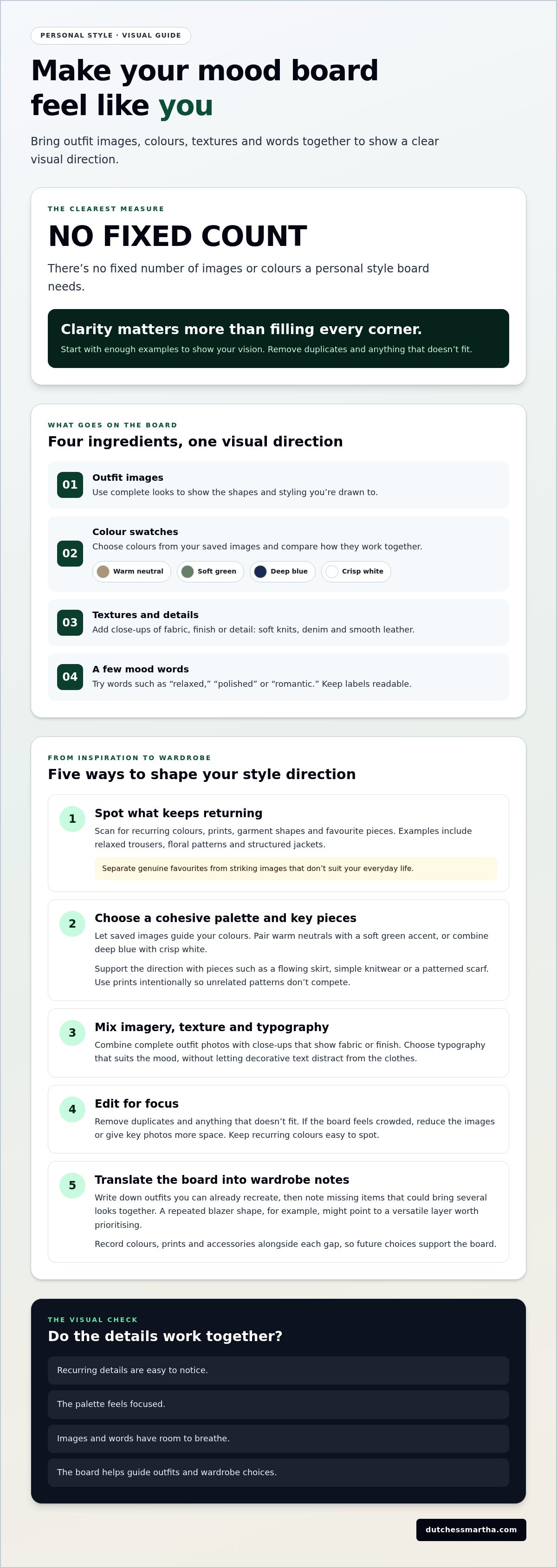
A personal style mood board brings outfit images, colour swatches, textures and words together to show a visual direction. Look for recurring details and use them to guide wardrobe choices and future outfits.
-
Spot recurring colours, prints, and styles
Gather your chosen photos and scan them for details that appear more than once. Notice colours, prints, garment shapes and favourite pieces, such as relaxed trousers, floral patterns or structured jackets. Repetition can reveal what you naturally gravitate towards. Separate genuine favourites from images that look striking but don’t suit your everyday life. A board should express your vision, not simply collect attractive outfits.
-
Choose a cohesive palette and key pieces
Choose colours from the images you’ve saved, then compare how they work together. Your palette might pair warm neutrals with a soft green accent or combine deep blue with crisp white. Look for garments and accessories that support this direction, such as a flowing skirt, simple knitwear and a patterned scarf. Use prints intentionally: repeated motifs can strengthen the look, while unrelated patterns may compete for attention.
-
Combine textures, typography, and imagery
Mix complete outfit photos with close-ups that show fabric, finish or detail. Textures such as soft knits, denim and smooth leather add a tactile dimension to your ideas. Add a few words to capture the mood, like “relaxed,” “polished” or “romantic.” Choose typography that suits the feeling, but keep labels readable. Avoid decorative text that distracts from the clothes and images.
-
Set image and colour quantities
There’s no fixed number of images or colours a personal style board needs. Start with enough examples to show your vision, then remove duplicates and anything that doesn’t fit. Keep the palette focused so recurring colours are easy to spot. If the board feels crowded, reduce the images or give key photos more space. Clarity matters more than filling every corner.
- Turn the board into a practical shopping list by comparing its recurring pieces and details with your wardrobe. Write down outfits you can already recreate, then note the missing items that would bring several looks together. A repeated blazer shape, for example, might point to a versatile layer worth prioritising. Record colours, prints and accessories alongside each gap, so future choices support the board rather than distract from it.
Arranging a physical or digital mood board
Choose a format that suits how you collect ideas and revisit your style vision. Arrange each element so clothing, colour and texture feel connected.
-
Choose a physical or digital format
Decide whether you want a tactile board or one you can edit on a screen. For a physical version, cut images and words from magazines, then arrange them on cardboard; according to Illawarra Shoalhaven Local Health District, photographs and drawings also work. A digital board is easy to update as your ideas shift. Choose a format you’ll actually return to, rather than one that becomes difficult to access or change.
-
Arrange the mood board elements
Place your strongest visual reference first, then group related images, colours and textures nearby. For example, cluster outfit photos with fabric details that echo their shapes or finishes. Vary image sizes and orientations to create rhythm, but keep a clear visual path across the board. Leave white space between groups so details are easy to read. On a physical board, move pieces around before attaching them; digitally, try several layouts before settling on one.
-
Choose a free app or website
For free digital fashion inspiration, explore Pinterest, Instagram and Behance. Save relevant references in a dedicated collection or board, using labels such as “workwear” or “weekend layers” to keep ideas easy to find. Treat these platforms as inspiration sources, then assemble your selections in a layout that suits you. Choose clear photos where clothing details are visible, rather than tiny or blurred previews.
-
Build a collaborative digital board
If you’re making the board with a friend, create a shared digital space and agree on its purpose first. Ask each person to add images that fit the same style direction, then discuss what feels consistent. Use short comments to explain choices, such as “useful jacket shape” or “love this colour pairing.” Avoid adding references without context, as a shared board can quickly become a mix of unrelated tastes.
-
Review the layout before you finish
Step back from a physical board or zoom out from a digital canvas to check its overall balance. See whether the main outfit references stand out, the colours feel related and any text remains legible. Remove duplicates and elements that interrupt the visual flow. Keep a working copy if you want to test changes later, and make the final version easy to revisit when planning outfits or considering new clothes.
Finding inspiration in art, nature, culture, and memories
Look beyond outfit photos for fashion ideas with a personal connection. Art, landscapes, music and remembered moments can shape your mood board’s colours, textures and feeling.
-
Collect existing fashion inspiration
Save fashion references with details you might adapt, such as a silhouette, colour pairing or way of layering. Pinterest, Instagram and Behance offer places to gather visual inspiration, while fashion magazines and runway photographs can reveal different styling approaches. Treat each image as a reference, not a formula to copy. Note what caught your attention, such as a coat’s shape or the contrast between a print and plain fabric.
- Explore art, nature, culture and memories for ideas beyond clothing. A gallery painting might suggest a rich colour combination; coastal rock formations could inspire layered textures; a favourite film scene may capture the mood you want. Personal photos from a trip or family gathering can make the board distinctly yours. Select references respectfully, especially when drawing from cultural designs or symbols, and focus on the colours, shapes or atmosphere that resonate.
Keep the purpose of each collection clear. An inspiration board documents direct sources, such as a painting, landscape or photograph. A mood board brings those references together to express an overall fashion feeling, like relaxed, romantic or bold. For example, a botanical print, a garden photograph and a flowing outfit might combine into one cohesive mood without copying any single source.
-
Gather seasonal inspiration
Choose the season or dressing period your board should serve, then gather references that suit its atmosphere and practical needs. For an Australian summer mood board, you might explore bright light, open-air settings and breathable-looking silhouettes. For cooler months, collect images with deeper tones, layered outfits and tactile fabrics. Seasonal colour forecasts can offer ideas, but let your preferences guide what stays on the board.
- Build a seasonal collection from varied sources rather than relying on one fashion trend. Combine runway details, street-style photographs, film stills, album artwork, older brand campaigns and your own phone photos. Add colour swatches from those references, then compare them with clothes you enjoy wearing. A warm-toned photograph, for instance, might inspire a palette of rust, cream and brown across several outfit ideas.
- Find Australian-friendly inspiration and materials without making the process depend on a shopping trip. Use your own photographs, sketches, saved digital references and magazine cut-outs; cardboard gives printed pieces a surface to arrange on. Pinterest, Instagram and Behance can help you collect fashion ideas, while local scenery, architecture and gallery visits offer original visual prompts. Focus your selections on a feeling, colour or detail you can translate into personal style.
Defining the purpose and brief for a personal-style mood board
Start with a clear purpose: decide what you want the board to help you wear, feel or choose. Avoid collecting attractive images with no connection to your lifestyle, because unrelated ideas won’t guide practical outfits.
- Name the style goal. Write a short brief describing the look you want and why. For example: “Build a relaxed, polished wardrobe for office days and weekends.” This gives each image a purpose. If a Pinterest reference doesn’t support the brief, leave it out rather than keeping it simply because it’s popular.
- Think about your real routine. Note the settings your clothes need to suit, such as commuting, desk work, social events or outdoor activities. A board for a mostly casual week will differ from one centred on formal occasions. Include outfit ideas for the situations you actually dress for, so the visual direction stays useful beyond a single special event.
- Use your lifestyle as the filter. Consider the climate, comfort and practical needs that shape your regular clothing choices. For example, if you walk between appointments, images of walking-friendly shoes may be more relevant than delicate footwear. A personal style board should reflect your lifestyle and be easy to refer to when considering outfits and wardrobe choices.
- Choose a cohesive direction. Select a few words that capture the mood, such as “soft,” “structured” or “playful,” then check whether the images support them. A polished brief might pair tailored shapes with simple accessories; a relaxed one might favour loose layers and natural textures. Avoid mixing ideas that pull in opposite directions unless contrast is part of your intended look.
- Set boundaries and avoid common mistakes. Don’t make the board a copy of one designer’s outfits, a collection of every passing trend or an unrealistic version of your daily life. Use references to understand shapes and styling, then build an original vision. If workwear and weekend dressing need different solutions, divide them into separate boards or sub-boards instead of forcing every idea together.
- Write a brief you can revisit. Add a simple note beside the board explaining its purpose, intended occasions and key style words. For example: “Weekend dressing, comfortable layers, warm neutrals, one statement print.” This keeps later edits focused. Personal style can evolve, so update the brief when your routine or preferences change instead of keeping images that no longer feel relevant.
How do you create a personal style mood board step by step?
Follow these steps to turn scattered references into a useful guide for outfits, shopping and everyday dressing.
- Set the board’s purpose. When creating a mood board for your personal style, begin with a short brief describing what you want it to do, such as “find relaxed work outfits” or “make weekend dressing feel more polished.” Name the occasions it should cover and the feeling you want your clothes to express. A focused purpose helps you decide which references belong.
- Gather personal references. Save runway, street-style and archival images that inspire shapes or styling, alongside your own photographs. Add details from art, nature, films, music or places you remember. Note what appeals in each reference, such as a colour combination, longline silhouette or layered look. Use images as prompts for your own vision, not templates for copying another designer’s clothes.
- Organise ideas before arranging them. Make a quick mind map with words for mood, materials, textures and silhouettes. For example, “easy,” “linen,” “soft structure” and “wide-leg” might form one connected direction. Group references under those ideas, then choose the ones that express them most clearly. If work, weekends and special occasions need different looks, make separate boards or sub-boards.
- Build and edit your collection. Bring outfit images, colour references, textures and useful words together in a physical or digital layout. Check that each item supports the brief and remove anything that distracts from it. For digital images, choose clear, good-quality files and consider copyright before using them. Leave space around key references so the overall direction is easy to read.
- Translate the board into outfits. Look for pairings that recur, then turn them into simple outfit formulas. A blazer with a knit top and relaxed trousers, for example, can become a repeatable combination. Compare each idea with your wardrobe and try to recreate the outfits using pieces you already own. Note what works and which gaps limit the combinations.
- Use the board while making choices. Keep a digital version accessible when shopping, or take a photo of a physical board. Compare potential purchases with its colours, shapes and outfit formulas before deciding. Balance foundational wardrobe pieces with trend-led details, so fresh ideas work with clothes you already wear. For a finishing touch that follows your visual direction, explore fashion accessories.
- Refresh it as your style changes. Revisit the board when your routines, preferences or dressing needs shift. Remove references that no longer feel right and add images that reflect what you enjoy wearing now. Creating a mood board for your personal style can evolve with you, rather than becoming a fixed set of rules. Keep the brief current so your outfit ideas stay relevant to your life.
Dutchess Martha: Women's Apparel
Dutchess Martha offers women’s apparel to help you explore outfit ideas inspired by your mood board. Once you’ve identified the colours, silhouettes and details you enjoy, browse clothing alongside fashion accessories and jewellery to see how those elements might work together in your wardrobe. Homewares can also echo the colours or textures that inspire your personal aesthetic, taking your visual ideas beyond what you wear.
When you’re ready to turn your style direction into fresh inspiration, explore Dutchess Martha’s clothing, accessories and jewellery. Use your board as a guide and focus on pieces and details that suit your everyday life and personal taste.
Contact Dutchess Martha to continue exploring your style.
Let your next style choice feel like your own
Your mood board doesn’t need to become a set of rules. Let it be a starting point for trying combinations, noticing what feels right and allowing your taste to change. Take one small next step: choose an outfit idea from your board and wear it this week. See how it fits your routine, then adjust your direction based on what you enjoy wearing.
Creating a mood board for your personal style can make future choices more intentional while leaving room for surprise. When you’re ready to explore pieces that complement your vision, browse Dutchess Martha’s women’s apparel, fashion accessories and jewellery.
Explore Dutchess Martha and take your next step with confidence. Your style is yours to shape, one thoughtful choice at a time.
Frequently Asked Questions
Can I use only digital images, or do I need to include physical elements?
Yes, a mood board can use digital images alone; physical elements are optional. A digital format works well if you collect outfit references on your phone and want to reorganise them easily. You can also combine formats: keep a digital collection of photographs, then add a fabric scrap or colour swatch to a printed page. Choose what helps you notice details and revisit your ideas.
What should you include in a personal style mood board?
Include references that help you picture how you want to dress, such as complete outfits, garment details, accessories and colours. Add a photograph of an outfit you already wear and one showing a look you’d like to try. A few words can explain what connects them, such as “soft layers” or “clean lines.” This makes the board useful for comparing your current choices with new possibilities.
How do you identify your personal style before making a mood board?
Start with your own wardrobe rather than online trends. Pick out clothes you reach for repeatedly, then consider what they share, such as relaxed fits, strong colours or simple shapes. Notice what stays unworn and why: the fabric, fit or occasion may not suit you. Also think about the settings you dress for. These observations help you choose references that match your real preferences.
How do you make a physical fashion mood board on a budget?
Reuse materials you already have, such as cardboard, old magazines, printed photographs and your own drawings. According to Illawarra Shoalhaven Local Health District, magazine images and words can be cut out and arranged on cardboard; photographs and drawings can also be used. Lay everything out before attaching it, so you can rearrange pieces without wasting materials. Handwritten labels can replace printed text.
How do you choose a colour palette for your personal style mood board?
Choose colours by comparing saved references with clothes you already enjoy wearing. For example, if several images and a favourite jacket share warm brown tones, use that colour as a starting point. Pull additional shades from the same photographs, then place them side by side to see whether they support the mood you want. Keep colours that feel connected to your style and remove distracting outliers.