

Caring for your most delicate garments should feel like an empowering styling ritual, not a high-stakes laundry gamble. We've all felt that sudden knot of dread holding a favourite silk blouse, breezy viscose dress, or intricate crochet knit, terrified that one wrong wash cycle might shrink the silhouette or pull the lace. If confusing care tags have ever caused wardrobe hesitation, you're certainly not alone. Understanding how to take care of delicate fabrics at home gives you the confidence to wear and celebrate your favourite fashion pieces without fear.
You don't need costly dry-cleaning trips to keep your cherished wardrobe vibrant, touchably soft, and effortlessly fluid. In this guide, you'll master the art of washing, drying, and preserving fine fibres using simple household tools, ensuring every beloved piece stays pristine season after season. Ahead, explore our complete stylist-approved roadmap to effortless garment care, clever label decoding, and timeless fabric preservation.
Key Takeaways
- Decode tricky laundry symbols and fibre traits to treat silk, lace, and viscose with the gentle precision they deserve.
- Learn how to take care of delicate fabrics at home using safe handwashing steps and protective mesh bags for stress-free machine cycles.
- Protect delicate textures and fluid drape by replacing tumble drying with cool air-drying and gentle garment steaming.
- Maintain the silhouette of your favourite bohemian dresses and intricate knits with proper hanger choices and thoughtful seasonal storage.
Understanding Delicate Fabrics: Identifying Fibres and Care Labels
Every gorgeous wardrobe piece tells a textile story. Delicate fabrics are materials crafted with fine, sensitive yarns that degrade quickly when exposed to rough mechanical friction, high heat, or harsh chemistry. Mastering how to take care of delicate fabrics begins with identifying the exact fibre woven into your garment. Different threads react distinctively to water and soap, meaning a universal washing method simply doesn't work for curated boutique collections.
Natural vs Synthetic Delicates: Silk, Rayon, Lace, and Linen
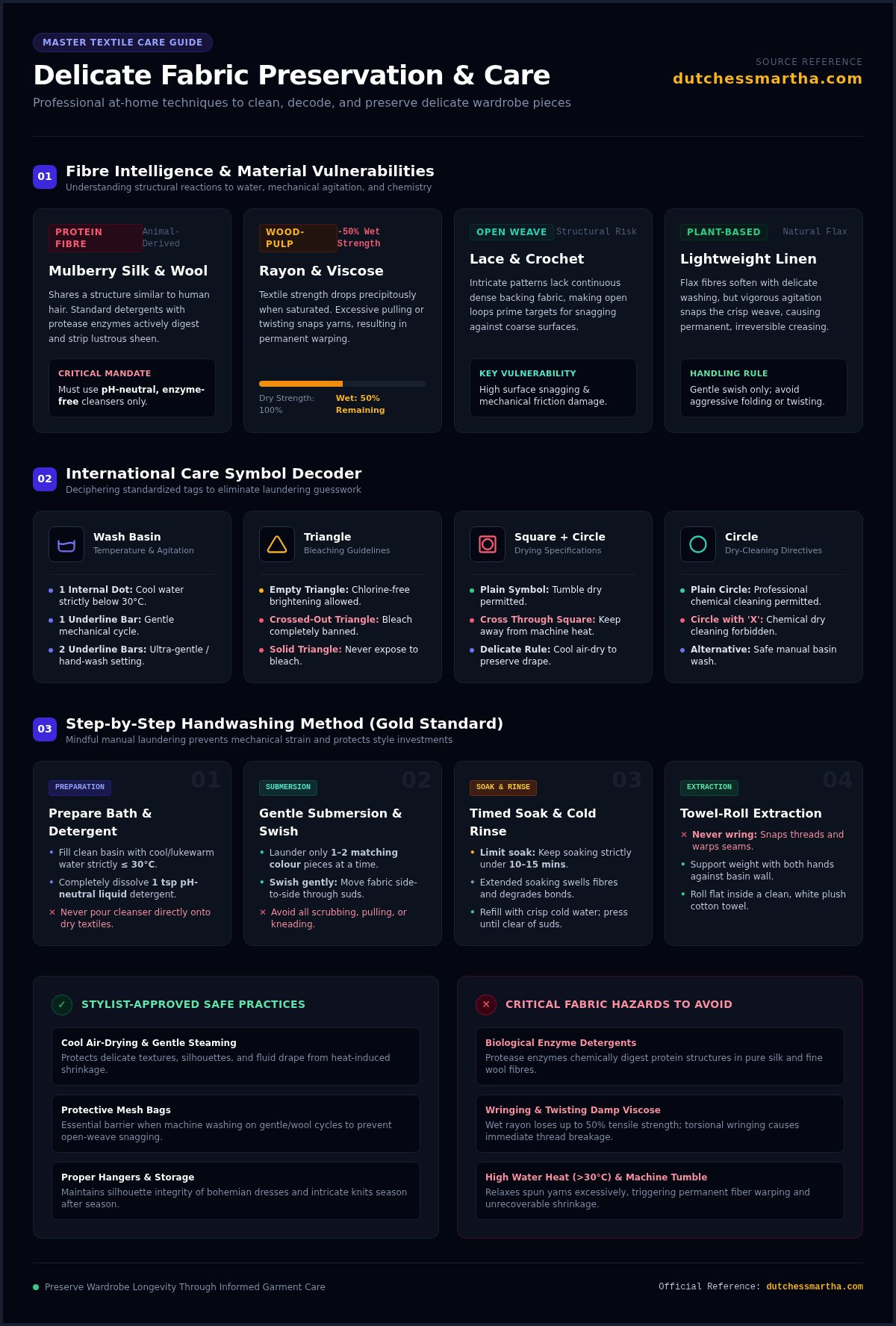
Garment composition dictates your laundering strategy. Animal-derived protein fibres like mulberry silk and fine wool share a structure similar to human hair; biological detergents containing protease enzymes will literally digest these fibres, stripping their lustrous sheen. Always choose pH-neutral, enzyme-free washes for pure silk slips and woollen knits. If you design your own garments or work with premium natural textiles, you can learn more about The Silk Route to explore specialist 100% silk fabrics.
Plant-based and regenerated fibres require a different mindset altogether:
- Rayon and Viscose: These wood-pulp textiles can lose up to 50% of their tensile strength when wet. Excessive pulling or twisting while damp easily snaps the yarns, causing permanent warping.
- Lace and Crochet: Open-weave crochet tops and intricate lace trims lack continuous dense backing, making them prime targets for snagging against rougher textures.
- Lightweight Linen: Natural flax softens with gentle washing, but intense agitation breaks the crisp weave, creating irreversible creasing.
Decoding International Garment Care Labels and Laundry Symbols
Understanding standardized laundry care symbols removes the guesswork from caring for your favourite bohemian silhouettes. The classic wash basin pictogram indicates water temperature through internal dots (one dot means cool water below 30°C). Underline bars beneath that basin signal agitation levels: one bar specifies a gentle cycle, while two bars demand an ultra-gentle wool or hand-wash setting.
Next, look at the dry-cleaning circle. A plain circle means professional chemical cleaning is permitted, but a circle marked with an 'X' forbids dry cleaning entirely. Pay close attention to the triangle: an empty triangle permits chlorine-free brightening, whereas a solid or crossed-out triangle bans bleach completely. Finally, check the square. A square with an inner circle denotes tumble drying, and a cross through it tells you to keep that piece far away from machine heat to prevent fibre shrinkage. Deciphering these markers empowers you to decide exactly how to take care of delicate fabrics safely in your own laundry.
Step-by-Step Handwashing Method for Sensitive Textiles
Handwashing remains the gold standard for preserving boutique garments, artisanal stitching, and fluid draping. While modern machinery offers convenience, nothing rivals manual laundering for total control over water temperature and mechanical strain. Garment experts frequently highlight specific guidelines on how to care for them to prevent premature textile wear, proving that a mindful five-minute basin ritual protects your style investments for the long haul.
Preparing the Water Bath and Choosing Gentle Cleansers
The Submersion, Swish, and Soak Technique
Wash only one or two garments of matching colour palettes at a time. Overcrowding invites friction, dulling delicate weaves. Gently press the pieces beneath the soapy water, moving them slowly with your hands:
- Swish gently: Move the fabric side-to-side through the sudsy water to coax out dust and body oils. Avoid scrubbing, pulling, or kneading.
- Limit soak time: Keep soaking under 10 to 15 minutes. Extended submersion swells fibres, weakening their structural bonds.
- Rinse cold: Drain the basin and refill with crisp, cold water. Submerge and press the fabric gently until the water runs completely clear of bubbles.
Safe Moisture Extraction Using the Towel-Roll Method
Wringing wet fabric is the fastest way to snap threads and warp seam lines. Instead, lift your garment with both hands, supporting its weight so the waterlogged hem doesn't stretch out the neckline. Press it lightly against the basin wall to release excess water.
Next, lay a plush, clean white cotton towel flat across a table. Spread your garment evenly on top, smoothing out any deep folds. Starting from one end, roll the towel and garment together snugly like a sushi roll. Press firmly down along the entire length of the rolled cylinder with your forearms. The towel absorbs up to 80% of the water without stressing a single stitch. Once unrolled, your piece is primed for gentle air-drying. Incorporating this mindful routine into your wardrobe care ensures each hand-picked silhouette from Dutchess Martha retains its pristine drape and soft texture for years to come.
Machine Washing Delicates: Cycles, Mesh Bags, and Water Temperature
Modern laundry appliances offer incredible versatility. You don't have to relegate every single piece to the wash basin once you understand the precise mechanics behind safe domestic cycles. Knowing how to take care of delicate fabrics in a standard washer lets you refresh flowing tiered skirts, soft knits, and romantic kimonos quickly without sacrificing their structural integrity.
Mastering the Delicate Cycle: Temperature and Spin Speeds
Programming your machine correctly makes all the difference between protecting fine fibres and ruining them. Standard wash programs feature aggressive drum rotations that rub threads together, wearing down fragile textiles. Instead, program your machine with these exact specifications:
- Select gentle settings: Turn the dial to 'Delicate', 'Hand-Wash', or 'Wool'. These cycles feature slow, intermittent drum rotations cushioned by longer rest pauses.
- Run cold cycles: Set the water temperature to 20°C or cold tap water. Cold temperatures preserve textile elasticity and prevent vibrant botanical prints from bleeding.
- Lower the spin speed: Drop spin velocity down to 400 or 600 RPM. Rapid centrifugal force presses damp fabrics forcefully against the metal drum, causing deep friction creases that weaken threads.
- Avoid overcrowding: Fill the machine drum only halfway. Ample water volume creates a protective fluid cushion around every piece.
Using Mesh Laundry Bags to Prevent Friction and Snags
Physical abrasion causes immediate damage to fine weave patterns. A durable, fine-mesh laundry bag creates an impenetrable shield against metal buttons, hardware zippers, and raw seams. Before placing any item into a wash pouch, take a moment to fasten every clasp, zip, and button on adjacent garments so exposed teeth cannot catch loose threads.
Turn printed skirts, embroidered pieces, and statement garments inside out before zipping them into their pouches. This simple trick shields the visible surface face from incidental rubbing against the interior mesh walls. Many effortless styles featured in our boho clothing guide maintain their vibrant hues and relaxed drape beautifully with this exact gentle wash routine.
Treat detailed necklines and delicate sleeves with the same level of care. When laundering intricate pieces alongside other lightweight items, you can effortlessly pair delicate styling with inspiration from our guide to stylish tops. Honing these mechanical wash habits gives you total mastery over how to take care of delicate fabrics with effortless boutique sophistication.
Drying and Steaming: Preserving Garment Shape and Drape
The post-wash phase makes or breaks your garment preservation efforts. Tumble dryers remain the single greatest cause of catastrophic shrinkage, frayed seams, and brittle fibres. Heated tumbling strips natural moisture from delicate threads, leaving silky fabrics dull and lifeless. Embracing natural drying methods keeps your cherished fashion investments flowing, vibrant, and perfectly proportioned.
Air-Drying Protocols: Flat Drying vs Padded Hangers
Water adds substantial weight to wet textiles. Hanging a soaked garment allows gravity to stretch out delicate necklines, shoulder seams, and bias cuts permanently. Fine-tune your air-drying space using these essential rules:
- Dry heavy textiles flat: Lay fine knits, crochet pieces, and viscose midi dresses flat across a clean drying rack. Smooth out the seams, sleeves, and hemline with your hands while damp to restore original proportions.
- Use contoured padded hangers: Lightweight woven tops, breezy linen shirts, and flutter-sleeve blouses can air-dry on soft, padded hangers. Avoid thin wire hangers that create unsightly shoulder bumps.
- Dry away from harsh sun: Position your drying rack in a breezy, shaded indoor spot. Direct Australian sunlight acts as a natural bleaching agent, quickly baking fine fibres and fading rich prints.
Steaming vs Low-Heat Ironing for Crease Removal
Direct metal heat damages fine textures. A handheld vertical garment steamer is by far the gentlest tool for relaxing wrinkles. Steam gently plumps delicate yarns without crushing the surface weave, making it ideal for ruffled hemlines, billowy sleeves, and delicate tiers. Simply suspend your garment on a padded hanger and sweep the steam nozzle downwards several centimetres away from the fabric face.
If you must iron a crisp linen blouse or tailored piece, always lay a clean, white cotton pressing cloth between the soleplate and your garment. Set the appliance to its lowest synthetic or silk setting, ensuring heat never touches raw fibres directly. Mastering these finishing touches is central to understanding how to take care of delicate fabrics, allowing your garments to drape with effortless grace. Discover how these flowing silhouettes move in real life by exploring our curated edit of dresses for every occasion. Elevate your everyday wardrobe today when you shop the latest collection at Dutchess Martha.
Long-Term Storage and Maintenance for Bohemian Wardrobes
Garment preservation doesn't end once your pieces are clean and dry. Thoughtful closet storage dictates whether your garments retain their original shape or slowly deteriorate between wears. Understanding how to take care of delicate fabrics requires curating a resting space that protects intricate stitching, rich textures, and fluid silhouettes throughout the seasons.
Seasonal Storage: Breathable Garment Covers and Pest Prevention
Your wardrobe foundation starts with the right hardware. Toss out thin wire hangers that create sharp shoulder divots. Replace them with broad wooden styles or non-slip velvet hangers that cradle seams evenly across the yoke. Avoid leaving clothing sealed inside clear plastic dry-cleaning bags. Plastic suffocates delicate textiles and traps ambient humidity, encouraging mould growth, fibre rot, and fabric yellowing over time.
For seasonal transitions, follow these simple wardrobe preservation steps:
- Use breathable cotton bags: Encase delicate kaftans and sheer evening dresses in zippered cotton canvas garment bags to promote airflow while blocking dust.
- Clean before storing: Launder every piece thoroughly before packing it away. Lingering body oils, perspiration, and perfume residue attract insects and cause permanent fabric discolouration.
- Deter fabric pests naturally: Scatter natural red cedarwood rings or dried lavender pouches across closet shelves. These fragrant botanical deterrents ward off moths and silverfish without exposing textiles to toxic mothballs.
Caring for Artisan Details: Tassels, Embroidery, and Crochet
Bohemian styling thrives on tactile artistry, from open crochet knits to handcrafted embroidery. Heavy open-weave crochet tops and embellished maxi dresses should never remain suspended on a hanger for months. Gravity pulls at the open loops, distorting the neckline and elongating the hemline permanently. Instead, fold these pieces loosely and lay them flat inside lined storage drawers.
Protect raised embroidery, mirrors, and corded tassels by interleaving folds with sheets of acid-free tissue paper. This prevents delicate embellishments from catching against sheer panels or pulling thread loops during storage. For relaxed styling advice and hemline preservation, explore beautiful options in our comprehensive guide to skirts to refresh your curated wardrobe.
Adopting these practical styling routines protects the artisanal beauty of your clothing collection. Ready to infuse your personal look with new statement pieces? Explore the latest arrivals of effortless bohemian fashion at Dutchess Martha.
Keep Your Cherished Wardrobe Looking Pristine
Treating your garments with gentle intention transforms laundry day into an empowering styling ritual. When you master how to take care of delicate fabrics, closet anxiety quickly disappears. By choosing cold water baths, skipping the tumble dryer in favour of shaded air-drying, and storing intricate knits flat, you protect the fluid drape and rich textures of your signature pieces for years to come.
Investing in your personal style means choosing pieces that make you feel truly radiant, confident, and graceful. Dutchess Martha brings a fresh Melbourne-based boutique perspective to your wardrobe, offering carefully curated women’s fashion designed for modern, effortless elegance. With trend-forward arrivals dropping weekly, finding timeless bohemian silhouettes you adore has never been easier. Wear your favourites with complete peace of mind. Explore curated bohemian fashion at Dutchess Martha today and curate a capsule you'll love season after season.
Frequently Asked Questions
Can I wash dry-clean-only delicate fabrics at home safely?
Yes, many unlined silk, linen, and viscose garments tagged with standard dry-clean recommendations can be safely washed at home. Care tags often suggest dry cleaning as a conservative precaution. However, if a label strictly specifies dry-clean only, or if the garment features delicate inner interlinings, structured shoulder pads, or suede trims, take it to a professional dry cleaner to avoid irreversible warping.
What is the best water temperature for washing delicate clothes?
Cold water between 15°C and 20°C is always the safest temperature for cleaning delicate textiles. Warm or hot water quickly relaxes spun yarns, resulting in severe shrinkage, loss of elasticity, and premature colour fading. If your winter tap water feels icy, warm it slightly to room temperature, but never allow the water bath to exceed 30°C for sensitive pieces.
How do I prevent my delicate garments from stretching while drying?
Prevent stretching by drying your garments completely flat across a mesh drying rack rather than suspending them vertically. Wet fabrics absorb significant water weight, which pulls seams and stretches open knits out of proportion. Always lift wet garments with cupped hands from beneath, gently coax them back into their original shape on a clean towel, and let them dry horizontally.
Why do delicate fabrics shrink in the wash and can I reverse it?
Fabrics shrink when hot water and mechanical friction cause spun fibres to tighten and constrict. While severe shrinkage is permanent, you can often relax mild shrinkage in viscose or wool. Soak the piece in cool water with a splash of hair conditioner for ten minutes, then gently stretch the damp fibres back into shape. Knowing how to take care of delicate fabrics with cold water prevents this issue entirely.
Is steaming safer than ironing for delicate silk and rayon garments?
Yes, vertical garment steaming is substantially safer than traditional flat ironing for delicate materials like silk, rayon, and lace. Gentle steam releases wrinkles without applying intense pressure or scorching heat to fragile yarns. Flat irons easily flatten textured crepe weaves and can leave permanent shiny streaks on dark silks if applied without an extra protective pressing cloth.
How often should I wash delicate garments like kaftans and dresses?
Launder delicate dresses, kimonos, and flowing kaftans only after two to three wears unless they are visibly soiled. Over-washing is a primary cause of premature textile wear. Hang your garment in a well-ventilated area or a steamy bathroom after wear to naturally release odours. Spot-cleaning minor surface marks with cold water keeps full wash cycles to a healthy minimum.
What should I do if a delicate garment snags or pulls during washing?
Never trim a pulled loop with scissors, because cutting the thread immediately unravels the weave and causes a hole. Instead, take a fine crochet hook or dull needle and gently pull the snagged loop through to the reverse side of the fabric. Knowing how to take care of delicate fabrics includes mastering these quick mending tricks to keep your wardrobe pristine.