

What if finding joy in your wardrobe has less to do with buying something new and more to do with seeing your clothes differently? A full wardrobe can still leave you staring at the rails, unsure what feels like you. When trends keep changing, it’s easy to mistake a fresh purchase for a fresh sense of style.
You don’t need a complete wardrobe overhaul to feel more confident getting dressed. Start by reconnecting with what you already own: the pieces you reach for, the colours and textures that lift your mood, and the outfits that feel comfortable and genuinely yours.
This guide shares practical ways to rediscover forgotten favourites, try new combinations and make everyday dressing feel more joyful. You’ll also learn how to spot a real wardrobe gap, so any new clothing, shoes, handbags or accessories you choose feels thoughtful and true to your personal style, not driven by pressure to keep up. A little curiosity can make getting dressed a more relaxed, expressive part of your day.
Key Takeaways
- Define how you want to feel in everyday outfits, then use your real routines and comfort needs to guide your style choices.
- Make finding joy in your wardrobe a gentle exercise in noticing, not a ruthless clear-out. Sort pieces by how they serve you now.
- Try a repeatable outfit formula with a base piece, a layer and an accessory, then save combinations you love for busy mornings.
- Use a seasonal check-in to recognise changing preferences and keep your wardrobe useful as life evolves.
- When you’re ready for fresh inspiration, personal styling support can help you explore what feels like you.
Finding Joy in Your Wardrobe Starts with How You Want to Feel
A wardrobe can be full of clothes and still leave you unsure what to wear. That doesn’t mean you need a dramatic makeover or a fresh set of outfits. It may simply mean the clothes you own don’t feel easy to choose, comfortable to wear or connected to who you are today.
Wardrobe joy is personal. It might mean feeling relaxed in a soft knit, more like yourself in a favourite colour, or quietly confident in an outfit that suits your day. It doesn’t require loving every item or keeping up with each new trend. The first step in finding joy in your wardrobe is noticing what already feels right, not making a shopping list.
Notice what getting dressed feels like now
Pay attention to your everyday experience before deciding what needs to change. When does getting dressed feel simple? Which mornings feel frustrating, and which outfits help you feel at ease or ready for the day? Notice what you reach for repeatedly, without judging yourself for wearing the same pieces. Those habits can reveal what works for your real life.
Consider practical details, too. A long commute, a busy day on your feet, a cool morning followed by a warm afternoon, or a need for comfortable layers can all shape how an outfit feels. Rather than asking only whether something looks good, ask whether it lets you move comfortably and suits the day ahead. Your answers are useful style clues, not rules you have to follow.
Let personal expression matter more than fashion rules
Notice the colours, textures and silhouettes you naturally enjoy wearing. Perhaps you like a crisp shirt, relaxed trousers and simple jewellery, or feel most yourself in soft fabrics and a flowing shape. There’s no need to label your style straight away. Recognise what draws you in and how you feel when you wear it. The ideas behind fashion psychology explore how clothing choices can connect with emotions and self-perception.
Your preferences can shift as your routines, seasons and priorities change. What suited a previous role or lifestyle may not feel as useful now, and that’s natural. In Australia, changing weather can make layering practical as well as expressive: a light outer layer might help an outfit work across a cooler morning and a warmer afternoon. Let your current needs guide you, rather than trying to fit a fixed style formula.
There’s no single correct way to look polished. One person may feel most confident in a considered, minimal outfit; another may love colour, print or a statement accessory. Your aim isn’t to dress for an imaginary set of fashion rules. It’s to find combinations that feel comfortable, expressive and appropriate for your day. Start with that feeling, and let your choices follow.
Discover a Personal Style That Fits Your Life
Personal style becomes easier to recognise when you look at how you actually live, not just at polished outfits on a screen. Your clothes need to suit the places you go, the way you move and the comfort you want throughout the day. A style that works for a relaxed weekend may look different from one that helps you feel composed at work, and both can feel authentically yours.
As you continue finding joy in your wardrobe, use your preferences as a guide rather than a strict formula. Inspiration can spark ideas, but your own routines and reactions tell you which ones are worth keeping.
Use your most-worn outfits as clues
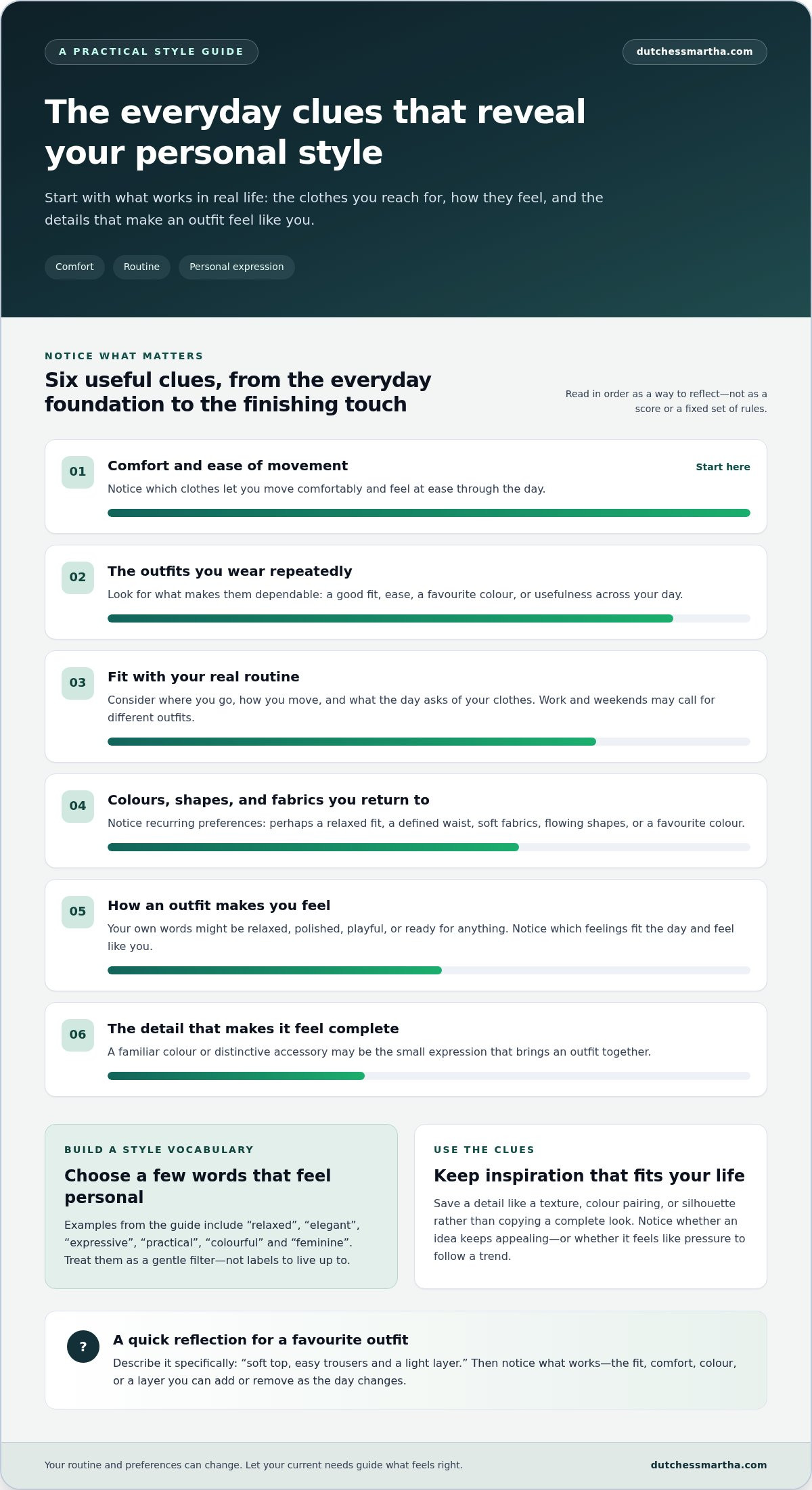
Look at the pieces and combinations you reach for repeatedly. Instead of asking whether they’re fashionable, notice what makes them dependable: the fit, ease of movement, a colour you love, or how well they work for different parts of your day. These details reveal more about your personal style than a trend you’ve only admired from a distance.
- Which outfits feel comfortable from morning through to the end of the day?
- What colours, shapes or fabrics appear in the combinations you wear most?
- Do you feel relaxed, polished, playful or ready for anything in them?
Describe one favourite outfit in specific terms. “Soft top, easy trousers and a light layer” gives you more useful information than “casual”. You might discover that the appeal lies in a relaxed fit, a defined waist or being able to add or remove a layer as the day changes. Notice what lifts your mood, too. A distinctive accessory or familiar colour might be the detail that makes an outfit feel complete.
Build a simple personal-style vocabulary
Choose a few words that describe the look and feeling you want from everyday outfits. They could be “relaxed”, “elegant” and “expressive”, or “practical”, “colourful” and “feminine”. Keep the words personal. They’re a gentle filter for decisions, not labels you have to live up to.
- For outfit choices: Ask whether a piece fits your words and your plans for the day.
- For inspiration: Save individual details, such as an interesting texture, a colour pairing or a silhouette, rather than copying a complete look.
- For new ideas: Notice whether you’re drawn to a style over time or simply feel pressure to buy something because it’s trending.
If relaxed, expressive looks appeal to you, a curated selection of clothing and accessories can offer fresh ideas as you explore what feels natural. For a more specific direction, think about elements often associated with boho style, such as flowing shapes, tactile fabrics and layered accessories. Keep only the details that suit your comfort, routine and personal taste.
Preferences that keep returning are worth paying attention to. A style vocabulary helps you build on those lasting clues, while leaving room for your tastes and everyday needs to evolve.
Review Your Wardrobe Without Turning It into a Ruthless Clear-Out
A wardrobe review doesn’t need to end with bags of clothes by the door. Think of it as a chance to see what you own more clearly: what’s earning its place, what could work with a little thought, and what no longer fits your life. You’re gathering information, not setting a challenge to discard as much as possible.
Keep the process contained. Choose one category, such as tops, dresses or shoes, and set aside a short block of time. Working through a single rail or drawer can feel much more manageable than emptying your entire wardrobe at once. As you look at each piece, consider comfort, fit, condition and whether it suits your current routines. A garment may be lovely but impractical for the days you’re dressing for now.
Make a low-pressure wardrobe review
Rather than deciding immediately whether every item stays or goes, give each piece a next step. This keeps the review useful without turning it into a test of willpower. You might make three groups:
- Wear: Pieces you reach for and feel good in as they are.
- Restyle: Items you’d like to wear but haven’t yet found the right combination for.
- Repair or reconsider: Clothes that need attention, or that no longer suit your comfort, fit or day-to-day life.
For anything uncertain, pause before making a final decision. Try it with a familiar favourite and wear the combination around the house or for an ordinary outing. Notice whether you feel comfortable moving, sitting and going about your day. If it still feels wrong, you’ve learned something. If it works, you’ve rediscovered an option without buying anything new.
Reconnect with overlooked favourites
Choose one piece that’s been sitting unworn and make it the starting point. Keep the rest of the outfit familiar: pair a forgotten top with trousers you trust, or bring out a skirt with a simple knit you already wear often. Then experiment with one change at a time, such as a different layer, shoes or accessory. This makes it easier to see what helps the piece feel like you, rather than changing everything at once.
If you’re reconsidering a top, look for a new way to balance its shape, colour or pattern with the rest of your outfit. A light layer may make it feel more relaxed, while a simple accessory can draw attention to a detail you enjoy. You can also explore ideas in a stylish tops guide, then adapt the inspiration to pieces already in your wardrobe.
Notice useful gaps, but don’t treat each one as a reason to shop. Perhaps several outfits would be easier with a comfortable layer or a versatile pair of shoes. Write that down and see whether the need persists as you wear what you own. A thoughtful note can help you make a more considered choice later, while the review itself brings forgotten possibilities back into view. That gentle rediscovery is part of finding joy in your wardrobe.
Create More Joy with Small, Repeatable Outfit Experiments
Refreshing your outfits doesn’t have to mean replacing them. A small experiment can help you see familiar pieces in a new light, without turning getting dressed into a project. Keep it playful and manageable: build around one item, change one detail, and notice how the result feels. If you’re not in the mood to experiment, simply wear an outfit you already love.
Try this easy formula with clothes and accessories you own:
- Choose a base piece. Start with something comfortable, such as a favourite dress, trousers or top.
- Add a layer. Try a cardigan, jacket or shirt over or under it, depending on the piece and the weather.
- Consider an accessory. Finish with jewellery, a scarf or a handbag if it feels right for the occasion.
Each step is optional. The aim is to create combinations that work for your day, not to follow a styling rule perfectly. An outfit for errands might feel relaxed with a simple layer and comfortable shoes. The same base could feel more considered for lunch with a different jacket, jewellery or bag. Small changes can shift the mood without changing the whole outfit.
Try one new combination at a time
Pair a familiar item with one you wear less often, then change only one element. For example, wear a favourite skirt with an overlooked top, keeping your usual shoes so the comparison feels clear. Check whether you can move comfortably and whether the result fits the words you use for your style. If it feels like you, save the combination. If not, you’ve learned what doesn’t work for you today.
Take a quick photo of outfits you enjoy, or jot down the pieces in a note on your phone. A small personal record can be especially useful on busy mornings, when you’d rather choose a proven combination than start from scratch. There’s no need to create something new every day. Repeating an outfit you feel good in is a smart way to make getting dressed easier.
Use accessories to make an outfit feel personal
Accessories can add a finishing touch without asking you to rethink an entire outfit. Jewellery might bring a little shine to a simple look; a scarf can add colour or texture; a handbag can bring a practical, polished note. Let the setting and your own comfort guide the choice. If you’ll be moving around all day, choose pieces that feel easy to wear and carry.
Try one accessory at a time so you can see what it adds. A bolder piece may be just right for an occasion, while a more understated detail may suit your everyday routine. For more ideas, explore women’s accessories and consider which details could complement outfits you already enjoy. The best finishing touch is one that feels like yours, not one you added just to follow a trend. Small, repeatable experiments can make finding joy in your wardrobe feel natural, one outfit at a time.
Keep Finding Joy in Your Wardrobe as Your Style Evolves
Your style isn’t fixed. A new role, a different daily routine, changing seasons or simply a shift in what you enjoy can change what feels right to wear. That doesn’t mean your wardrobe has failed or needs replacing. It means your preferences are responding to your life.
Try a brief seasonal check-in. Look at what you’ve worn often, what has felt comfortable and useful, and what you’ve been overlooking. Consider the conditions you’re dressing for in Australia, from cooler mornings that call for an extra layer to warmer days when lighter pieces feel more appealing. Use what you notice to guide small adjustments, not to create pressure for a complete wardrobe overhaul. Finding joy in your wardrobe can be an ongoing practice of paying attention.
Refresh your wardrobe with intention
Before adding anything, name the specific feeling or function you’re looking for. Do you want an easy layer for changing weather, a piece that feels more polished for work, or a colour that brings energy to outfits you already wear? A clear reason helps you decide whether an item suits your life, rather than buying it because a trend makes it seem essential.
Then think about how it might work with clothes you already enjoy. Picture a few realistic combinations, including shoes and accessories you own. If you can imagine wearing it for an occasion or routine that genuinely happens in your life, it may be a considered addition. If it only works in an imagined outfit, give yourself time. There’s no deadline to define your style, and no purchase can guarantee confidence. A thoughtful choice should complement your preferences, not dictate them.
Find inspiration and styling support when you want it
Inspiration can be a useful starting point, not an instruction to start over. A curated edit of European-inspired clothing and accessories, for example, might help you notice a colour, shape or detail you’d like to explore. Bring that idea back to your own wardrobe and consider whether you can adapt it with pieces you already have. Keep what feels relevant; let the rest pass by.
If you’d enjoy another perspective, personal styling sessions at the Dutchess Martha boutique offer a supportive way to explore outfits and preferences. Use the conversation to reflect on what feels comfortable, expressive and suited to your routines, without treating the experience as a reason to replace everything you own. The aim is to find ideas that feel like yours and work in everyday life.
Whenever you’re ready for fresh inspiration, explore Dutchess Martha’s curated collection and let the pieces spark ideas for your own evolving style.
Let Your Next Outfit Feel Like You
Let your wardrobe keep pace with the life you’re living now. You don’t need a perfect style plan. Give yourself permission to make choices that feel comfortable and considered, and to change your mind as your preferences shift. That’s where finding joy in your wardrobe can lead: not to a finished look, but to a more personal relationship with getting dressed.
If you’d like fresh inspiration, Dutchess Martha is a Melbourne boutique founded in 2012 and recognised with the South East Melbourne Local Awards 2024 for Outstanding Fashion. Its boutique personal styling sessions offer a supportive way to explore outfit ideas and discover details that feel true to you. There’s no need to start over. Let a thoughtful piece or a fresh styling perspective spark possibilities for the clothes you already love.
Explore Dutchess Martha’s curated collection of clothing and accessories for inspiration as you shape your personal style. Take what resonates, trust your own eye, and enjoy getting dressed in a way that feels like you.
Frequently Asked Questions
Can finding joy in your wardrobe help you feel more confident?
Yes, finding joy in your wardrobe can support confidence by helping you express your preferences and feel comfortable, but confidence is personal and no outfit can guarantee it. For a presentation or social event, consider what helps you feel composed, such as a familiar fit or a colour you enjoy. Try options without dressing to satisfy someone else’s expectations, then notice how you feel wearing them.
Do I need to buy new clothes to enjoy my wardrobe again?
No, you can start with clothes and accessories you already own. Revisit a piece you like but rarely wear and try it for a different occasion, such as styling a relaxed top for dinner rather than errands. If you notice a genuine gap, think about a potential addition that works with your routine and existing outfits. Shopping is one option, not the starting point or only route to enjoyment.
How can I stop feeling overwhelmed by a full wardrobe?
Make the task smaller by choosing one area, such as a drawer or a group of work clothes, instead of reviewing everything at once. Separate pieces you wear often from those needing attention and those you’re unsure about. For an uncertain item, compare it with a reliable favourite and see how the combination feels. If sorting starts to feel burdensome, pause and return another day. There’s no deadline.
Is it okay to wear the same favourite outfits often?
Absolutely. Repeating outfits can make daily choices easier and show that you’ve found combinations that suit your comfort and routine. You don’t need to make each appearance feel different. If you want a small change, swap one detail, such as your jewellery or shoes, while keeping the rest familiar. A photo or short note can help you remember dependable looks for days when you’d rather not plan an outfit.
What if my personal style changes over time?
That’s completely natural. Your preferences may shift as work, social plans or other parts of your life change, and you don’t need to commit to a permanent style label. Focus on what feels comfortable and expressive now. You might wear an old favourite for a special occasion even if it no longer suits your usual routine. Let your wardrobe adjust gradually, keeping meaningful pieces without expecting every item to serve the same purpose.
How can I make getting dressed feel easier on busy mornings?
Before a busy day, check your calendar and the forecast, then choose an outfit that suits both. Keep the full combination together, including any layer or accessory you plan to wear, so you’re not making every decision in the morning. A small set of ready-to-go options can help for recurring situations, such as commuting or a school run. You can still choose something different if your mood changes.
Do I need a capsule wardrobe to find joy in my clothes?
No, a capsule wardrobe is simply one way to organise clothing, not a requirement for enjoying what you wear. A smaller, coordinated selection may suit someone who prefers fewer choices, while another person may enjoy variety, colour or pieces for different occasions. Instead of following a prescribed number of items, consider whether your clothes suit your everyday life and whether you have options you look forward to wearing.