

What if a room felt more like you, rather than a copy of an inspiration photo? The most inviting aesthetic room decor ideas aren’t about recreating a perfect image. They bring your personal style into focus through colours and textures that work together, while leaving room for comfort and everyday life.
It’s easy to see a beautiful room online and wonder how to make it work in your own space. Add too many colours, finishes or styles, and the result can feel cluttered. A refresh doesn’t have to mean replacing everything. A clear direction and a few thoughtful changes can make a room feel more cohesive and personal.
Explore practical ways to build that feeling in any room, from choosing a colour palette and layering texture to using lighting and adding considered finishing touches. Start with what you already own, then add small details, such as homewares, candles or fragrance, if they suit your style. The goal is a space that feels polished, comfortable and unmistakably yours.
Key Takeaways
- Choose a mood that suits your routines, then use existing furnishings to guide your decorating direction.
- Use aesthetic room decor ideas to create a considered palette, balancing a base colour with supporting tones, a repeated accent and varied textures.
- Explore different decor styles as inspiration, borrowing the elements that feel right rather than following one look too strictly.
- Refresh one room zone at a time, from bedding and shelves to desk areas and room fragrance.
- Make the space feel personal with meaningful details, then edit anything that distracts from the overall look.
Aesthetic Room Decor Ideas Start With the Feeling You Want to Create
An aesthetic room doesn’t need to look like a showroom or come together in a single weekend. The most successful aesthetic room decor ideas feel personal, support everyday routines and grow from what’s already in the space. Before choosing colours or browsing decor, consider how you want the room to feel when you walk in and how you use it throughout the day.
A bedroom that needs to feel restful has different priorities from a living room used for reading, entertaining and relaxing. Let the room’s purpose guide your choices, then consider how light, furniture and existing colours can support the mood. The wider principles of interior design offer useful context, but your own habits are the most practical place to begin.
Try this quick self-audit before making changes:
- What feels right? Notice the pieces, colours or corners you already enjoy.
- What feels distracting? Identify visual clutter, awkward layouts or items that don’t suit the room’s purpose.
- What should stay? Set aside useful furniture and meaningful objects you want to keep in the picture.
These answers help you make deliberate choices rather than adding decor simply because it looked appealing somewhere else. Cohesive room decor is a repeated visual idea, not a room where everything matches.
Choose a room mood that feels personal
Start with a few descriptive words. Calm, warm, playful and collected can each suggest a direction, but they aren’t strict styles or rules. A calm room might call for a simpler arrangement; a playful one could make space for a favourite colour or an unexpected object. Pick words that reflect how you want to feel, not just what’s trending.
Personal pieces give that mood meaning. A keepsake from a trip, a well-loved book or artwork you chose because it speaks to you can make a room feel lived-in rather than staged. Give each object enough space to be noticed, and let your choices tell a story over time.
Start with the room you already have
Take stock before shifting furniture or shopping. Notice where natural light falls at different times of day, what the room is used for, which furnishings are already working and how much clear wall space you have. A sunny reading corner, for instance, may already provide a natural focal point; a desk that needs to stay may shape the room’s layout. Use these details as design clues.
Keep useful or meaningful pieces and build around them. You might rearrange what you own, edit a crowded surface or move an item to a spot where it has more impact. That’s a more grounded starting point than trying to reproduce an inspiration photo exactly. If you’re drawn to expressing your personality through carefully chosen details, the women’s accessories style guide offers a related way to think about personal style. Bring that same instinct for considered choices into your home, one room and one decision at a time.
Build an Aesthetic Room Decor Palette With Colour, Texture and Focal Points
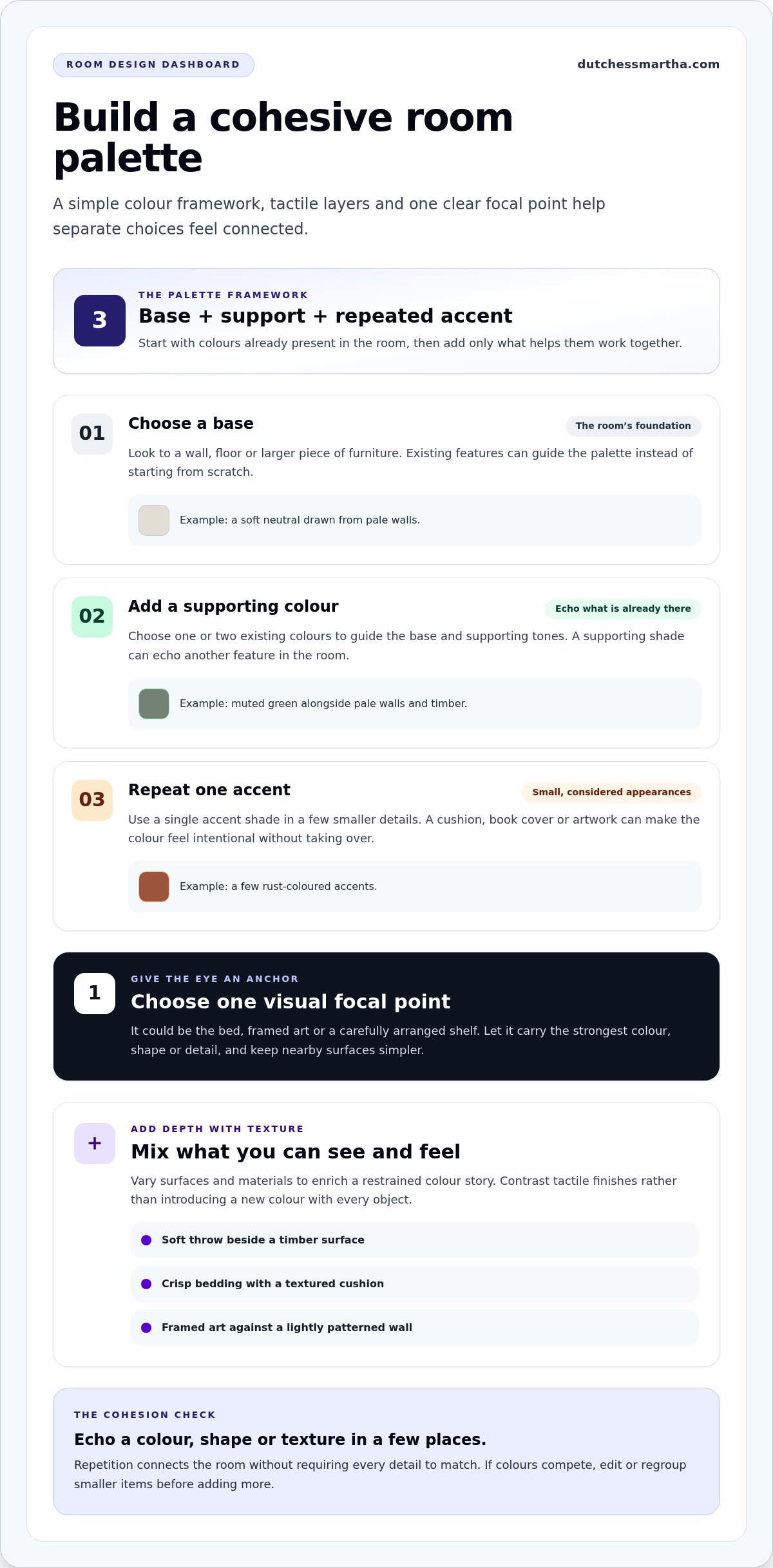
A thoughtful palette gives separate decor choices a shared thread. Keep the framework simple: choose a base, add a supporting colour, then repeat one accent sparingly. The base might come from a wall, floor or larger piece of furniture; the supporting colour can echo another existing feature. Your accent adds contrast without taking over.
For example, a room with pale walls and a timber bed could build on those tones with a soft neutral base, a muted green support and a few rust-coloured accents. The exact colours are yours to choose. What matters is deciding how they relate before introducing more shades. These aesthetic room decor ideas help you develop a palette from the room itself, rather than assembling unrelated inspiration.
Combine colours without making the room feel busy
Look first at the colours already present in larger or harder-to-change elements, such as flooring, wall paint, curtains or a sofa. Pick one or two to guide your base and supporting colour. Then choose a single accent shade to repeat in smaller details, perhaps in a cushion, a book cover or a piece of artwork. You don’t need to use the accent everywhere; a few considered appearances are enough to make it feel intentional.
Before adding another colour, step back and assess what the room already contains. If several hues compete for attention, edit or regroup the smaller items instead of immediately buying new ones. Colour preferences are personal, and no shade guarantees a particular mood. Let the room’s existing features and the feeling you want guide your choices.
Layer texture and create a clear focal point
A restrained colour story can still feel rich when surfaces and materials vary. Try pairing smooth finishes with tactile ones: a soft throw beside a timber surface, crisp bedding with a textured cushion, or framed art against a lightly patterned wall. Natural-looking finishes can add another layer. Focus on contrast you can see and feel, rather than introducing a new colour with every object.
Choose one visual anchor to organise the rest. It might be the bed, a piece of framed art or a carefully arranged shelf. Let this focal point carry the strongest colour, shape or detail, then keep nearby surfaces simpler so it remains easy to notice. In a bedroom, for instance, a patterned bedcover can lead the eye; a calmer bedside arrangement prevents the whole scene from feeling crowded.
Repetition creates cohesion: echo a colour, shape or texture in a few places, and the room begins to feel connected without matching every detail. Use that idea as an editing tool. If an item doesn’t support the palette, add useful texture or complement the focal point, it may be one detail too many.
Once the palette feels settled, a considered piece of homewares can offer a finishing touch rather than a reason to start over. Browse curated homewares for inspiration, and choose only what genuinely fits your room.
Compare Aesthetic Room Decor Styles to Find Your Best-Fit Look
Style labels can help you spot ideas you’re drawn to, but they’re a starting point, not a decorating rulebook. Compare each direction by its palette, textures, mood and finishing details. Then consider how those cues might work with the furniture and colours you already have. The right look is one you enjoy living with, not one that matches a trend perfectly.
Use this quick comparison to find a direction to explore. The cues are flexible: borrow a texture from one look and a colour or accent from another if that feels more like you.
| Style direction | Visual cues | Easy starting detail |
|---|---|---|
| Soft and natural | Gentle, earthy tones; relaxed textiles; organic-looking finishes | Add a woven or textured cushion to an existing chair |
| Bohemian-inspired | Collected patterns, layered fabrics and personal accents | Style a small group of keepsakes on one shelf |
| Moody and expressive | Deeper tones, high-contrast artwork and richer textures | Try one darker cushion or a bold print |
| Pared-back | A lighter palette, simple shapes and clear surfaces | Edit one tabletop, keeping only a few useful or meaningful pieces |
Explore soft, natural and bohemian-inspired room details
Soft, natural and bohemian-inspired looks can share relaxed textures and thoughtfully collected details while still feeling distinct. A light throw and natural-looking finish may add softness; patterned fabric or a keepsake can bring in a more bohemian note. Choose just a few details, and leave breathing room around them so the result feels considered rather than crowded. If you enjoy this relaxed, expressive sensibility in clothing, the boho clothing and effortless style guide offers a related perspective on personal style.
Try moodier, playful or pared-back aesthetic directions
A moodier direction might use a darker artwork or textile as its defining accent, while a playful look could introduce a lively print or unexpected colour. A pared-back room takes the opposite approach, giving simple shapes and open surfaces more attention. These are options, not boxes. Before changing several things, test one element, such as swapping a cushion, reframing artwork or restyling a shelf. Live with the change and notice whether it suits the room’s light, function and your comfort.
Existing furnishings matter more than a label. A treasured timber piece can sit comfortably in a pared-back room, while a simple neutral sofa can take on a more expressive feel through art or textiles. Build around what you like and use; let the style name help describe the direction, then make it your own.
As you try different aesthetic room decor ideas, assess each choice on its own merits: does it suit the room, feel comfortable and connect with something else already there? Keep the details that answer yes. A few well-chosen cues often communicate a style more clearly than a full-room makeover.
Try These Aesthetic Room Decor Ideas in Different Parts of the Room
A room refresh feels easier when you tackle one zone at a time. Start with what you already own: clear a surface, rearrange a few pieces or bring a favourite textile into view. Then decide whether that spot needs more colour, softness or breathing room. These small changes can make a difference without turning the whole room into a project.
Edit, arrange, layer and review. This simple sequence keeps each update intentional. Try it in the zone you use most, then move on only if the room still feels like it needs something.
- Bed or sofa: Smooth and restyle the bedding or cushions you already have. Add a throw for texture, or repeat a colour that appears elsewhere in the room. Leave some of the surface clear so the arrangement feels relaxed, not overworked.
- Desk area: Clear away items that don’t support work or study. Group everyday essentials together, then leave a small open space for writing or setting down a book. A useful surface can still feel considered.
Refresh walls, shelves and everyday surfaces
Give favourite objects room to stand out. Rather than displaying everything at once, group a few meaningful pieces, such as framed art, a keepsake and a book, then vary their height or spacing. On a shelf, leave a little open space beside the group; on a tabletop, keep the arrangement compact enough to preserve its everyday use. Step back and adjust until the display feels balanced from across the room.
If you can’t make permanent changes, lean framed art on a stable shelf or use removable hooks suited to the surface. A small tray can gather loose items on a desk or bedside table and make the arrangement easy to shift. These low-commitment touches let you test a display before settling on it.
Make textiles and room fragrance part of the finishing layer
Textiles can connect separate parts of a room. Fold a throw across the end of a bed, or bring a cushion onto a sofa in a colour or texture already present elsewhere. One repeated detail is often enough. If the room feels crowded, edit an existing layer before adding another.
Room fragrance is an optional finishing touch, not a decorating essential. If you enjoy scent at home, a candle or room fragrance can contribute to the atmosphere alongside the visual details. Dutchess Martha’s selection includes the Mykonos Soy Candle and I am Capri Room & Linen Spray. Keep this layer personal, and leave it out if it doesn’t suit your preferences.
For a final check, look at the room from the doorway. Notice which area draws your eye first, whether the zones feel connected and whether anything competes for attention. Remove or relocate one distracting item before adding more. If you’d like to explore optional finishing touches, browse homewares, candles and fragrances for ideas to suit your space.
Finish Your Aesthetic Room Decor With Thoughtful, Personal Details
The final details are what make a room feel like it belongs to you. A piece of artwork that brings back a favourite memory, a keepsake collected on a trip or a well-used object with a story can add character in a way a perfectly matched set can’t. Choose items you genuinely enjoy seeing and living with, rather than filling every empty spot just because it’s there.
Now review the whole room. Stand in the doorway and notice what draws your eye first, then look for details that compete with it. Does a colour, texture or shape appear naturally in more than one place? Are there objects you love but can’t really see among the surrounding clutter? A small edit can make the pieces you’ve chosen feel more intentional.
Edit the final details for a more cohesive room
Look for quiet connections between your finishing touches. A shape in a framed print might echo a vase, or a fabric’s texture may reappear in a cushion. These repetitions help different objects feel at home together without making them identical. Leave some surfaces clear, too. Open space gives standout items room to breathe and keeps practical areas easy to use.
Before removing something, consider whether it makes the room more comfortable or useful. A favourite book beside the bed or a basket that keeps daily essentials close may matter more than a perfectly styled surface. Your room should work for real routines, not only look polished from one angle.
- Keep: meaningful pieces that add a story or make the room more comfortable.
- Move: items that suit the room but are lost in their current spot.
- Edit: details that distract, repeat without purpose or get in the way of everyday use.
Choose finishing touches that reflect your own style
Let the room’s mood and function guide any final additions. A considered piece of homewares might give a shelf a personal finishing point; candles or room fragrance can add another layer of atmosphere if you enjoy them. They’re optional details, not essentials. The best choice is one that feels at ease with the rest of the room and has a place in your everyday life.
Personal style can travel from what you wear into how you arrange your home, but it doesn’t need to follow a strict formula. Keep the pieces that feel like you, and give them enough space to be appreciated. For inspiration for those finishing touches, explore Dutchess Martha’s curated homewares, candles and fragrances as part of its broader lifestyle selection.
The most lasting aesthetic room decor ideas aren’t about achieving a flawless photograph. They’re about creating a room that feels considered, comfortable and unmistakably yours. Trust your eye, make changes at your own pace and let the space evolve with you.
Let Your Room Grow With You
Your space doesn’t need to be finished all at once. Let it evolve as your routines, favourite finds and sense of style change. Start with one detail you’d love to see every day, then give yourself time to decide what belongs beside it. The most inspiring aesthetic room decor ideas leave room for real life, not just a picture-perfect moment.
Bring that same personal point of view to the pieces you choose. Established in Melbourne in 2012, Dutchess Martha brings fashion, home and lifestyle together. Its curated homewares, candles and fragrances offer inspiration for adding a thoughtful finishing touch, not a checklist for completing your room.
Ready to discover details that feel at home with your style? Explore Dutchess Martha’s curated home and lifestyle selection, and choose what speaks to you. Your room is yours to shape, one considered choice at a time. Trust your taste and enjoy making it feel like you.
Frequently Asked Questions
Can I make my room look aesthetic without buying new decor?
Yes. Begin by changing how existing items are used. Swap a bedside table and a small cabinet if their new positions suit your routine, or move a favourite object from a crowded shelf to a more visible spot. You could also rotate books so their spines create a calmer block of colour. Try one change at a time, then live with it before deciding whether anything else is needed.
How can I decorate a small room without making it feel cluttered?
In a small room, protect clear pathways and choose storage that uses overlooked space, such as the area beneath a bed or the back of a door. Keep frequently used items within reach, and store occasional-use belongings out of sight. A mirror can reflect light and create a sense of openness, while a few larger, purposeful details may feel calmer than lots of tiny ornaments competing for attention.
What is the easiest way to choose a colour palette for a bedroom?
Choose a colour you already enjoy seeing in the bedroom, then look for a quieter shade to accompany it. Check potential combinations beside your bedding or curtains in both daylight and evening light, since colours can look different as the room’s lighting changes. A fabric swatch or paper sample is an easy way to compare options before committing. Keep the final palette comfortable to wake up and wind down in.
How do I make a rented room feel more personal without permanent changes?
Use flexible details you can take with you: lean framed artwork on a stable surface, hang lightweight fabric with removable hooks, or add a freestanding screen to define a corner. A removable cover can also give a chair or cushion a fresh look. Keep packaging for temporary hanging products and follow their instructions for the wall surface. These choices let you express your taste without relying on paint or drilled fittings.
Is it better to choose a room style before buying decorative pieces?
Set a loose direction before shopping, but leave room to change your mind. Write down a few qualities you want, such as relaxed, bright or collected, then use them to assess each potential purchase. Ask whether it suits the room’s use, works with something you own and has a clear place. A style should help you make decisions, not pressure you into buying a complete matching look.
How can I make an aesthetic room feel cosy as well as stylish?
Prioritise comfort in the items you interact with daily. Choose bedding that feels pleasant to sleep in, keep a warm layer within easy reach and make sure your favourite seat supports the way you like to relax. Softer textures can balance crisp surfaces, while a familiar book or personal keepsake makes the room feel lived in. Let practical comfort guide the finishing choices, rather than styling for appearance alone.
What should I remove first if my room decor feels visually busy?
Start with items that have no clear purpose or place, such as packaging, stray cables, empty containers and duplicate ornaments. Temporarily clear one surface completely, then return only what you use or genuinely want to see. This makes it easier to spot whether the visual busyness comes from too many objects, tangled practical items or competing patterns. Keep removed pieces aside for a few days before deciding where they belong.